
Music

At Agganis Arena, the guitarist led a genre-spanning set from tight harmonies to deep-space jams.
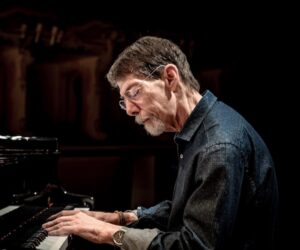
The acclaimed pianist-composer reflects on a newly unearthed duet with Mick Goodrick, the art of deep listening, and a life shaped by resilience and risk.
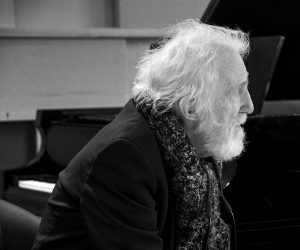
Separated by 35 years, new releases from Blake–Eade and Goodrick–Hersch illuminate jazz at its most intimate—where interpretation, history, and shared sensibility converge.
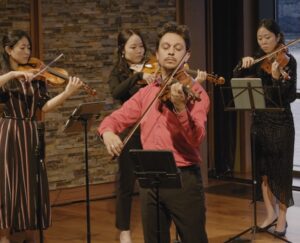
A pair of concerts at the Shalin Liu Performance Center paired elegy, bite, and virtuosity in vividly different ensemble settings.
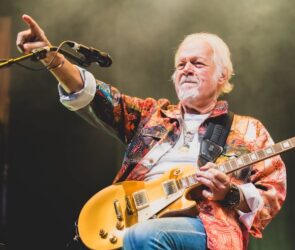
The Guess Who and Don Felder bring skill and spirit to Boston, though nostalgia comes packaged with more than a few modern annoyances.
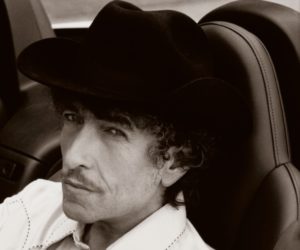
A reconfigured band and evolving arrangements made Bob Dylan’s Boston set vital, strange, and rooted in “Rough and Rowdy Ways.”
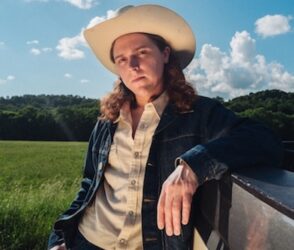
The rising Nashville artist on genre-blending, spiritual energy onstage, and a full-circle live album.
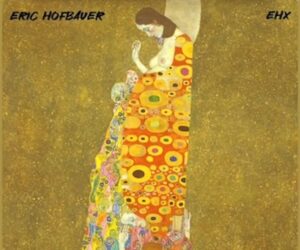
Eric Hofbauer and EHX turn a wide-ranging songbook into a cohesive, emotionally charged jazz narrative.
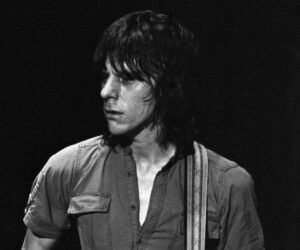
Jeff Beck is a bigger guitar hero than you realized.
Arts Commentary: Notes on Bob Dylan
A skeptical listener finds phrasing, groove, and quiet authority in an 85-minute Boston set.
Read More about Arts Commentary: Notes on Bob Dylan