
Visual Arts
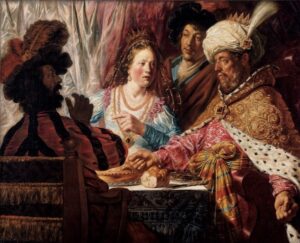
An incisive exhibition traces how Rembrandt, his Dutch contemporaries, and earlier artists remade a biblical story of concealment, power, and survival.
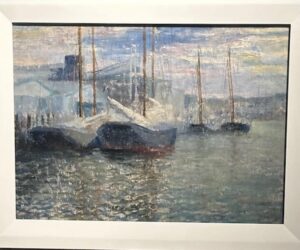
The Cape Ann Museum’s revelatory exhibition shows how Milton Avery, Adolph Gottlieb, and Mark Rothko turned the Gloucester shore into a language of abstraction.

In a revised study of the celebrated sixteenth-century painter, Michael W. Cole traces how family support, artistic training, and scholarly revision shaped her legacy.
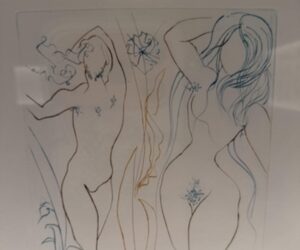
The MFA exhibition brings viewers close to the remarkable printed books in which Spanish modernists and French writers fused art and literature.
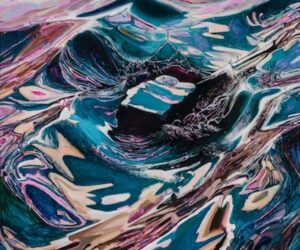
In “the drop falls” at 3S Artspace, the artist’s lush hybrid paintings bring Virginia Woolf, artificial intelligence, and ecological collapse into a seductive, disquieting flow.
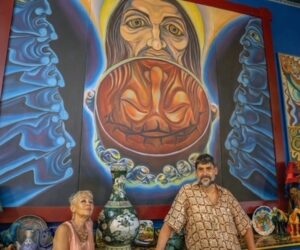
We need to sustain where the Muses live — Somerville’s The Museum of Modern Renaissance.
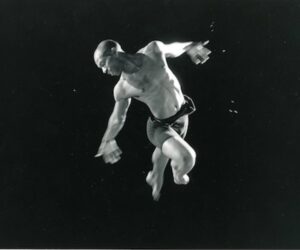
A retrospective survey of a photographer who has long worked at the intersection of art, activism, and community.
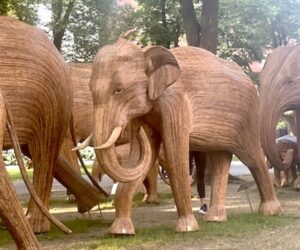
On Boston’s Commonwealth Avenue Mall, 100 handcrafted elephants turn an exuberant family attraction into a persuasive call for human-wildlife coexistence.
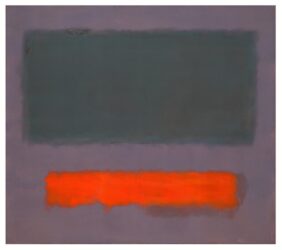
This ambitious catalogue is strongest when it treats Rothko’s paintings as shifting perceptual structures—and weakest when it resolves them into metaphysical comfort.
Arts Commentary: Superman, Spider-Man, and the American Art of Slugging Nazis
William Nicholas Love’s punch heard round the internet belongs to a long comic-book history of fighting homegrown fascism—from Captain America to “The Clan of the Fiery Cross.”
Read More about Arts Commentary: Superman, Spider-Man, and the American Art of Slugging Nazis