
Coming Attractions: July 19 Through August 3 — What Will Light Your Fire
Compiled by Arts Fuse Editor
Our expert critics supply a guide to film, visual art, theater, author readings, television, and music. More offerings will be added as they come in.
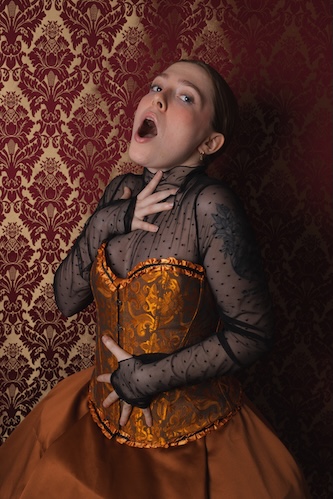
Zoe Dean in Hungry Women. Photo: courtesy of Soho Playhouse
EDITOR’S NOTE: Boston area theaters have decided to pretty much ignore what is happening in America and beyond — mounting threats to democracy, the country’s slide toward authoritarianism, the climate crisis, growing economic inequality, ICE’s violent roundup of immigrants, the expansion of internment camps, ongoing genocide in Gaza, transphobia, the grueling war in Ukraine, etc. I have decided to point out a production in Coming Attractions — staged in America or elsewhere — that grapples with today’s alarming realities. Sometimes the stagings will be available via Zoom, sometimes not. It is important to present evidence that theater artists — maybe not here, but elsewhere — are reflecting, and reflecting on, the world around us.
A world premiere production of a play by Melissa Haney at NYC’s Soho Playhouse (at 15 Vandam St., July 23 through August 30) dramatizes a tantalizing question — “If men went extinct, what would our world look like?” Feminist speculation like this takes on particular urgency now, given what Aussie sociologist Ruth Phillips sees as Trump’s interest in Rebuilding Hegemonic Masculine Patriarchy.
Hungry Women envisions a woman-only world across two hundred years. “A dark comedy that blends absurdism and the macabre through a feminist lens, the play explores survival, identity, sexuality, motherhood, and the reshaping of power in the absence of the patriarchy. In the end, it asks: What are women most hungry for?” Daniella Caggiano directs Zoe Dean, Mariyea, and Sophie Zmorrod.
— Bill Marx
Film
Maine Outdoor Film Festival
July 21-26
Portland, Maine
The festival features a panoply of programming; each night, an outdoor theater is erected in spaces like the Eastern Promenade and the Portland Museum. Full schedule & Tickets
The Boston French Film Festival
July 24 – August 23
Museum of Fine Art Boston
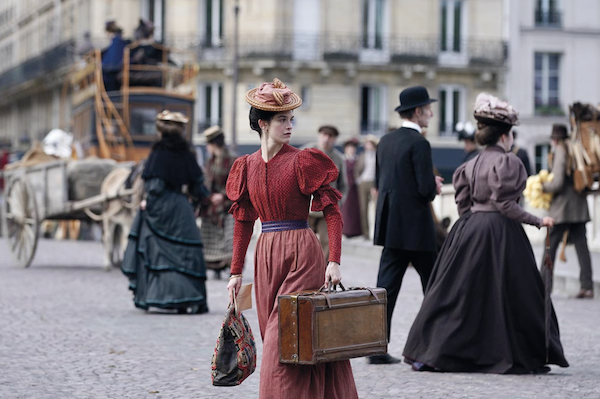
A scene from Colors of Time, screening at the Boston French Film Festival. Photo: courtesy of the MFA
Films added to the venerable festival were recently announced — check the website.
Bazaar (Le crime du 3e étage) on July 24 at 7 p.m.
Colors of Time (La venue de l’avenir) on July 25 at 11 a.m. and August 2 at 2 p.m.
Promised Sky (Promis le ciel) on July 25 at 2 p.m.
Nino on July 26 2 p.m.
Leave One Day (Partir un jour) on July 31 at 7 p.m.
Whatever it Takes (Ceux qui comptent) on August 1 at 11 a.m.
The Girl in the Snow (L’engloutie) on August 1 at 2 p.m.

A scene from the documentary Our Mr. Matsura. Photo: courtesy of Woods Hole Film Festival
Woods Hole Film Festival
July 25 – August 1
Woods Hole, MA
Now in its 35th year, and this may be the fest’s best lineup yet. Full film Listings
My picks would include:
The Leader on July 31 at 6:15 p.m. at Redfield Auditorium at WHOI
Based on the true story of Heaven’s Gate, a UFO cult that made headlines in 1997 when 39 followers committed the largest mass suicide in U.S. history, the film traces the cult’s origins from the early 1970s meeting of its leaders, Ti and Do, in Houston, Texas, through its tragic conclusion in Rancho Santa Fe, California. Starring Tim Blake Nelson, Vera Farmiga, and Jim Parsons.
Mallory’s Ghost on July 26 at 7 p.m.at Redfield Auditorium at WHOI
A young woman accompanies her playwright boyfriend to a coastal Maine retreat, only to become obsessed with his glamorous ex, whose presence seems to haunt her. Post-screening discussion with the filmmakers.
Little Audrey on July 25 at 8:30 p.m. at Redfield Auditorium at WHOI
When a Vatican commission investigates mysterious phenomena surrounding a comatose girl in Worcester, a skeptical child psychologist is drawn into a world where faith and reason collide. As unexplained events mount, she is forced to question her deepest beliefs.
Heartworm on July 30 at 8:30 p.m. at Redfield Auditorium at WHOI
In a future shaped by immersive virtual reality, a woman fights to save her husband from a digital refuge designed for the grieving called NeuraLife. Filmed entirely on Martha’s Vineyard with cast and crew members from Cape Cod and the Islands. Post-screening Q&A with filmmakers.
Our Mr. Matsura on August 1 at 5:15 p.m. at Clapp Auditorium in the Lillie Building
After arriving from Japan in the early 1900s, Frank Matsura settled in Okanogan County, Washington, where he became the region’s leading photographer, shooting portraits and images featuring settlers, immigrants, and Native peoples. A post-screening Q&A with director and producer Beth Harrington (The Winding Stream: The Carters, the Cashes and the Course of Country Music). The film won Best Documentary and Best Northwest Feature at this year’s Spokane International Film Festival.
Sherman’s March & Remake
Opens July 31
Coolidge Corner Theatre, Brookline
Local filmmaker Ross McElwee’s Sherman’s March is subtitled “A Meditation on the Possibility of Romantic Love in the South during an Era of Nuclear Weapons Proliferation.” While intending to make a documentary about the lingering effects of General Sherman’s march through the South during the Civil War, the director is continually sidetracked by women who come and go in his life, his recurring dreams of nuclear holocaust, and Burt Reynolds. This landmark work of personal cinema, narrated by McElwee in his inimitable dry style will shown in a 4K Restoration. There will be a post-film discussion moderated by filmmaker Robb Moss on July 31.
This year McElwee returned with Remake, a poignant reflection on the death of his son Adrian from a drug overdose. The doc also includes the often absurd attempts by Hollywood and others to redo Sherman’s March in new guises. The result is, by turns funny, poignant, and unexpectedly affecting.
Cat Video Fest
Regent Theater in Arlington
August 2 – 9 Showtimes vary
Capital Theatre in Arlington
August 6 – 9 Showtimes vary
Stop watching cat videos on your cell phone and head over to the Regent or the Capital to see, on the big screen, a compilation of the latest and best cat footage culled from countless hours of submitted possibilities. There will also be sourced animations, music videos, and classic scenes of yore. A portion of the ticket proceeds from the Regent go to Dr. Rachel Geller’s charity, “All Cats All the Time,” while proceeds from the Capital benefit Boston’s “Black Cat Rescue!”
Pick of the Week
Holy Spider (2022), streaming on Kanopy for free / Amazon Prime for $4.99
The Iranian crime thriller Holy Spider by Ali Abbasi (Border, 2018) uses the mechanics of a police procedural to tell the true story of Saeed Hanaei, who murdered sixteen women in the Iranian city of Mashhad between 2000 and 2001. The film does not sensationalize the crimes, but rather uses the story to expose the social conditions that enable and even celebrate violence against marginalized women in that culture. The killer’s ordinariness is used to explore a culture filled with misogyny and religious hypocrisy, a society in which prejudice has become institutionalized. Zar Amir Ebrahimi, already living in exile, won the Cannes Best Actress Award for her role as the journalist investigating the crimes. She reported receiving roughly 200 threats against her life because of her performance. The film was officially condemned by Iran — with the country’s culture minister warning that Iranians involved with the making of Holy Spider could face punishment.
Iranian directors such as Abbas Kiarostami, Jafar Panahi, and Asghar Farhadi have been creating some of the best work in world cinema, sometimes at risk to their freedom. As political tensions, social divisions, and questions about democratic institutions continue to grow here, the most enduring American works, in both film and theater, may be those that follow the Iranian example by combining political insight with emotionally engaging narratives. (Fuse review)
— Tim Jackson
Theater
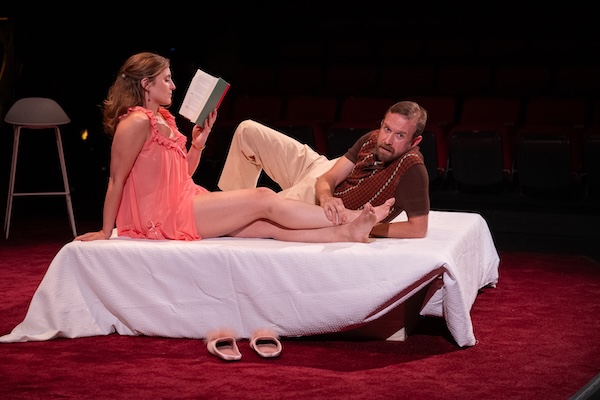
Liza Giangrande and Tanner Efinger in the Gloucester Stage Company production of Betrayal. Photo: Shawn G. Henry
Betrayal by Harold Pinter. Directed by Shana Gozansk. Staged by Gloucester Stage Company at the Natti-Willsky Performance Center, 267 East Main Street, Gloucester, July 9 through August 1.
Nobel Prize winning playwright Harold Pinter’s oft-revived 1978 play “traces the unraveling of a seven-year affair through an ingenious reverse chronology. As the story moves backward through time, audiences witness the shifting dynamics of love, friendship, memory, and deception with devastating clarity and emotional precision.” Arts Fuse review
Amchitka by Mark St. Germain. Directed by Julianne Boyd. Staged by the Chester Theatre Company at Chester Town Hall Theatre, 15 Middlefield Road, Chester, July 24 through August 8.
The world premiere production of a “philosophical thriller” by a veteran playwright (Magdalene and Freud’s Last Session): “In a monitoring station at Amchitka, a volcanic island 170 miles off the coast of Alaska used for underground nuclear testing in the 1960s, three scientists find themselves cut off from the outside world as an event seems to be underway. But what?”
M: Refractions from an Evil Act by James Wilkinson. Directed by Joe Juknievich. Staged by Exiled Theatre at the Boston Playwrights Theatre, 949 Commonwealth Ave, Boston, July 31 through August 9.
The world premiere production of a new horror/thriller. The plot: “A late-night return. A hotel room that feels…wrong. Traveling abroad, a woman’s unease after a night out deepens into something far more insidious. The staff watches too closely. A man appears, disappears and reappears. Time loops, memory fractures and the past begins to repeat itself. As identities blur and reality destabilizes, she must escape the hotel before she’s trapped by its history.” The cast includes Sydney Grant, Julia Hertzberg, Tim Hoover, and Peter Tone.
As You Like It by William Shakespeare. Adapted and directed by M Graham Smith. Staged by the Lanes Coven Theater Co at the Windhover Performing Arts Center in Rockport, through August 2.
Poet W.H. Auden argues that “of all Shakespeare’s plays,” this comedy “is the greatest paean to civilization and to the nature of civilized man and woman. It is dominated by Rosalind, a triumph of civilization, who, like the play itself, fully embodies man’s capacity, in Pascal’s words, to “to deny, to believe, and to doubt well — nier, croire, et douter bien. The play presents a balance of dialectical opposites: the country versus the court, detachment versus love, honesty versus poetry, nature versus fortune, nature and fortune versus art.”
Still, the Bard was not without fault in terms of shoring up civilization: Samuel Johnson lamented Shakespeare’s omission of “the dialogue between the usurper and the hermit” because it blurred Frederick’s miraculous conversion from evil to good at the end of the play. It would be useful to have that conversation.
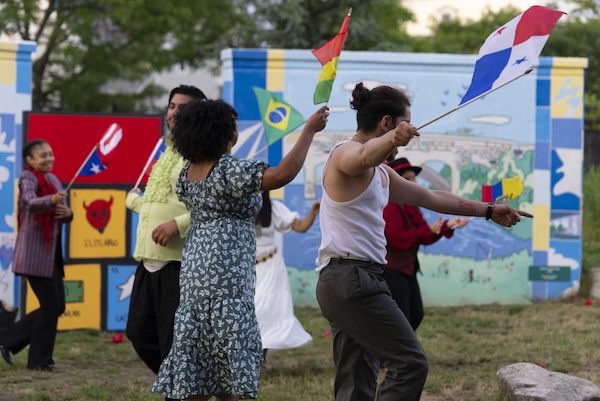
The cast of ¡Que Diablos! Fausto, 2025. Photo: Susanna Jackson.
La Broa’ en tu barrio (La Broa’ in Your Neighborhood) by Orlando Hernández. Directed by Lorraine Guerra. A summer touring theatrical partnership between Rhode Island Latino Arts and Trinity Repertory Company. The production plays in parks across the state of Rhode Island, including Payne Park, Roger Williams Park, and more. Starting times and locations for this outdoor production change from date to date — please check the website. Through August 2. Free
The show is a new adaptation of an earlier production. It draws from the true tales of Latinos/as who have made Rhode Island their home, as documented by oral historian Marta V. Martínez in her book Nuestras Raíces (Our Roots). This staging will present “stories
Twelfth Night By William Shakespeare. Directed by Kate Kohler Amory. Staged by Shakespeare & Co at the Arthur S. Waldstein Amphitheater, Lenox, through July 26.
An observation from critic Tony Tanner in his Prefaces to Shakespeare.
“Viola’s words in Twelfth Night on learning of the possible salvation of her brother determine the atmosphere at the end of the play:
O, if it prove,
Tempests are kind, and salt waves fresh in love!
(III, iv, 395-6)
That is probably the most defining sentence in Shakespearian comedy: salt becomes fresh; wreckage generates love; the world turns kind.”
A New Era by Miranda Austen ADEkoje. Directed by Summer L. Williams. Dramaturgy by Lizzy Cooper Davis. Staged by Company One at the Strand Theatre, 543 Columbia Road, Dorchester, through August 8.
The world premiere production of a script that, according to the Company One site, “blends historical source material with a present-day heartbeat. The play tells the story of real-life activist Josephine St. Pierre Ruffin, founder of The Woman’s Era club and journal (played by Patrice Jean-Baptiste). As we journey to 1895, we watch Ruffin organize the First National Conference of the Colored Women in Boston from her Beacon Hill home, where six other formidable women from across the deeply divided country join her to birth a new movement. Can these women overcome their political differences to build a unified coalition when freedom is fragile and Black Lives are at stake?” Arts Fuse feature
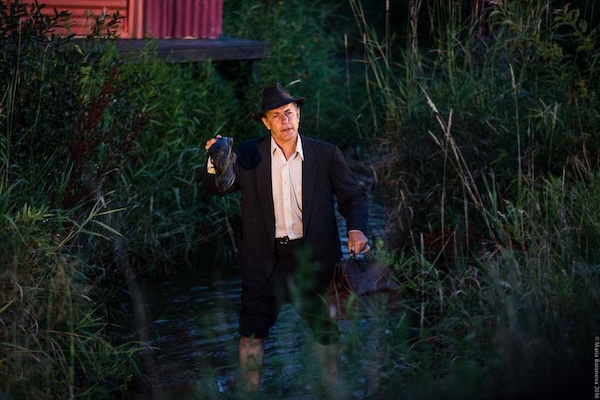
A scene from Double Edge Theatre’s revised revival of Once A Blue Moon – Cada Luna Azul. Photo: courtesy of Double Edge Theatre
Once A Blue Moon – Cada Luna Azul Conceived by Stacy Klein with Carlos Uriona. Directed by Klein. Staged by Double Edge Theatre at the Farm Center, 948 Conway Road Ashfield, through August 2.
Info on the Double Edge Theatre website: “The performance is based on lead actor and cultural strategist Carlos Uriona’s past experience with military dictatorship and cultural rebellion in his native country Argentina. Once a Blue Moon returns Carlos to Agua Santa, a fictional version of his hometown, after many years in exile. He evokes the memories of his past and the stories of the town’s colorful inhabitants as well as the events leading to his departure. The story reflects an increasingly present-day and universal situation in which ‘progress’ and ‘power’ displaces people, in this case causing a flood. It is a story of memory, culture, and song.” Arts Fuse review
“We presented a version of this performance in our 2015 / 2016 season and are looking forward to re-examining this work 10 years later and creating it anew with our current company.” The Arts Fuse review of the 2015 production.
Buyer & Cellar by Jonathan Tolins. Directed Daniel Bourque. Staged by Hub Theater of Boston at Club Café, 209 Columbus Ave., Boston, through August 1.
According to Robert Israel’s Arts Fuse review of a 2015 production of this one-person comedy at SpeakEasy Stage, the script revolves around an enjoyable, if farfetched, conceit. A man is hired by diva Barbra Streisand to keep a watchful eye over the basement empire of her Malibu, California, home, where she houses her memorabilia and tchotchkes.
Lovesong by Abi Morgan. Directed by David Auburn. Staged by Berkshire Theatre Group at The Unicorn Theatre 6 East Street, Stockbridge, through August 29.
Morgan’s play, according to the BTG website, “traces a marriage across decades, revealing how love evolves, deepens and endures over time. Moving fluidly between youth and later years, the play places two versions of a couple side by side, allowing past and present to unfold simultaneously on stage. Through their shared memories and lived experiences, the story explores love, aging and the ways in which memory shapes identity. As time moves forward, the impact of early choices reverberates across a lifetime, illuminating the fragility of happiness, the resilience of partnership and the inevitability of change.” The cast features Karen Allen, David Garrison, Rebecca Brooksher, and Shawn Fagan.
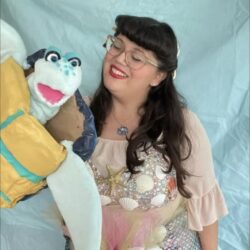
A glimpse of Kasandra Vargas and the sea turtle in A Pirate’s Great Adventure. Photo: courtesy of Puppet Showplace Theater
A Pirate’s Great Adventure by Peanut’s Playhouse. Presented by Puppet Showplace Theater at Emerson College’s Stage at UnCommon Corner in the Boston Common, corner of Boylston Street & Tremont Street on July 25 at 12 p.m. and on July 26 at the Puppet Showplace Theater, 32 Station Street in Brookline, at 10:30 a.m.
“Join Pirate Kasandra and her puppet pals for an interactive high-seas adventure full of surprises, laughter, and treasure hunting! The audience will help the Peanuts crew search for hidden treasure, while meeting colorful puppet friends along the way, including a plush sea turtle, blue elephant, and more! As the journey unfolds, the pirates discover that the greatest treasure of all is friendship — especially the new friends we make on our adventures together. Stay after the show to meet the artists and see the puppets up close.
iBoss by Thomas Kee. Directed by Clay Hopper. Staged by Great Barrington Public Theater at Great Hall at Saint James Place, 352 Main Street, Great Barrington, July 23 through August 9.
The world premiere of what sounds like a probing script — good to see companies beginning to probe the anti-humanist vision of AI — that “takes place in a not so distant future, where the rapidly accelerating intelligence of AI systems has created LISA Powered by AI, she wields enormous power. Shockingly, LISA displays an emergent property of AI — sentience. And from this newly sentient being something else emerges: an emotional agenda. As Job Johnson begins his first in-person evaluation, it’s clear this isn’t going to be just another day at the office.”
Also of interest, if somewhat scary sounding: “The production will utilize a brand new technology called Random Actor, an interactive design tool that was co-created by director Clay Hopper. This is the first time this software has been used in a professional production of a new play. It creates visuals that are an extension of LISA, the AI character in the play. The images projected in the space respond to her movement, her voice and her mood and intonations. Random Actor allows for the visual design of LISA’S internal state.
The images are not recorded or played back from a video. They are created IN REAL TIME along with the actor’s performance, with a generative algorithm using machine learning to create evocative images that are organic, despite their computational nature. No two performances of this play will be exactly the same…it is live, real-time design, based on the interaction of the actor, the text, and the designer who is responding to the performance in the very same moment that the audience is watching it.”
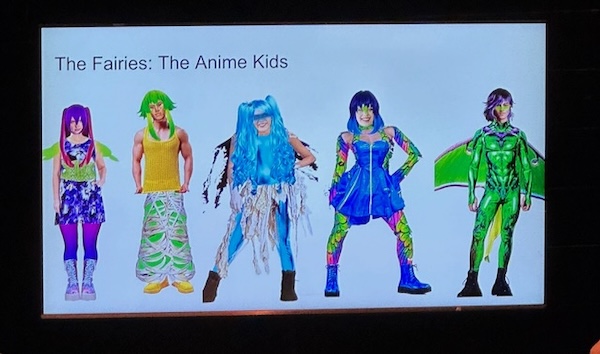
The costume design for the Fairies in the Commonwealth Shakspeare Company production of A Midsummer Night’s Dream. Photo: Bob Green
A Midsummer Night’s Dream by William Shakespeare. Directed by Steven Maler. Staged by Commonwealth Shakespeare Company at Parkman Bandstand, Boston Common, July 22 through August 9. Free
“Young lovers escape to a wonderland of freedom and desire, drawn together and torn apart by forces they can’t quite control,” writes Commonwealth Shakespeare Company about its production of one of the Bard’s most popular plays. This will be the 30th Anniversary outing for the venerable troupe, In this presentation, audiences will be “transported to a neon-lit festival escape, where rules dissolve and self-expression blossoms.”
The CSC cast: Michael Broadhurst as Flute, Annika Burley as Helena, Meghan Carey as Hermia, Nick Cearley as Puck/Philostrate, Nora Eschenheimer as Hippolyta/Titania, De’Lon Grant as Theseus/Oberon, Jack Greenberg as Demetrius, Jaime José Hernández as Lysander, Karen MacDonald as Quince, Paul Melendy as Bottom, and Brooks Reeves as Egeus/Starveling. Arts Fuse feature
— Bill Marx
Television

A scene from the upcoming 15th season of King of the Hill.
If there’s smoke in the air where you live, stay indoors or wear a mask. Seriously—if that particulate matter gets in your lungs, it’s not good. What better time to get caught up on some TV viewing than during an apocalyptic, wildfire-induced air-quality emergency?
King of the Hill, Season 15 (July 20, Hulu) Last night I overheard a young man’s phone playing a video in which a high-pitched voice yelled, “That’s my purse! I don’t know you!” I mentioned that I loved Bobby Hill—a pre-teen boy with a sensitive soul and the only child of Hank and Peggy Hill, voiced, respectively, by Pamela Adlon, Mike Judge, and Kathy Najimy. I don’t think this person understood the reference; the video was a meme derived from that long-ago episode in which Bobby, taking a self-defense course, shouts the now-infamous line.
I’ve always loved this show. I remember that in its early days, some friends would say, “I don’t get it,” because it seemed to be making fun of Texas conservatives and coastal liberals in equal measure. It soon became clear that King of the Hill made fun of everyone—and it was hilarious, clever, and often surprisingly moving, thanks to its brilliant writing and excellent cast. The show has also featured a remarkable roster of voice-acting cameos, including Brad Pitt, Kathleen Turner, Jeff Goldblum, Meryl Streep, John Amos, Betty White, Lucy Liu, and Alan Rickman, among many others.
What will Season 15 bring? The recent death of actor Jonathan Joss Gonzales, who voiced John Redcorn, may have fans reflecting on the earlier loss of Brittany Murphy, who voiced Luanne Platter, in 2009. The series premiered in 1997 and has weathered gaps, revivals, and shifts over nearly three decades.
Briefly: I’ve never been a fan of the Real Housewives franchise, but The Real Housewives of London premieres on Bravo on July 21, and I’m actually considering checking it out.
There are new seasons of plenty of shows premiering this month, giving you something to watch while you’re avoiding smoky air, heatwaves, contaminated lettuce, thunderstorms, ICE agents, and whatever other infernal forces might be lurking out there. New installments of Kitchen Nightmares (Fox), Who Wants to Be a Millionaire (ABC), The Walking Dead: Dead City (AMC), and Star Trek: Strange New Worlds (Paramount+) are all on the way—something for everyone. And if that’s not enough, Season 14 of Futurama, the smart, enduring animated series from the creators of The Simpsons, arrives on Hulu on August 3.
— Peg Aloi
Visual Art
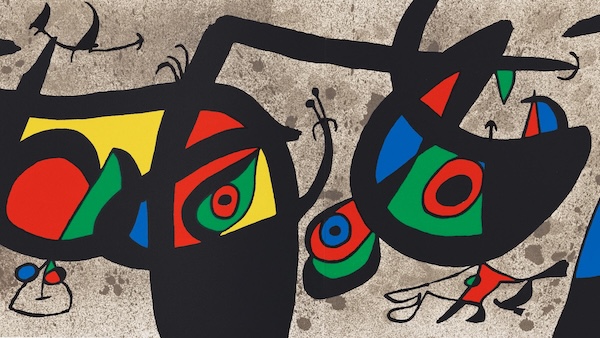
Joan Miró, Le Lézard aux plumes d’or (The Lizard with Golden Feathers) (detail), published by Louis Broder, printed by Mourlot Frères, Paris, 1971. Illustrated book with 40 color lithographs (including wrapper front and cover); publisher’s vellum. Photo: courtesy of MFABoston
The art hybrid livre d’artiste is usually defined as a limited-edition publishing collaboration between an author (text) and an artist (illustrations). In the 20th century, these experimental projects, which radically and permanently redefined the idea of the book, often involved publishers, designers, and printmakers as well. Tours de force designed for a rarefied audience of connoisseurs and collectors, they remain among the least frequently exhibited products of modern art. That gap is about to close, at least in Boston. The MFA’s exhibition Picasso, Miró, Dalí: Unbound, which opens on August 1, concentrates on livres d’artiste by several extraordinary Spanish artists, each of whom played a major role in shaping 20th-century art.
“Bold, experimental, extravagant, and unbound, both literally and in the minds that produced them,” the museum says of the show, “livres d’artiste had no precedent… [The works on view] invite visitors into a world of artistic ambition in which creativity and the power of collaboration led to some of the most singular and compelling achievements of publishing in the 20th century.”
The exhibition includes artists’ interpretations of classic texts, such as the illustrations Dalí made in 1974 for Sigmund Freud’s shocking Moses and Monotheism, originally published in 1939 shortly before the psychoanalyst’s death, as well as Au Soleil du Plafond (1955), the product of a close collaboration between Juan Gris and the poet Pierre Reverdy. Here, both text and illustrations were printed as unbound lithographs. Although Gris died in 1927, before the project was finished, and it was completed by others, the book is nevertheless considered one of the greatest Cubist livres d’artiste and one of the most beautiful examples of the form ever published.
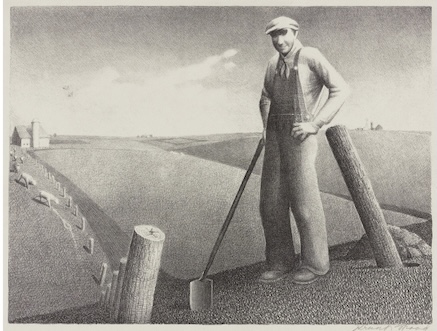
Grant Wood, In the Spring, 1939, lithograph. Photo: courtesy of the Hood Museum of Art
Dartmouth’s Hood Museum of Art opens Division of Labor: Work in the United States on July 25. Selected from the Hood’s own collections, the show explores how artists drew on deep American traditions and contemporary political currents in depicting and interpreting work and its modern transitions: from farm work and fishing to factory labor and manufacturing, and finally to office work in the 20th and 21st centuries. In this era of labor-killing artificial intelligence, the show has an especially strong resonance.
More than 100 images in Sightlines: British Landscape Photographs, 1849 to Now, opening at the Yale Center for British Art on July 23, trace the considerable distance from English experiments in the earliest days of a new medium to the latest creations of British landscape photographers. English artists had been part of the radical rethinking of landscape painting since the late 18th century. After its invention in the late 1830s, the constant technical innovations of photography only expanded the possibilities.
The exhibition’s organizers suggest three ways to look at photography’s complex social role as illustrated in this show: “as a tool to build knowledge about the landscape; as an artistic medium to inspire, awe, and communicate; and, increasingly, as a vehicle to critically examine social and environmental conditions.”
The works on view range from the pioneering botanical studies of William Henry Fox Talbot and Bessie Rayner Parkes, to the lyrical and majestic views of nature of the 19th and 20th centuries, to scenes of industrial transformation by Bruce Davidson and Rachel Whiteread, revealing British landscape photography “as a dynamic and continually evolving field of inquiry.”

Unknown Nigerian maker (Abeokuta or Ibadan), Adire cloth (detail), mid-1900s. Photo: courtesy of RISD Museum
The small subtropical shrub Indigofera tinctoria, which may originally have been native to India, has been cultivated across cultures for thousands of years for the dye-producing chemicals in its leaves. Traditionally produced by a complex process of fermentation and oxidation, indigo—the resulting dye—is a deep and distinctive blue used in textiles. It also has myriad symbolic, cultural, and magical meanings, including associations with the night sky, protection from negative energies, healing, extraordinary skill, transformation, personal growth, and the enhancement of psychic abilities.
The RISD Museum’s Cloth of the Earth: Indigo, Cape Verde, and West African Knowledge, opening August 1, brings together indigo-dyed textiles and clothing from the museum’s collection with selections from the collection of Maria Tavares, a native of the Cape Verde Islands off the western coast of Africa. Centerpiece of the exhibition is a complex, handwoven Cape Verdean pan di terra (“cloth of the earth”), which, exhibition organizers say, “reveals indigo as knowledge passed down through technical skill, cosmological belief, and enduring histories of resilience and continuity.”
Alma Thomas (1891–1978) began her full-time career as an artist in her 60s after retiring from many years of teaching art in Washington, D.C. She later became the first African American woman to have a solo exhibition at New York’s Whitney Museum of American Art. Starting on July 24, at the Smith Museum of Art, Thomas’s work will be the subject of Composing in Color: Paintings by Alma Thomas from the Smithsonian Museum of American Art, which features brilliantly colored, mostly abstract paintings from the world’s largest public collection of her work, together with two additional paintings, one from the museum’s collection and one from a private collector.
With deep roots in the Washington Color School, which also produced abstract artists such as Morris Louis and Kenneth Noland, among many others, Thomas made mosaic-like compositions that “through color,” she said, “…sought to concentrate on beauty and happiness, rather than on man’s inhumanity to man.”
Nearly 80 artworks—including sculpture, painting, collage, textile, fashion, jewelry, and architectural design—come together in the New Britain Museum of American Art’s exhibition Architects of Being: Louise Nevelson and Esphyr Slobodkina, opening July 30. The two 20th-century masters, Nevelson (1899–1988) and Slobodkina (1908–2002), were both Jewish immigrants from different parts of the old Russian Empire. Both moved to New York City in the 1920s to pursue careers as pioneering abstract artists, where they braved formidable odds in a male-dominated American art world. They are shown here “in dialogue” for the first time.
Nevelson became known for her monumental wood assemblages, installations, and fashion and jewelry, most inspired by architectural sources. She declared herself to be an “Architect of Shadow,” and her assertion that “character is the architecture of the being” inspired the title of the show. Slobodkina, experienced in mechanical drawing but, like Nevelson, not formally trained as an architect, designed two modern houses and collaborated on interior environments. Her “sustained engagement with mechanics and engineering” is made clear through her sculptures, paintings, and designs, which were also influenced by European modernism, including, somewhat ironically, Russian Constructivism.
“Through their multimedia practices,” the museum says, “Nevelson and Slobodkina challenged conventional definitions of art, abstraction, and architecture in mid-century America.”
As part of its celebration of Salem’s quadricentennial, the Peabody Essex Museum, the premier repository of Salem history, is presenting Salem Gets Dressed starting August 1. With more than 40 costumes and ensembles, including uniforms, wedding dresses, and everyday wear dating from the early 18th century to the present, the show is one of the most extensive fashion exhibitions in recent memory devoted purely to New England tastes. It explores how local figures and families dressed over generations, with special attention to Salem’s history as a wealthy trading port, a retail hub, the home of immigrant communities, and a modern tourist destination. “From commemorative costumes to contemporary designs inspired by Salem’s past,” the museum says, “these works show how each generation interprets and reshapes the stories it inherits, inviting us to consider how we express ourselves and what we choose to carry forward.”
In the parlance of technologists and gamers, a “dead pixel” is a failed pixel in a computer display that has gone permanently dark, leaving behind a tiny black dot and potentially disrupting any image displayed on the screen. Pap Souleye Fall, a Senegalese American artist born in Washington, D.C., who is both a fine artist and comic-book illustrator, imagines dead pixels as minuscule portals into “hidden realms of autonomy” and uses them “as a way of exploring the dynamics of visibility and invisibility that shape contemporary life.”
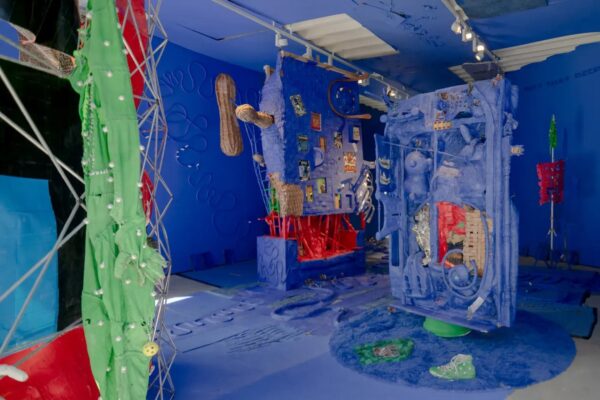
Installation view, Pap Souleye Fall, ITAINTTHATDEEP, 2023. Courtesy of the artist, Gratin, and Garth Greenan Gallery, New York. Photo: Andrés Altamirano
In the latest installment of MIT’s List Visual Arts Center’s long-running List Projects series, List Projects 35: Pap Souleye Fall, opening July 30, the artist extends a DARK PIXEL story line, developed through installation, performance, drawing, sculpture, and video, with a protagonist named DARK PIXEL and a villain called THE DATA COLLECTOR.
The List installation is elaborately constructed from blocks of quilted textiles, electronic waste sourced from MIT’s campus, papier-mâché sculpture, and myriad other materials. Fall’s creation is intended to encompass complex layers of illusion, meaning, and symbolism, including a system of quilt patterns used as codes on the Underground Railroad. The piece “exemplifies both the power and the stakes of being able to move through the world unseen.”
The first institutional solo exhibition of the artist Eve Biddle, who divides her time between New York City and Wassaic, New York, Eve Biddle: Wonderlands opens at the Portland Museum of Art on July 31. Biddle, a co-founder of the contemporary arts institution the Wassaic Project, presents screen-printed images based on photographs of landscapes and natural objects—a rock, a shell, kelp, or a branch—altered and layered in ways that are intended to reshape the landscape genre. She invites visitors, the museum says, “to consider how memory, perception, and presence transform the natural world.”
Organized by School of the Museum of Fine Arts faculty and Tufts University Art Gallery curators, SMFA at 150: Looking Back aims “to create an authentic portrait of a properly messy and wonderfully creative institution” using archives, first-person narratives, and the collective memories of alumni artists and curators. Opened in 1876 in the basement of the original Museum of Fine Arts building in Copley Square, the “museum school,” as it is often informally known (now officially the SMFA at Tufts), grew into one of the nation’s most important institutions for training fine artists, with decade after decade of distinguished faculty members and leading artist alumni, as it responded to the triumphs and turbulence of American history as it was being made. The exhibition opens at the SMFA at 230 The Fenway, Boston, on July 28. The festive opening reception on September 17 is, alas, not open to the public.
— Peter Walsh
Jazz
Allan Chase’s Jazz Impressions of Brazil
July 19 at 6 p.m.
Lilypad, Cambridge, Mass.
Since a 2019 visit to São Paulo, Rio de Janeiro, and Salvador (Bahia), the eminent reedman, composer, and educator Allan Chase has assembled an annual Brazilian music concert, expanding the repertoire each year. This year, with pianist Gilson Schachnik, he draws on composers including Hermeto Pascoal, Antonio Carlos Jobim, Ivan Lins, Johnny Alf, Edu Lobo, and Wilson Moreira. Joining Chase (alto and baritone sax) and Schachnik are flutist Yulia Musayelyan, electric bassist Fernando Huergo, and drummer Gen Yoshimura.
Yulia Musayelyan Quartet
July 22 at 7 p.m.
The Mad Monkfish, Cambridge, Mass.
The sublime flutist Yulia Musayelyan leads her quartet in “compositions and arrangements with influences from folkloric styles of Argentina, Russia, Ukraine, and Armenia.” The mixed-metered grooves that the Moscow-born (and Berklee prof) Musayelyan is drawn to serve as metaphor not only for those diverse musical cultures but also for the “strange times” alluded to in the title of her most recent album. The band includes pianist Maxim Lubarsky, bassist Fernando Huergo, and drummer Gen Yoshimura.
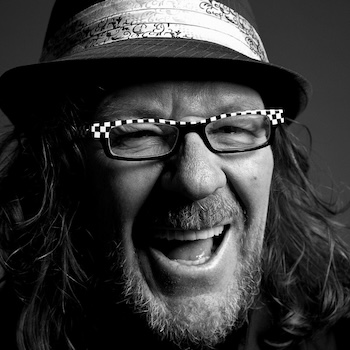
Singer, composer, and bassist Alex Alvear. Photo: courtesy of the artist
Mango Blue
July 23 at 7 p.m.
LoPresti Park, Boston
FREE
The long-running Afro-Latin band Mango Blue — fronted by the Ecuadorian singer, composer, and bassist Alex Alvear — plays this free show as part of Berklee’s free Summer in the City series. Other band members hail from Venezuela, Costa Rica, Puerto Rico, Brazil, Colombia, and Mexico, as well as the US. Alvear knows how to incorporate all of that into the band’s vibrant sound.
Cambridge Jazz Festival
July 25 and 26, 12 p.m. to 6 p.m.
Danehy Park, Cambridge,
FREE
This is the 11th annual iteration of the two-day free festival presented by the Cambridge Jazz Foundation. Saturday’s show will include. Las Nenas Del Swing, directed by Kristalis Sotomayor Matos; singer and composer Kavita Shah; Eguie Castrillo y Su Orchestra; and the phenomenal quartet Triad+, with bassist Oscar Stagnaro, drummer Mark Walker, pianist Maxim Lubarsky, and saxophonist Edmar Colón playing the music of the late, great Brazilian genius Hermeto Pascoal. Sunday will feature powerhouse alto saxophone phenom and composer Tia Fuller; drummer Ron Savage’s quartet, with saxophonist Antonio Hart; drummer Damon Duewhite’s FAZZ (Funky Jazz); and a quartet from the Berklee Global Jazz Institute.
Gonzalo Grau
July 25 at 6 p.m.
Long Live Roxbury Brewery & Taproom, Boston
FREE
The distinguished Venezuelan composer, pianist, and singer Gonzalo Grau brings his band Plural to Long Lite Roxbury’s Brewery & Taproom for a special event. As always, these jazz nights at Long Live Roxbury are free, but Grau, a Caracas native, is working with the Boston Foundation’s Mass. United for Venezuela Fund to raise awareness and provide relief for victims of the two disastrous earthquakes that hit his hometown last month. Grau’s credits include commissions from the Atlanta and Chicago symphonies as well as Gustave Dudamel and the L.A. Philharmonic. And his small Afro-Latin bands are hi-octane. Plural includes flutist Amir Milsteein, bassist Alex Alvear (see July 23), percussionist Ernesto Diaz, and drummer David Rivera.
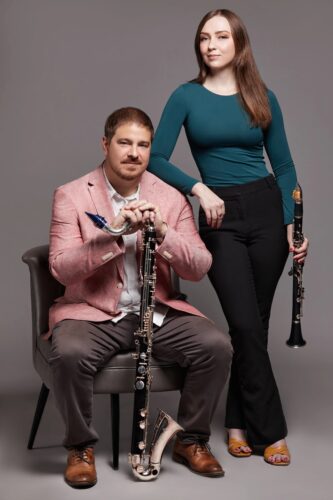
Todd Marcus and Virginia MacDonald. Photo: courtesy of the artist
Todd Brunel’s Swing Conspiracy
July 26 at 5 p.m.
Eustis Estate, Milton, Mass.
Clarinetist and saxophonist Todd Brunel moves easily between classical and jazz, traditional and avant-garde. He comes to the Eustis Estate for this Mandorla Music concert with his Swing Conspiracy, “music rooted in the roaring 1920s and swinging 1930s.” He’s joined by violinist David Eure, guitarist Mark Endresen, banjo player Tev Stevig, bassist Chris Rathbun, and drummer Renato Malvasi. “Picnics, blankets, chairs, and dance shoes encouraged!”
Todd Marcus-Virginia MacDonald Quintet
July 30 at 7 p.m.
Lilypad, Cambridge, Mass.
One of the most satisfying jazz releases of recent months has been Toronto clarinetist Virginia MacDonald’s In Search of. . . . The small-ensemble album (featuring pianist Geoff Keezer) includes fresh takes on standards (“Stardust”) and not-so standards (Charles Mingus’s “Duke Ellington’s Sound of Love”), probing originals, and MacDonald’s buoyant playing. The Juno-winning artist comes to the Lilypad in a quintet she regularly fronts with fellow clarinetist Todd Marcus (it seems to be a week for clarinetists, and for clarinetists named Toddy; see July 26). The band is rounded out by pianist Xavier Davis, bassist Blake Meister, and drummer Eric Kennedy.
Sullivan Fortner
August 1 at 7:30 p.m.
Shalin Liu Performance Center, Rockport, Mass.
The pianist and composer Sullivan Fortner had been known as a frequent, brilliant accompanist for singer Cécile McLorin Salvant, but his growing solo career was capped with a Best Instrumental Jazz Album Grammy for his Southern Nights (2025). He comes to Rockport Music with bassist Tyrone Allen and drummer Kayvon Gordon.
— Jon Garelick
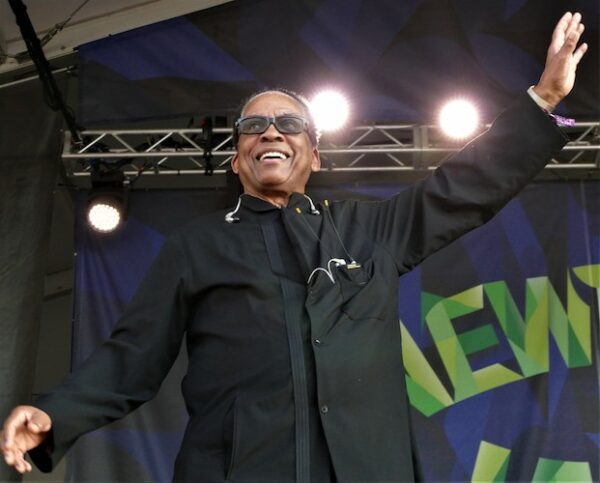
Herbie Hancock at the 2023 Newport Jazz Festival. Photo: Paul Robicheau
Newport Jazz Festival
July 31 to Aug. 2
Fort Adams State Park, Newport, R.I.
This year’s Newport Jazz lineup includes such frequently recurring acts as Herbie Hancock, Kamasi Washington (if with Chief Adjuah for a Coltrane/Miles/Rollins celebration), Robert Glasper, Cory Wong (if with Joshua Redman), and new artistic director Nate Smith. But this edition is likely to be remembered as much for the proggy, costumed phenoms Angine de Poitrine, Red Hot Chili Peppers bassist Flea playing Miles-style trumpet with his Honora Band, and Atomic Habitz, featuring country-rocker Marcus King and the iconoclastic rhythm section of Mononeon and Chris Dave. Add jazz sage Charles Lloyd, blues guitarist Gary Clark, Jr., the popular Lake Street Dive, rapper Little Simz and funk-soul jammers Vulfpeck (also playing Newport Folk, but likely to collaborate with drummer Bernard Purdie here) and it’s no wonder Newport Jazz has joined its Folk counterpart as a quick sellout.
–Paul Robicheau
Classical Music
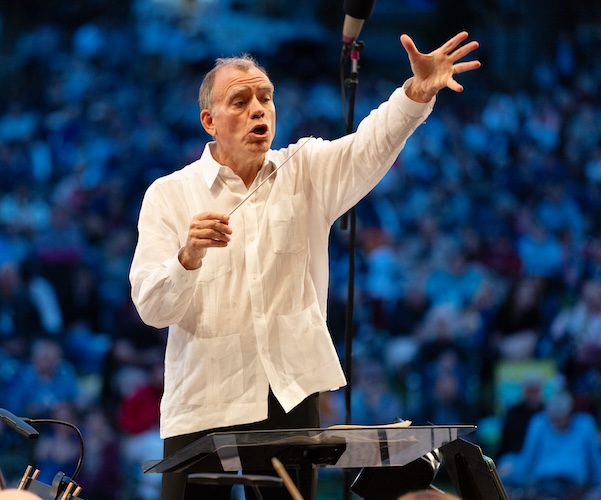
Christopher Wilkins conducting the Boston Landmarks Orchestra. Photo: Michael Dwyer
Best of Boston
Presented by Boston Landmarks Orchestra
July 22, 7 p.m.
DCR Hatch Memorial Shell, Boston
Christopher Wilkins leads BLO in a program of American music with Boston connections, including works by Dudley Buck and Leonard Bernstein. Marcus Santos and his Grooversity Brazilian drumming ensemble and members of Berklee’s Reverence Gospel Ensemble get in on the action, too.
Nelsons conducts Tchaikovsky
Presented by Boston Symphony Orchestra
July 24, 8 p.m.
Koussevitzky Shed, Lenox
The BSO gets a jump on next January’s Tchaikovsky cycle this weekend. Nelsons, a fine Tchaikovsky conductor, kicks off the proceedings with a traversal of the Symphony No. 3. Augustin Hadelich joins him and the orchestra for Mozart’s Violin Concerto No. 5.

Music director Andris Nelsons leading the Boston Symphony Orchestra and pianist Paul Lewis in Beethoven’s Piano Concerto No. 4. Photo: Michael Blanchard.
Lewis plays Mozart
Presented by Boston Symphony Orchestra
July 25, 8 p.m.
Koussevitzky Shed, Lenox
The Tchaikovsky fête continues with the Symphony No. 4 prefaced by Paul Lewis playing Mozart’s Piano Concerto No. 27.
Salonen, Mozart, Tchaikovsky
Presented by Boston Symphony Orchestra
July 26, 2:30 p.m.
Koussevitzky Shed, Lenox
Violinist Himari joins the BSO in a performance of Mozart’s Violin Concerto No. 1. Nelsons conducts Esa-Pekka Salonen’s Gambit and Tchaikovsky’s Symphony No. 5.
Four Seasons Recomposed
Presented by Boston Landmarks Orchestra
July 29 & 30, 7 p.m.
DCR Hatch Memorial Shell, Boston (Wednesday) & Bethel AME Church, Jamaica Plain (Thursday)
Violinist Michael Jorgensen joins BLO and conductor Wilkins for Max Richter’s reworking of Vivaldi’s evergreen set of concertos. Additional selections by Florence Price, William Grant Still, Gabriella Lena Frank, Julia Perry, and Mozart fill out the program.
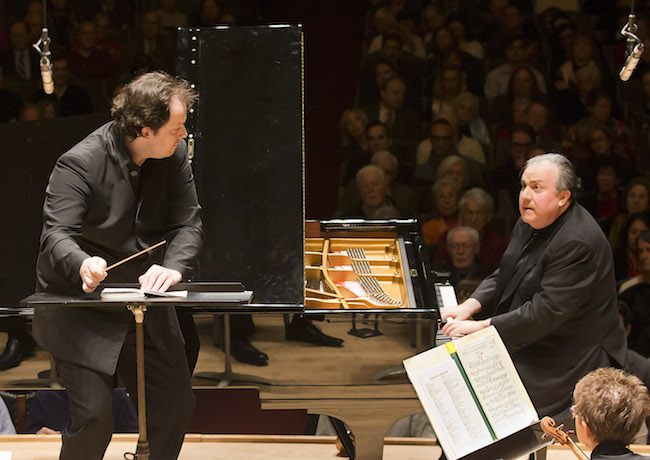
Andris Nelsons leads the Boston Symphony Orchestra in Bartok’s Piano Concerto No. 2 with soloist Yefim Bronfman. Photo: Winslow Townson
Bronfman plays Beethoven
Presented by Boston Symphony Orchestra
July 31, 8 p.m.
Koussevitzky Shed, Lenox
Pianist Yefim Bronfman joins the BSO for Beethoven’s Piano Concerto No. 5. Meantime, Esa-Pekka Salonen leads additional item by Wagner and Sibelius.
— Jonathan Blumhofer
Roots and World Music
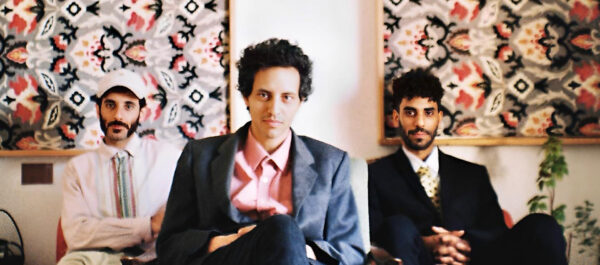
El Khat, led by multi-instrumentalist Eyal El Wahab of Yemen. Photo: courtesy of the artist
El Khat
July 23
Museum of Fine Arts, Boston
Conflicts in the Middle East are often portrayed as “Jew vs. Arab.” Inconveniently, for ill-informed commentators on both sides of the conflict, there are also Arab Jews, such as the members of Israel’s Yemeni community. Yemeni Jews have both a rich culture that dates back centuries, as well as a complicated story that includes both persecution in Muslim countries and mistreatment in Israel. Musician Eyal El Wahab, who grew up in Tel Aviv and is now based in Berlin, explores and often deconstructs Yemeni-Israeli identity with El Khat, a trio that combines traditional sounds with homemade instruments and electronic noises. It’s a complex, layered project that’s also highly danceable. For those who want El Wahab to pick a champion, he has a simple response: “I don’t have a flag, I never found one that actually means anything good.”
The Howard Levy Four
July 23
Club Passim
Every now and then, harmonica virtuoso, pianist, and composer Howard Levy comes this way when Béla Fleck and the Flecktones—whom he co-founded—reunite. Local appearances with his own combo are far too infrequent. In the Flecktones’ mode, his own group is a genre-crossing journey into jazz and music from all over the world
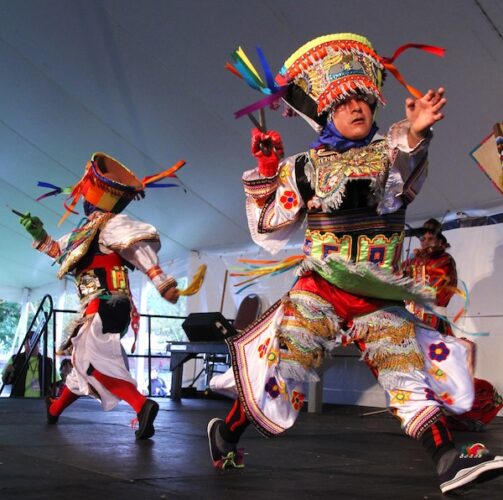
The Chankas of Peru will perform at the Lowell Folk Festival. Photo: courtesy of the artist
Lowell Folk Festival
July 24-26
Many fans of both music and food say that the Lowell Folk Festival is the highlight of their summer calendar, and with good reason. For three days, the festival takes over downtown Lowell with an abundance of traditional music, dance, and food from around the country and around the world. One of this year’s highlights is the Tuvan throat‑singing ensemble Alash, who will perform several sets as well as appear in a workshop with the spiritual a cappella gospel sounds of the Northern Kentucky Brotherhood Singers and the romantic Mexican ballads of Tres en Punto. And, with Cape Verde in the spotlight thanks to its World Cup team, there should be packed crowds for the sets by one of that country’s finest vocalists, Elida Almeida.
Not all of the acts are imports: New England will be nicely represented by Puerto Rican cuatro whiz Fabiola Mendez and her band, polka greats Eastern Sound Orchestra, and two masters of classical Indian music, the santoor/tabla duo of Kunal Gunjal and Amit Kavthekar. Other highlights include Creole zydeco great Geno Delafose and French Rockin’ Boogie, the unique Delta bluesman Super Chikan, and Haitian traditional dancer Peniel Guerrier, a National Heritage Fellow. As for the food – all of it sold by local non‑profits – longtime favorites like the Polish pierogis and the meaty Filipino options will be joined by two newcomers: a Vietnamese stand and a Salvadoran organization that will be selling a wide variety of pupusas.
Nubian Block Party
July 25
The Black Market in Roxbury’s Nubian Square may have closed its doors last month, but its proprietors are still throwing their annual free block party. Much of the lineup is devoted to ’80s and ’90s hip-hop, including such golden era greats as Chubb Rock, Tweet, Brand Nubian, Kool DJ Red Alert, and Special Ed. But the biggest news might be the first Boston appearance — in eons — by Super Cat, the “Wild Apache” who ruled dancehall reggae during its mid-’80s infancy and helped bring the genre to the major label world with his 1992 classic “Don Dada.” As dancehall evolved, Super Cat seemed to drop out of sight, but he’s reemerged in recent years with widely acclaimed stage shows that capture the excitement and lyrical brilliance of early dancehall.
Emancipation Day Reggae Bash
August 1
Middle East Upstairs, Cambridge
August 1 is the day that Jamaicans celebrate the abolishment of slavery, and it starts a week of festivities leading up to Jamaican Independence Day on August 6. To mark the occasion, a selection of the region’s most crucial reggae veterans will be gathering at the Middle East, including foundation artists Errol Strength and Conscious Band, Adul Baki with Root Fiyah Band, and Journalist. Other performers include Jah Rico, NyJah DiOrganizah, King Rhymez, and a special guest.
— Noah Schaffer
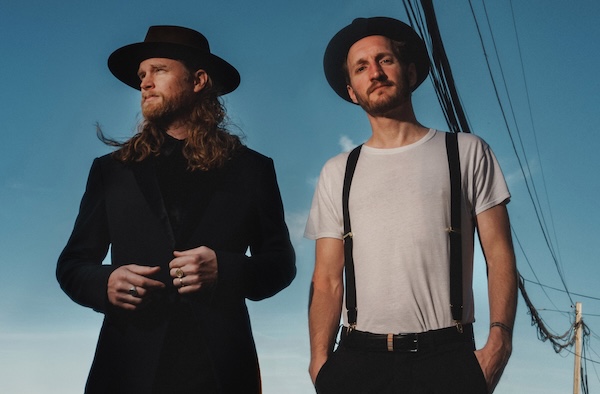
The Lumineers. Photo: Noah Griffel
Newport Folk Festival
July 24-26, at 11 a.m. (main stages)
Fort Adams State Park, Newport, R.I.
Each year Newport Folk lives up to its great legacy with a predictable balancing act that leans toward rock, pop and hip-hop more than traditional folk. This summer’s lineup looms as particularly heavy-hitting, from such veteran draws as the Lumineers, Brandi Carlile, and the Killers’ Brandon Flowers to promising upstarts Lizzy McAlpine, Dove Ellis, Leif Vollebekk, and This is Lorelei. The event’s collaborative nature shows in “With Friends” outings from Nathaniel Rateliff, Hayley Williams, and Deer Tick that foretell sure surprises. For that matter, could any extra friend(s) join Michael Shannon and Jason Narducy’s R.E.M. tribute project? Or might Tom Morello bring along his Boss from recent touring? How will mercurial personalities like Lauren Hill and Cat Power fare at Newport? Answers to those questions — or others unasked — actually make this weekend unpredictable.
–Paul Robicheau
Rock, Indie, and Alternative
Alex Lahey with allie
July 26 (doors at 7)
Middle East Upstairs, Cambridge
Alex Leahy’s third LP, The Answer Is Always Yes, was the first of hers that I’d heard and a revelation. Although I didn’t officially rank my favorite albums of 2023, this was definitely among them. Therefore, I was unsurprised to learn that the suburban Melbourne native had been nominated more than 20 times by various Australian awards organizations and won three. I have been admittedly slow in catching up on her catalog, but this year’s 10th anniversary reissue of her first EP, B-Grade University (Reunion Edition), has afforded me the opportunity to start from the beginning. This version includes alternate versions of four of the five original songs, with Tegan & Sara featuring one and Lahey’s fellow Aussies Slowly Slowly on another. Two additional recordings of two tracks might seem a bit much, but they are very much welcome in the case of songs as good as “Let’s Go Out” and “You Don’t Think You Like People Like Me”.
Tori Amos with Bartees Strange
July 31 (show at 7:30)
Leader Bank Pavilion, Boston
Of all the massive female talents to emerge in the 1990s, Tori Amos was among the most unique. Her first three releases – 1992’s Little Earthquakes, 1994’s Under the Pink, and 1996’s Boys for Pele (which was given the 33-1/3 treatment by Bloomsbury Publishing) comprise a hat trick of popular and critically lauded classics of the decade. Thirty years and 14 albums after the last of these three, Amos is back with In Times of Dragons, a generous 75-minute collection that Amos described on Instagram as “a story that parables the current dangerous times we are in – where democracy itself is on the line.” She then proceeds to explain that the protagonist is “fleeing from the character that is [her] sadistic billionaire Lizard Demon husband….” Three-and-a-half decades into her recording career, Amos’s ambition and imagination have clearly not eroded on iota.
Dan Deacon with Peretsky
August 2 (doors at 7 / show at 8)
The Sinclair, Cambridge
Although he has released five studio albums, much of electronic musician Dan Deacon’s output has been in the form movie, television, and documentary soundtracks. The most recent of these is for the Netflix movie Little Brother, the second consecutive one that he has composed for the streaming service, following 2022’s Hustle. On the challenge of piecing together Little Brother’s score, Deacon explained, “Thematically, the score has to keep us on board with John Cena’s Rudd during his Kafkaesque nightmare and meet the spontaneity and chaos of Eric André’s Marcus, all while keeping us within the emotional through-lines.” This serves as quite a plug for both the soundtrack and the film!.
— Blake Maddux
Author Events
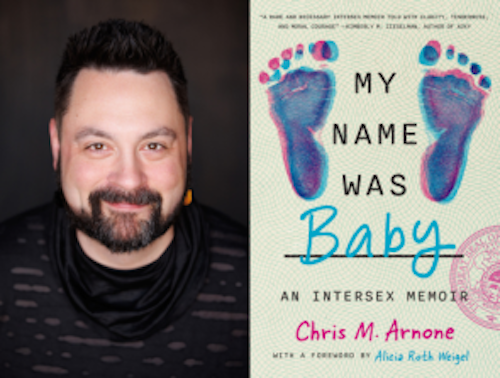
Chris Arnone with Kimberly Zieselman at Brookline Booksmith
My Name Was Baby
July 20 from 7- 8 p.m.
Free
“In this fresh and affirming memoir, Chris’s struggles with anxiety, confusion, and a painful journey toward self-acceptance will be familiar to LGBTQIA+ people everywhere. But he also offers a perspective that is largely untold: that of an intersex man, existing in the toxic masculine culture of the heartland; parents who were open and accepting of his differences; and doctors who (mostly) did no harm.
It is a deep and wide exploration of religion and politics, gender and sexuality, frat parties, magic and burlesque shows. Arnone boldly shows how the lives of intersex folks can be so different and yet so familiar to everyone, helping us all take one step closer to understanding and acceptance.”
John A. Jenkins at Harvard Book Store
Summer of ’71: Five Months That Changed America
July 21 at 7 p.m.
Free
“More than a half-century later, it’s difficult to overstate the importance of events that defined the American experience during that fateful five-month period spanning May to September 1971. On May Day, President Nixon orchestrates a massive police-military response to disrupt the biggest anti-war demonstration in history. Two days later, the Supreme Court announces that it will take up Roe v. Wade. In the weeks and months that follow, friction escalates between the police and the Black Panthers, Congress debates universal healthcare, Attica prisoners riot, and the New York Times publishes the Pentagon Papers—a turning point that ultimately dooms Nixon’s presidency and his legacy.
Summer of ’71 brings it all to the page through first-person accounts that are only now becoming available: the papers, diaries, and oral histories of key players. Award‑winning journalist and author John A. Jenkins witnessed many of the events himself, and draws on a multitude of sources, including Nixon’s White House tapes, to tell the story of that time as no one else could. Here is both a fascinating, brilliantly researched read in its own right, and a critical lens through which to view today’s political discord.”
Jason Dove Mark with Julia Sklar at Brookline Booksmith
The Earth Said Remember Me
July 23 at 7 p.m.
Free
“As the climate emergency worsens and biodiversity shrinks, we humans get used to it—we adapt, we normalize, we forget. Scientists call this “shifting baseline syndrome” and warn that it’s why we are increasingly sleepwalking toward disaster. In this positive and inspiring manifesto, the environmental activist and longtime editor-in-chief of Sierra magazine Jason Dove Mark offers an antidote, focusing on four simple but powerful rules that everyone can use to resist environmental amnesia: Go outside. Bear witness. Make a record. Pass it on.
Mark makes the case for easy, everyday practices that can help us “remember the Earth” and support environmental conservation, restoration, and rewilding. And he shares moving examples of citizen scientists, birdwatchers, mountain climbers, and fishermen across the country who are putting them into practice. The Earth Said Remember Me is a hopeful, achievable prescription for protecting the planet, one citizen at a time.”
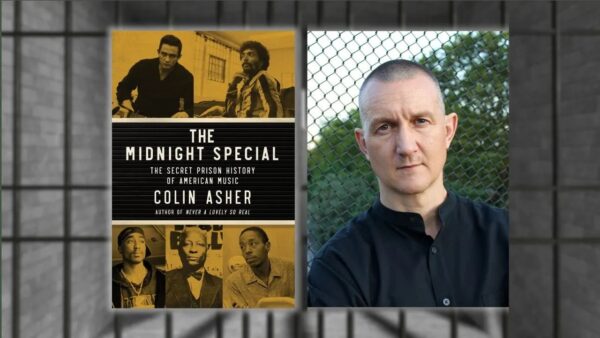
Book cover courtesy of W. W. Norton. Portrait by credit: Nora Carroll
Colin Asher in conversation with Makis Antzoulatos at Porter Square Books
The Midnight Special
July 24 at 7 p.m.
Free
“In American popular music, we often glorify rebellious artists and “outlaws.” But in The Midnight Special, Colin Asher tells a deeper story about the criminal justice system’s impact on our musicians, explored through compelling portraits of five artists whose careers span the twentieth century.
With keen musical analysis and sociological insight, The Midnight Special examines key themes in culture and criminal justice, from the movement for prison reform that allowed soul musician Ike White to stage thrilling concerts while locked up and record his album Changin’ Times (1977), to the crushing cultural weight of mass incarceration a generation later. Closing with Tupac Shakur’s Me Against the World (1995) and stories of music in prisons today, The Midnight Special recounts how prisons occasionally incubate talent but more often shorten careers and distort the public’s perception of musicians and their value to society.”
Robyn Hitchcock in conversation with Brett Milano — Porter Square Books
Stranded in the Future
July 27 at 7 p.m.
GrubStreet Center for Creative Writing, 50 Liberty Drive: Suite 500, Boston, MA 02210
Free
“Incredibly enough, when decades ago I first swooned for the Soft Boys and their shambolic leader, I said to myself and anyone who’d listen, ‘This is the sole psychedelic musician I can imagine writing not one, but actually two witty, self-effacing, phantasmagorical autofictional memoirs in quick succession as he rounds into late middle age.’
Even more incredibly, I have been completely vindicated in this left-field speculation, and we are all the better for it, as Stranded in the Future has capitalized on the opportunities opened by 1967’s close focus on that single year of boyish self-invention and vaulted us into the next act, in which mannish boy becomes boyish man. Now our correspondent only has to repeat this astonishing trick ten more times to complete his imperishable twelve-volume epic A Dance to the Music of Hitchcock.”
— Jonathan Lethem, author of Brooklyn Crime Novel

Elizabeth Stordeur Pryor at Harvard Book Store
Something We Said: Richard Pryor, A Notorious Word, and Me
July 28 from 7-8 p.m.
Free
“When a white student quoted her father and blurted out the N-word in the middle of a class she was teaching, Professor Pryor’s worlds collided. In that moment, she was forced to confront the history of the notorious slur in the United States, and her complicated relationship with her father Richard Pryor, who made the word a trademark of his comedy in the 1970s.
As she dives into her research, her own memories of the N-word come flooding back in unprocessed memories that she hadn’t thought about for decades. In reckoning with those memories, Elizabeth goes on a more public journey of discovery of the messy and sometimes surprising legacies of racism in the United States.”
WBUR CitySpace: Maggie Haberman – Brookline Booksmith
July 29 at 6:30 p.m.
Tickets are $7.13 for livestream
“Are we witnessing the most consequential presidency in history? It’s a question that looms large as the country heads into a summer celebrating 250 years since its founding. Maggie Haberman and Jonathan Swan, White House reporters for the New York Times, explore that question in their new book, Regime Change: Inside the Imperial Presidency of Donald Trump.
The two have conducted hundreds of interviews taking them inside the oval office to reveal an unconstrained Donald Trump making unprecedented use of executive authority on everything from the economy to immigration.” The event is sold out, but livestream tickets are available.
Angela Pelster in conversation with Shuchi Saraswat at Porter Square Books
The Evolution of Fire
July 30 at 7 p.m.
Cambridge Edition, 1815 Massachusetts Avenue, Cambridge
Free
“Crisis is an agent of evolution, and Angela Pelster knows what it means to evolve. As a child, she burned grass to keep weeds at bay and watched tadpoles transform. She basked in the warmth of her father’s love but was burned by his rage, and she witnessed a sudden, unnamable change occur in her older sister after an encounter with a stranger in a white van. In adulthood, she survived the explosion of her marriage, the destruction of her burning home, and a year spent as the single mother of a toddler without a home of their own. And like us all, she has weathered the upheaval of our current atmosphere–political instability, climate change, mass extinction.
But in spite of the world’s violence, Pelster manages to remain open to its beauty, deciding not to resist change, but to give herself over to it and let evolution make her into a new animal. She plumbs the depths of ancestral knowledge to uncover the scale of our ancient capacity for adaptation, from humankind’s early harnessing of fire to the grandmothers responsible for our continued existence.”
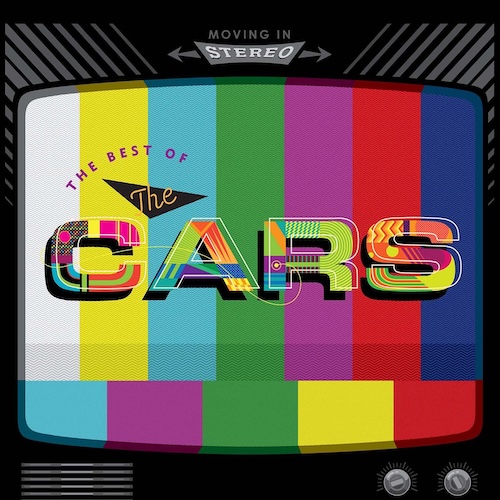
Peter Aaron at Harvard Book Store
Moving in Stereo: Ric Ocasek, the Driving Force of The Cars
August 3 at 7 p.m.
Free
“Moving in Stereo: The Life of Ric Ocasek, the Driving Force of the Cars” serves as an in-depth guide to Ocasek’s life and catalog as a musician. Drawing on interviews, personal reminiscences, and the journalistic coverage he so reliably inspired, it gives a memorable portrait of one of the most essential voices in pop music during the MTV era and beyond.
— Matt Hanson
Tagged: Bill-Marx, Jon Garelick, Jonathan Blumhofer, Matt Hanson, Noah Schaffer, Paul Robicheau, Peg Aloi, peter-Walsh