
Trevor Fairbrother

By Trevor Fairbrother The Queer Lens project made me think about queer culture and camera culture as distinct phenomena that began in the Victorian era: each was a manifestation of modernity. The latest exhibition that Paul Martineau has curated at the J. Paul Getty Museum is titled Queer Lens: A History of Photography and features…

Quibbles aside, this book’s profusion of illustrations is a windfall for artists, art students, and those keen on close looking and visual culture.
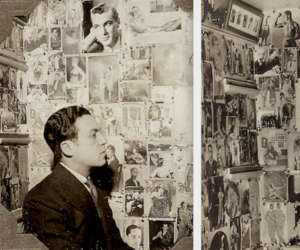
Max Ewing is little known today, but this book celebrates him as a sexually nonconforming bachelor who strove to impress the quirkiest bohemian clique of the Roaring ’20s.

I wish this catalogue spelled out John Singer Sargent’s professional stance as a “juste milieu” painter more methodically. That term refers to those eager to be associated with new stylistic tendencies yet careful not to transgress the establishment’s norms.

In her stimulating book, Eva Díaz presents more than 30 conceptually minded artists who “reconsider how the applications of technologies used in near and outer space, once billed as progressive and exploratory, are today rife with negative effects such as resource depletion and privatization, economic inequality, and racial and gender domination.”

Minor White’s autobiographical undertaking lacks diaristic narrative. There’s too much neurotic navel-gazing too much of the time. Yet it is very appealing as a twisted personal miscellany whose contents range from summaries of sex dreams to snarky letters that were never sent.

This book is an anti-biography that argues Leonardo had little interest in autobiographical self-promotion and claims that the many gaps in the historical record prevent him from cohering as a biographical subject

It is clear to Candy Darling’s biographer that the present moment contains alarming reminders of the political scapegoating generated by the culture wars of the ’90s. She leaves no doubt that her subject’s difficult, complicated life embodies a cautionary tale.
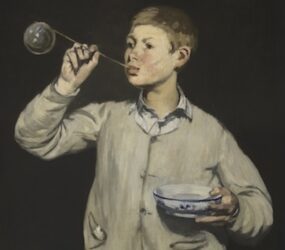
It is a great gift that the Gardner Museum has made such a strong and lively exhibition, presented exclusively in Boston, devoted to Manet.

“Georgia O’Keeffe and Henry Moore” at the MFA builds a case for two artists that many are inclined to think of as “unlikely bedfellows.” Brava!

Recent Comments