
Musician Interview: Mike Patton & The Avett Brothers Take Their Radical Collaboration on the Road
By Robert Duguay
On the recording “AVTT/PTTN,” mutual admiration turns into a bold experiment in form, trust, and sonic space.
When two distinct musical worlds collide, the result can be as unpredictable as it is compelling. Such is the case with AVTT/PTTN, the collaborative album from the ever-elusive Mike Patton and the folk-rock mainstays The Avett Brothers, released last November via Ipecac Recordings and Ramseur Records. Blending Patton’s experimental instincts with the Avetts’ roots-driven sensibility, the recording offers a striking new take on Americana—one that stands among the strongest full-length releases of 2025. Tracks like “Dark Night of My Soul,” “Eternal Love,” and “The Ox Driver’s Song” underscore the album’s range and ambition, qualities the artists are now bringing to the stage on a national tour. Their next stop arrives in Boston on June 10, when they take the stage at the Wang Theatre at the Boch Center.
I spoke with Mike Patton and Seth Avett about the origins of the teaming up, the creative tension and mutual admiration that shaped it, and what audiences can expect from the live show.
 Arts Fuse: When it came to this collaboration, how did it initially come about? Did you meet in person beforehand at a festival or something, or did the catalyst occur in a different way?
Seth Avett: It’s a little bit mysterious to us how it exactly started, though we know there was mutual respect and appreciation. We had made it clear multiple times in interviews that Mike is a great inspiration to us—we’ve been fans of his work for many years. I know that at some point Scott made contact with Mike, and then song ideas started happening pretty quickly after we all got in touch.
Mike Patton: As far as I can remember, that’s more or less how it started. I do remember hearing that you guys had mentioned me in an interview—or somewhere, I’m not sure—but somehow you were familiar with my stuff, which blew my head off. I remembered it and jotted a note in my phone that predated us writing together by about a year. It said, “Rustic project with Avett Brothers?” It was just a note to myself. Of course, we hadn’t met in person at all before any of that started, and yes, Scott was the first person to reach out.
I caught wind of it, and from what my manager/partner told me, it was a really innocent, nice note—it wasn’t careerist at all. It was just complimentary. My manager texted me saying, “Hey, do you know The Avett Brothers?” I told him I was a fan, but I didn’t know them. He told me Scott had written to us, and I said, “Well, write him back!” So he sent a quick note saying, “Wait, is this who I think it is?” and Scott replied, “Yeah.” I was really touched by that.
Avett: Mike’s response—so genuine, honest, and open and vulnerable at the outset—made it easier for songs to start happening quickly. Scott had a batch of songs coming along, and in that moment came that new correspondence with Mike.The idea went through Scott’s head that maybe he could share something with Mike and he was interested. As artists, we can sometimes poison the purity of an idea by overthinking at the outset. We think the other person won’t receive something a certain way, and it makes you too afraid to try something new. But Scott did a good job inviting Mike into that chapter of creativity.
I didn’t really know about it until they were already into it, which was exciting for me. After they had a few songs going, Scott said, “Hey, Mike and I have this thing happening—we’ve got to get you involved.” I thought it was awesome, so it felt very natural and organic. It really speaks to Scott’s ability to embrace what was being offered—a new connection and inspiration with Mike was an integral part of it.
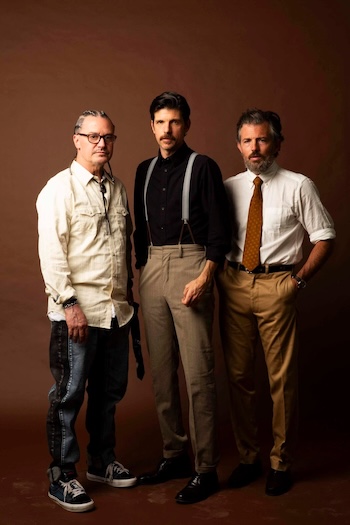
Mike Patton & The Avett Brothers. Photo: Crackerfarm
Arts Fuse: Mike, you have shown a very experimental and fluid approach to music through your work with bands and projects such as Faith No More, Mr. Bungle, Tomahawk, Fantômas, Peeping Tom, and many others. With this record, what were you able to tap into artistically that you hadn’t done before?
Patton: I approached it the way I approach most things—by asking what serves the music and what it needs. It tells me; I don’t have to come in with a preconceived notion, a concept, or something I need to get off my chest. It was a bit like jumping into a cold lake, which is exciting, because this music had so much space, and I had to fight my natural instincts to fill it. Open spaces scare me—the desert scares me, the open sky kind of scares me. I need density, and I hear music the same way. Unless it’s tense and there’s a lot going on, I feel vulnerable or naked.
In many of my projects, my role has been the head of the spear. I’ve always struggled with that. But these guys made it so easy. They’ve got a fully established, amazing band that’s already cookin’. I am trying to integrate and not be a third wheel. Specifically, the challenge was how to fit my voice into the fabric of two brothers who harmonize like angels. How does that happen? I had to take it slow and be very careful and deliberate. Otherwise, it just sounds like another mashup, another collision of styles, or another sonic experiment.
Arts Fuse: Seth, for you and Scott, with Mike’s inclusion in the creative process, what would you say he affected most in terms of shaping your artistic approach?
Avett: I’d say the whole thing was kind of like finding the trust to fall off a cliff. What helped us grow was our ability to take our hands off things—not just to say you trust the people you’re working with, but to show it in action. For me, personally, the last 30 years have been about my running my head against a wall, trying to relinquish control. Also, the techniques of creating, writing, and recording had become segmented in my life: there was the writing phase, then the developing phase, followed by the rehearsal phase, which was capped by the recording phase.
That can all be good depending on the moment, the material, and the people performing it. But this process with Mike compressed all of those phases into one. It became this kaleidoscopic, ever-changing set of shapes and colors, where writing, developing, and recording all happened at once. We each had as much time as we wanted in our own studios to experiment, without fear of messing something up. We could just keep going until we made real discoveries, then share them—“Do you hear what I hear?” If it didn’t work, that was okay; we’d figure it out together. It felt like it was big step for me and for us in terms of trust and taking the pressure off the process.
Within that growth, there was also a freeing of roles. Like Mike said, he’s often in the position of lead singer—and he’s a great one—so it made sense for him to be the head of the spear. But that means others are called on to the role of serving the song, and sometimes that calls for something small—hitting one note on a keyboard or bass, for example. This was another good lesson for me: to play whatever role the song calls for. I see myself as someone who plays guitar or piano and sings, but it’s been helpful to realize that I don’t fully know what or who I am—I’m always changing, and art helps me grow into who I am in the moment.
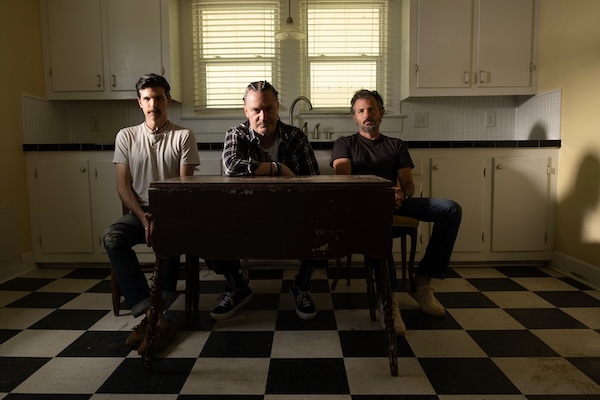
Mike Patton & The Avett Brothers. Photo: Crackerfarm
Arts Fuse: For the upcoming live show at the Wang Theatre, how do you think the performance will present both the AVTT/PTTN album and this invigorating collaboration?
Patton: I’ve been thinking about the difference between sitting down and listening to the record and seeing it performed live. A few friends have told me the record hits them one way, but live it hits in multiple ways. On stage, we’re interacting with the audience from different angles, and it feels more personal and inviting. You hear material from the album, but there are also Avett Brothers songs that I add a little spice to.
Likewise, there are things from my catalog that the Avett Brothers bring an incredible new dimension to—it becomes a completely different meal, to use that analogy. Some of the arrangements they’ve made of my music blew my head off. It’s fascinating to hear how they interpret songs I’ve written or been part of. There’s something magical about hearing this music through someone else’s ears—sometimes it’s even better. There are also some great covers. So, while it may sound like a cliché, it does feel like a kind of variety show—it’s all over the place.
Avett: In a beautiful way, we can’t answer your question too specifically. We might make a discovery during soundcheck that we decide to use that very night. Even songs that feel old suddenly feel brand new. It’s like finding new rooms in old buildings.
Rob Duguay is an arts & entertainment journalist based in Providence who is originally from Shelton, CT. Outside of The Arts Fuse, he has also written for DigBoston, Aquarian Weekly, Providence Journal, Newport Daily News, Worcester Magazine, New Noise Magazine, Manchester Ink Link, and numerous other publications. While covering mostly music, he has also written about film, TV, comedy, theater, visual art, food, drink, sports, and cannabis.
Thanks