
Music
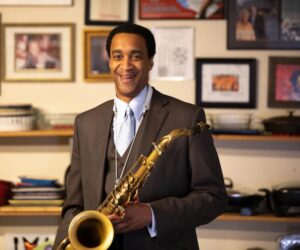
Javon Jackson’s homage to Bob Dylan is well thought out and beautifully rendered.

The jam-rock vibes and gnarly blues licks that Scofield showcased in many of his projects over the years weren’t evident in Saturday’s laid-back final set of his trio’s two-night stand.
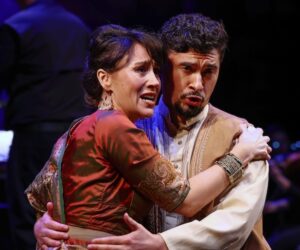
By Aaron Keebaugh The Last Savage delivered good tunes, a delightfully twisted story, and all-around cheer. As a librettist, Gian Carlo Menotti held a critical mirror up to society, often probing the psychological fault lines of his operatic targets. Yet, though he would often question what he saw around him, his works, no matter how…
Three recent high-end LP reissues that have only become more valuable over time.
“Future Soul” is an exercise in creating maximum accessibility without reducing the band’s extraordinary musicianship.
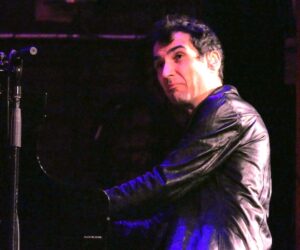
An evening where music steeped in Armenian culture was too often outweighed by the acrobatic complexities of prog rock and jazz fusion.
“Listening to Prestige” can be read as a kind of post-literate anti-Spotify. And, lo and behold, it’s true jazz history.
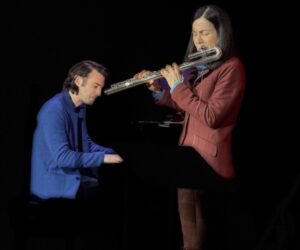
Reviews of live performances by bands led by flutist and composer Jamie Baum and saxophonist Miguel Zenón.
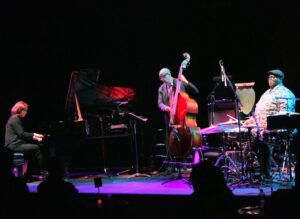
Kris Davis appeared with her current trio of acoustic bassist Robert Hurst and drummer Johnathan Blake, a simpatico unit that clearly responds to both the pianist’s genre-pushing forms and spontaneous sense of adventure.
Arts Commentary: The Nelsons Case
Ultimately—and regardless of one’s take on Andris Nelsons as an artist—it’s hard to see how the institution’s long-term interests are served by last week’s developments.
Read More about Arts Commentary: The Nelsons Case