
CD Review: Michael Kiwanuka’s “Fudge” — Songs of Despair, Notes of Hope
By Jason M. Rubin
Recorded prior to a debilitating stroke and released a year afterward, Michael Kiwanuka’s album offers beautiful songs of pain, loneliness, heartbreak, and despair.
 David Bowie’s final studio album, 2016’s Blackstar, is one that I own but never play. It was recorded while he was being treated—unsuccessfully, suffice to say—for liver cancer and was released just two days prior to his death. The album reeks of death. To listen to it is to feel scared. I suppose it’s a good album for Halloween, but I can’t bring myself to play it.
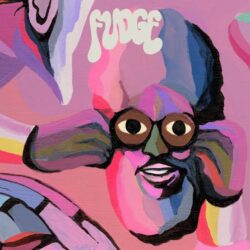
Michael Kiwanuka’s new album, Fudge, released on October 23 but recorded more than a year earlier, also reeks—but of premonition—and the song lyrics tell of pain, loneliness, heartbreak, and despair. What Kiwanuka didn’t know at the time this album was written and recorded was that he had high blood pressure; left untreated, it led to a massive hemorrhagic stroke so debilitating that, more than a year later, he still has been unable to return home. Knowing this, listeners cannot help but have Kiwanuka’s exploding brain in their minds.
And yet the net result is not scary so much as redemptive. These songs are by a singer not being chased by death but rather chasing a new lease on life—only to run into serious illness.
I attempted to get an interview with him but was unsuccessful. To date, only The Guardian has been able to speak with him. The resulting article by Jason Okundaye answered many questions that had perplexed his fans when it was announced last summer that the talented 38-year-old singer and songwriter had to cancel shows in Europe and North America due to illness. No further details were given.
At the time, he was touring in support of his fourth album, Small Changes, released in 2024. Unbeknownst to his fans, he had another album in the can that he planned to release in the fall of 2025: Fudge. Also unknown was that he’d had a stroke, for which “he underwent emergency surgery and was then in intensive care for months to support his breathing,” according to Okundaye’s article. He went from intensive care to a regular hospital ward, followed by a stay at a rehabilitation center that apparently continues to this day.
Okundaye reported that Kiwanuka’s speech is “slow and fragmented.” Strokes tend to affect the left side of the body, so he likely is unable to play an instrument and may have difficulty walking. All of this suggests that he may never sing, perform, or tour again. None of this, however, is—as it was in Bowie’s case—death. That surely must offer a grace note of hope for Kiwanuka and his fans.
The Guardian article reveals that Kiwanuka began working on Fudge while still making Small Changes. There was a difference in the two creative paths, however. Small Changes, like his previous two albums—Love & Hate (2016) and Kiwanuka (2019)—was produced by the team of Danger Mouse and Inflo. While the results have always been excellent (Kiwanuka is very popular in the UK, and his releases are award winners over there; in the US, he might be best known for “Cold Little Heart” from Love & Hate, which was used as the theme music for the TV series Big Little Lies), he wanted to strip away the sheen and put out a set of more rough-edged, self-produced recordings.
In a DIY-built, one-room studio, Kiwanuka brought together a small group of confederates (mostly singers and musicians who had been part of his touring band) to improvise, take chances, and bare themselves musically, whatever the result turned out to be. One of the results is a certain gauziness to the sound, which makes it seem otherworldly, though it’s clear that the album is a roadmap to the center of Kiwanuka’s soul. He told Okundaye that the seven-minute “Love in My Heart” (a consensus highlight of the hour-long album) came together in one inspired night. “You can only get these special moments when you’ve got a relationship with musicians you’ve played together with so much,” he said.
The gradually growing intensity of “Love in My Heart” and its gentle resolution make it a highlight not only of Fudge but of its composer’s entire oeuvre.
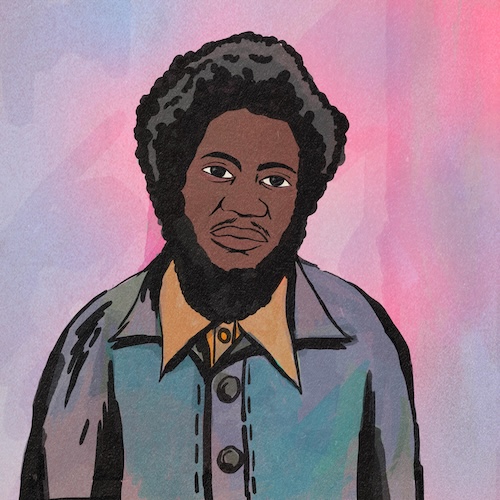
Michael Kiwanuka. Photo: Stevie Gee
The album opens, somewhat eerily, with an excerpt from an interview with Chick Corea, the brilliant jazz composer and keyboardist from Chelsea, Massachusetts, who died in 2021. He says, in part, “[W]hen…you’re creating, you have to learn to be certain about what you like, not what you think sounds good to someone else. First thing is, you have to learn your own heart and your own mind about sound. So whatever you think is beautiful, that’s what’s beautiful, see, and you have to pursue that.” That benediction leads into the first track, “Summer Clothes,” which responds to Corea’s urging: “My own road/Where it takes me feels so lonely though/So alone/Could you take me? I feel so alone/But please don’t try and change, try and change/My own mind/Please don’t try and break, try and break/My own pride.”
Supported by his longtime background singers, Emily Holligan and Simone Daley Richards, Kiwanuka sings from the heart, and it’s worth noting that, for a self-produced album, many songs feature string arrangements and a vocal choir (arranged by Richards)—the latter sanctifying the poppy-sounding “Just Another Moment” with two minutes of lovely la-la-las at the end. There are also songs that are more stripped down and even sound like demos, complete with studio chatter and count-ins.
The dirge-like “California” sounds like it might have been inspired by the wildfires of early 2015: “California, rise again/Be my sweet medicine, I need/California to live again/She knows I’m innocent/I need love, love, love/To take me home/I’ve been gone, gone, gone/For way too long.”
In “Stars,” a fairly mellow song that opens and closes with crunchy electric guitar, Kiwanuka seems prescient: “I remember when I played, I used to feel/Now I don’t feel a thing.” The same is true of “Sing,” another highlight: “Miracles/I need miracles/To wash away the pain because/Life is hard to live.”
That this album exists is a miracle. That it may be all we will ever get from Michael Kiwanuka is a tragedy. In the Guardian article, the singer seemed hell-bent on getting better. One way he is trying to recuperate is by singing songs he loves. When asked by Okundaye which songs he enjoys singing, he answered, among others, “Some stuff off [the Beach Boys’] Pet Sounds, like ‘I Just Wasn’t Made for These Times.’ I love the lyrics on that album. Very melancholy, as it reflected how I felt in recovery.”
Also on the market right now is an album by Italian film composer Daniele Luppi called Wilma, which features Kiwanuka’s vocals on four tracks. It is also recommended.
That Kiwanuka may never make another album is not the reason to buy Fudge. It is worth owning on its own merits. If you do buy it, or even hear something off it online or on the radio, send a prayer his way. It’s a small price to pay for a miracle.
Jason M. Rubin has been a professional writer for 40 years. He has written for The Arts Fuse since 2012. His books include SHORTS: A Sizable Collection of Short Fiction (2025); Villainy Ever After (2022), a collection of classic fairy tales told from the villains’ point of view; and Ancient Tales Newly Told (2019), a pairing of two historical romances, one set in 17th-century England and the other in Biblical Jerusalem and Sheba. Jason also teaches journaling workshops. He holds a BA in Journalism from the University of Massachusetts Amherst. Learn more here.
Tagged: British Soul, Contemporary Soul, Danger Mouse, Daniele Luppi, Fudge, Inflo, Jason M. Rubin, Love & Hate, Michael Kiwanuka, Music Reviews, Small Changes, Soul music, album reviews