
Television Review: “Cape Fear” — Restraint Revives the Fear Factor
By Matt Hanson
Apple TV’s reboot leans into slow-burn menace over Scorsese-style excess, with Javier Bardem channeling the original film’s unnerving restraint.
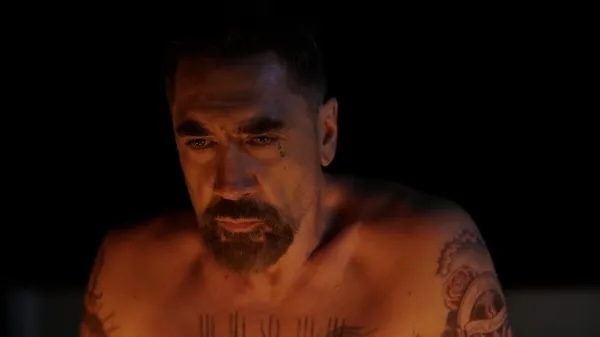
Javier Bardem’s Max Cady in TV’s Cape Fear. Photo: Apple TV
As premises for TV series reboots go, Apple TV has made an interesting choice in remaking Cape Fear, which premiered last Friday with the first two episodes out of ten. The premise is simple but rich: a psychotic convict is released from prison and slowly takes revenge on the family of the lawyer who refused to use the evidence that would have exonerated him. Cinematically, two drastically different versions of the story have already been established, one pulpy and cartoonish and the other subtle and wire-tight with suspense. It’ll be enticing to see which path the remake chooses to take.
Scorsese’s 1991 remake of the 1962 classic Cape Fear is a good example of him going over the top, with Robert DeNiro’s Max Cady sporting some goofy-looking glasses and a shaggy mullet. As he puts the sleazy moves on a teenage Juliette Lewis, this Cady is continually referencing horny writer Henry Miller by way of an almost parodic Southern accent. We’re supposed to be (at least) somewhat charmed by the brute; allegedly, his is wild-man antithesis to the teen character’s boredom with her suburban life. Or something. The film flops because its stylistic overkill is as cartoonish as the massive jailhouse tattoos all over DeNiro’s back.
Not to be a cranky cinephile but, in contrast, Robert Mitchum in the 1962 original really knew how to make Cady’s villainy send shivers down your spine. His Cady is slicker than grease as he slowly works his way into his ex-lawyer’s orbit, making maximum use of his sly eyes and deliberate manner. This movie is a great example of how the repression of the early ’60s makes this suspense drama way scarier. We infer the vile things that Cady did (and is capable of doing) through Mitchum’s off-kilter innuendo, the nuance of his soft, cruel purr. He is a cat playing with a wounded mouse — which makes the character so much more menacing.
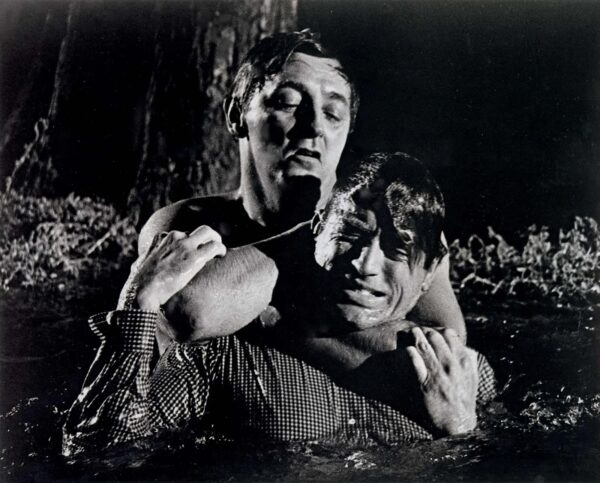
Robert Mitchum and Gregory Peck in 1962’s Cape Fear, directed by J. Lee Thompson. Photo: Britiannica
Two episodes in, it looks as if the new Cape Fear has been wise enough to take the strategy of the ’60s version to heart. Hopefully, having the likes of Steven Spielberg and Martin Scorsese as executive producers will keep the story on track. Javier Bardem’s Max Cady ably evokes the brooding threat that is at the core of the character, and so far he’s not overdoing it. Amy Adams and Patrick Wilson play the roles of successful lawyers with a discernable level of professional self-satisfaction, which heightens the class tensions inherent in the premise of the underclass taking revenge on the privileged.
No spoilers here, but the idea that the case against Cady was rigged serves as an inviting plot point. Why has this guy become a celebrity who has the clout to inspire a fundraising event for a Southern Policy Law Center–like organization? And why is he crashing the party? Granted, Cady has become famous for being wrongfully convicted, but the fact is, he was put away for supposedly committing quite a brutal crime. Wouldn’t that throw enough shade on him that he would still be ostracized from polite society?
Another reason that Cape Fear is effective—arguably takes it out of the thriller category and nudges it into horror—is Cady’s biblical vision of revenge. He’s not just going to ruin his ex-lawyer’s life; he’s going to defile his family as well. Along these lines, the series will need to make the threat to their teenage son and daughter’s security a little more drastic than showing how easily a toe can be detached.
The community’s response to Cady’s threat—especially among the lawyers—opens another line of inquiry that merits closer attention. Part of what made Cady so terrifying in the original film is his precise understanding of how far he can push without crossing the legal threshold. Suspicion alone is not grounds for arrest—particularly for someone who looks like him—then as now. The film’s cold recognition of how easily one can skirt the edges of criminality without consequence feels especially resonant in an era defined by persistent, visible abuses of power.
The series shows clear potential, and with eight episodes ahead, there is ample room to deepen and complicate the plot. The premiere sustains a palpable tension—one that, ideally, will carry through the rest of the season; few recent shows have made something as ordinary as a home security alarm feel so genuinely jolting. It will be worth watching whether the series can build on its early reliance on subtlety and implication to trace the mounting strain between what Cady can get away with and where the limits lie—and, ultimately, who pays the price for testing them.
Matt Hanson is a contributing editor at The Arts Fuse whose work has also appeared in The American Interest, The Baffler, The Guardian, The Millions, The New Yorker, The Smart Set, and elsewhere. A longtime resident of Boston, he now lives in New Orleans.