Musician Interview: Neko Case — “More of a Joy Than a Chore”
By Blake Maddux
Ahead of two Massachusetts shows with Dan Bejar, Neko Case talks about producing Neon Grey Midnight Green, writing her memoir, composing a Thelma and Louise musical, and the toll of streaming on working musicians.
 Possessed of one of the most stunning vocal instruments in recent popular music, Neko Case’s recording career is currently winding up its 30th year.
During those three full decades, Case has distinguished herself as a bandleader (Neko Case and Her Boyfriends), a longtime member of The New Pornographers, a solo artist, and one-third of case/lang/veirs. In the process, she has demonstrated her mastery of folk, alt-country, Americana, indie rock, and power pop.
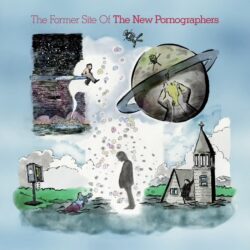
The past 21 months have been an embarrassment of riches for her fans. Grand Central published her memoir — the punishingly candid The Harder I Fight, the More I Love You — in January. September saw the release of her first new album in seven years, Neon Grey Midnight Green. Finally, the aforementioned New Pornographers unveiled The Former Site Of this past March.
And if you’ve had your fill of all of that, she also composed the score for a recently produced musical version of Thelma and Louise.
Case’s fall 2025 tour included an October 23 stop at The Wilbur in Boston. Nearly a full year later, she will be returning to the Boston area with stops at Rockport’s Shalin Liu Performance Center (October 16) and Lexington’s Cary Hall (October 15).
This trek will be a particular treat for fans of The New Pornographers and the critically revered Destroyer. A longtime member of the former who has since departed, and the mastermind of the latter, Dan Bejar (click for my 2018 Arts Fuse interview with him) will be performing his own material in advance of Case’s headlining set. My bet is that they will do a few songs together.
The Northern Kingdom resident spoke to me via Zoom ahead of her forthcoming Massachusetts visits.
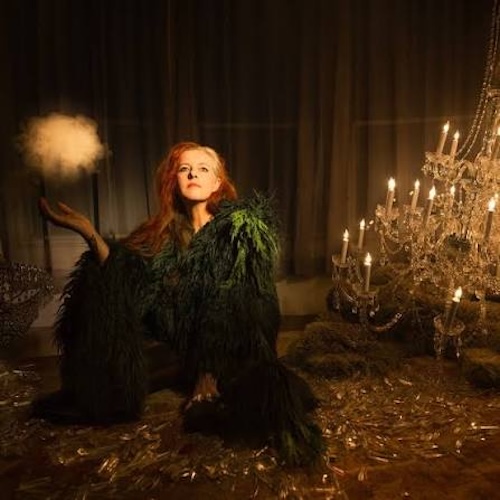
Omni-talened singer Neko Case. Photo: courtesy of the artist
Arts Fuse: It’s pretty cool that you’re touring with Dan Bejar. Did that come about kind of serendipitously, or did you kind of work to make that happen?
Neko Case: Well, I mean, I’ve been in a band with him since 1995, so I have his phone number. So that actually was not too hard.
AF: Have you ever toured in a solo capacity with any other members of The New Pornographers?
Case: Yeah. Carl Newman has been in the touring band. Nora O’Connor plays with me, and she plays with The New Pornographers all the time too. We’re all game.
AF: What do you think is the overlap between your audience and his?
Case: Well, I think both of our audiences like a wide variety of music, and so that’s nice. Then there are New Pornographers fans, obviously. We’re both songwriters who are very much about the lyrics, too, so I think that would be something that appeals to both audiences.
AF: You had a tour last year that included a date, I think, at The Wilbur in Boston. This time around, you’re playing different cities. Do you plan to, like, emphasize different songs, or do you think you’ll stick to the songs that are well-rehearsed?
Case: Well, there are some that you always have to play, you know? People would be really mad if I didn’t play “I Wish I Was the Moon.” But I’m doing some stuff from the case/lang/veirs record and then maybe some stuff from the Thelma and Louise musical. Just depending on how many we can learn before we go out on the road again.
AF: What about from Neon Grey Midnight Green specifically?
Case: There’s a lot of stuff off Neon Grey Midnight Green. I can’t give it away. And I haven’t made a new setlist yet, so I don’t actually know. I’m not trying to be obtuse. I actually don’t know. It will be a surprise even to me.
AF: What were some of the challenges and benefits of self-producing this album?
Case: Well, I’ve been a producer on most of my records, so there weren’t really any challenges other than financial ones, which are always the challenges. And I mixed with Tucker Martine, who I love working with, so it was actually quite fun. It was more of a joy than a chore.
AF: What do you think makes this record better as a result of your having self-produced it?
Case: I like little tiny details. If you’re a person who likes to listen to music like it’s 1978 and you have giant headphones and a really amazing stereo, there are little things in there for you. I love, you know, stereo imaging and, you know, just putting little things in places.
AF: What makes your frequent collaborator Paul Rigby so dependable?
Case: He’s kind of my translator. You know, I don’t have any musical education, whereas he went to school for jazz. And he knows theory and all these other things. I don’t have that language, and he’s really adventurous and likes to break the form, which a lot of people don’t like to do. They don’t like to mix up time signatures. So he’s just a really adventurous companion and maybe the funniest person I know. So we always have a good time working together.
AF: “Tomboy Gold” is a very interesting song. It kind of put me in mind of Laurie Anderson or the more experimental side of Tom Waits. Can you give me the story behind that song?
Case: That song is a shadow of the song “Destination,” which is written from my perspective of people I admire, whereas “Tomboy Gold” is supposed to be written from the perspective of the people being admired, going through their own lives. And that’s why the songs are next to each other on the record.
AF: It has an experimental feel to it. Did something specific inspire that, or did it just come out that way?
Case: It was a walk signal that I heard and recorded on the street. It was a recording, and it just was very sing-songy. And I really liked it, and I was kind of obsessed with it for a while. And so I used that as a basis for how the song started.
AF: How did the Winchester Mansion serve as the basis for one of the other songs?
Case: Well, it’s well known that the widow Sarah Winchester kept building the house, thinking that it was cursed. She kept building it to trap spirits. I don’t know the full fullness of it. It’s just something that keeps going and going and going. And it doesn’t always make sense. I thought that it was a good way to describe my friend’s sound. (She is referring to Dexter Romweber of the Flat Duo Jets, who died in 2024.)
AF: Your memoir and Neon Grey Midnight Green came about around the same time. Were you working on both of them at the same time, or was one finished before the other?
Case: I started the record before I started the book, and I would use one to distract me from the other. I worked on them very separately, but in tandem. Like, they don’t have anything to do with each other, really. There are little details here and there that definitely overlap, but nothing major.
You know, I wouldn’t have written a book about myself if I had my druthers. And that’s not a complaint. I did enjoy writing the book, but I would much prefer writing fiction myself, which is, you know, songwriting for me.
AF: How satisfying is it that your record with k.d. lang and Laura Veirs has been given the deluxe 10th-anniversary edition treatment?
Case: I’m so proud of that record, and I’m so pleased with my time with Laura and k.d. I just loved the whole experience. And we had the funnest tour. And it’s so funny because it seems like five minutes ago to me, but it’s ten years ago now, which is humbling — that time goes by that quickly. But I’m so proud of that record and proud of the work we did with all the incredible musicians who played on it, and with Tucker Martine. I really, I really love that record, and I’m so pleased that they’re re-releasing it.
AF: Does the Vermont environment inspire you as an artist?
Case: Yeah, I mean, it just keeps me sane. Yeah. I need nature and creatures and, you know. I like living in the city, but as far as what grounds me, being in the countryside is much more my speed.
 AF: And was your decision to live there directly or indirectly related to the time you spent there — as discussed in your memoir — when you were younger?
Case: Oh, directly related. I loved it. Yeah. I loved it when I was a kid. And the air smells so clean, and the water’s delicious.
AF: One thing I’m always interested in with musicians: In what ways does streaming positively or negatively impact working musicians?
Case: Well, very negatively in that since streaming really hit right before Covid, nobody got royalty checks anymore. And it was massive. I’m still in financial trouble based on Covid, my house burning down, and streaming happening at the same time. So I have nothing good to say about things like Spotify, which don’t pay proper royalties to musicians.
However, the actual technology of streaming is magnificent. It’s such a cool technology because, you know, so many people can get music wherever they are. And they can get really interesting music because, you know, growing up in the ’70s and ’80s, you had to look for music. And if you lived anywhere remote and there wasn’t a cool record store where you could find independent stuff or interesting things, all you got was Top 40. So the streaming technology is amazing, but the people in charge of it are not.
AF: What is the status of the Thelma and Louise musical?
Case: It just opened in London for a month. I was there for two months, and I’m still addled from working six days a week all day and most of the night. So I’m a little “duh…” So it’s currently open in London at the moment, and hopefully it will come to the United States. Hopefully so.
AF: Was there a good response in London?
Case: Yeah. It’s been packed, and we get standing ovations every night. It’s fantastic; it’s been really moving. And they’re so supportive. It’s such an important story. It’s very American, but it’s also very universal and unfortunately still crucial to be told at this time. It’s a big deal, and people have really showed up to tell it properly.
Blake Maddux is a freelance journalist who regularly contributes to The Arts Fuse, Somerville Times, and Beverly Citizen. He has also written for DigBoston, the ARTery, Lynn Happens, the Providence Journal, The Onion’s A.V. Club, and the Columbus Dispatch. A native Ohioan, he moved to Boston in 2002 and currently lives with his wife and eight-year-old twins — Elliot Samuel and Xander Jackson — in Salem, MA.
Tagged: "Neon Grey Midnight Green", Americana, Blake Maddux, Cary Hall, Dan Bejar, Destroyer, Laura Veirs, Neko Case, Paul Rigby, Shalin Liu Performance Center, The New Pornographers, Thelma and Louise, alt-country, case/lang/veirs, indie rock, k.d. lang, music streaming, musician interviews, songwriting