
Jazz Album Reviews: Two Recordings, Two Homelands, One Expansive Musical Vision
By Brooks Geiken
Claudia Acuña reconnects Chilean roots with American jazz on Ave de Luz, while Jorge Drexler explores love, technology, politics, and dance on Taracá.
 Chilean vocalist/composer/bandleader Claudia Acuña has returned to her roots and recorded what I consider to be her finest disc. For some background, Acuña has spent three decades in New York, releasing seven albums as a leader. In 2022, she recorded Duo, which featured Acuña’s voice coupled with a different jazz musician on each track. (It included only two songs in Spanish.) This summer, Acuña released Ave de Luz, featuring songs in Spanish and utilizing a group of Chilean musicians with impressive jazz chops. The result is a benchmark album that fuses two rich traditions: indigenous music from Chile and American jazz.
This is a notable record: every song matters and merits close scrutiny. Rather than my usual practice of focusing on selected tracks, I will consider the album song by song, from “Chinga La Ka Chinga” to “La Jardinera.
“Chinga La Ka Chinga” opens the album in spirited fashion, its infectious rhythm serving lyrics that demand an end to war and proclaim personal freedom. The Chilean rhythm section—Manu Koch on piano, Carlos Henderson on electric bass, and Yayo Serka on drums—propels the performance with buoyancy and force.
The title track, “Ave de Luz” (“Bird of Light”), stands out for two details: a brief passage in English and Pablo Zárate’s accordion. Acuña reaches deeply into her roots, singing with urgency and affection about a small bird.
“Viento del Sur” (“Wind from the South”), composed with the New York musician Jason Lindner, moves through sharply contrasting tempos and vocal inflections, making it one of the album’s most adventurous pieces. It is followed by “Rezo” (“I Pray”), a deeply personal tribute to Acuña’s homeland. On both tracks, Fredy Torralba’s charango—the small Andean stringed instrument—gives Acuña’s music a distinctive, resonant color.
Drawn from a poem by Nobel laureate Gabriela Mistral, “Piececitos de Niño” (“Little Children’s Feet”) builds an arresting, provocative wall of sound from Indigenous instruments. Fredy Torralba, again central to the album’s sound, plays the trutruca, a long Mapuche trumpet, and the zampoña, an Andean panpipe. Near the song’s close, the Chilean actor Paulina García delivers the poem in a calm recitation, while Acuña’s son, Daniel Kelley-Acuña, adds background vocals—turning the performance into a family affair.
On the ballad “Un Gorro de Lana,” Acuña’s voice and Andrés Pollak’s piano establish a quietly somber atmosphere. The album closes with Violeta Parra’s “La Jardinera” (“The Woman Gardener”). One of Chile’s most consequential singer-songwriters and a defining figure in the country’s folk tradition, Parra supplies a fitting final touchstone. Acuña sings the song with deep feeling, bringing the listener unmistakably into its Chilean emotional landscape.
The thoughtful pairing of musicians and material lifts Ave de Luz well above the ordinary. Mistral’s poem and Parra’s song anchor the recording in Chilean culture, while Acuña’s powerful voice, the vivid presence of Indigenous instruments, a supple jazz sensibility, and consistently discerning arrangements give the album both depth and originality. It is an album that deserves the attention of listeners drawn to exploratory, deeply rooted music.
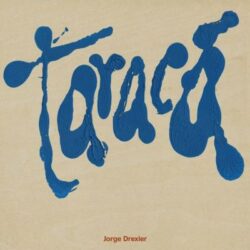
A Grammy Award–winning singer-songwriter, Jorge Drexler released his 14th album, Taracá, earlier this year. Within the Spanish-speaking world, Drexler occupies a singular place: his finely observed lyrics, graceful guitar work, and understated vocal manner have earned him a notably broad audience. To accompany the release, he made 11 videos—one for each song—and enlisted several younger singers as well as Rueda de Candombe, an Afro-Uruguayan percussion ensemble.
The album opens invitingly with “Toco Madera” (“Touch Wood”), whose spare guitar and light percussion give the song an unforced intimacy. Its refrain—“Ante la duda, toco madera” (“When in doubt, I knock on wood”)—offers a modest reassurance for unsettled times.
Love, naturally, is one of Drexler’s recurring subjects. Three songs approach it from different angles: “¿Cómo se ama?” (“How Does One Love?”) poses the enduring question of how to love; “Te llevo tatuada” (“You Are Tattooed on Me”) deals with an indelible bond between lovers; “Amar y ser amado” (“To Love and Be Loved”) is a direct meditation on mutual affection.
“Ante la duda, baila” (“When in Doubt, Dance”) may be the album’s most striking track. Three spoken-word passages precede its refrain, with Drexler reciting historical decrees that ban musical forms accused of inciting dance—and, in the language of the authorities, “lascivious” movements of the hips, waist, and buttocks. He carries that repressive impulse into the present by invoking restrictions on reggaetón in Puerto Rico. The song’s response is at once witty and defiant: when faced with censorship or uncertainty it is time to dance.
“¿Hay alguien A I?” (“Is Anyone There?”) turns to artificial intelligence. Drexler exploits a bilingual pun: ahí, Spanish for “there,” sounds like the English initials “A.I.” The song raises a deceptively simple question about technology and trust: if there is no one truly “there,” what, exactly, should we ask artificial intelligence to do—and how much faith should we place in its answers?
Now based in Spain, Drexler pays tribute to Enrique Morente, among the great modern flamenco singers, in “Cuando Cantaba Morente” (“When Morente Sang”). Flamenco vocalist Ángeles Toledano and guitarist Julio Cobelli lend the performance an appropriate emotional gravity. The Spanish pianist and singer Meritxell Neddermann injects admirable brightness into “Amar y ser amado.”
Uruguayan collaborators supply another essential current. Rueda de Candombe energizes “El Tambor Chico” and “¿Qué será, qué es?” with its percussion; Américo Young blends naturally with Drexler on “Nuestro trabajo/Los puentes” (“Our Work/The Bridges”); and Falta y Resto, the politically engaged Carnaval ensemble, is the forceful chorus in “Las palabras” (“The Words”), their voices sharpening the song’s emphasis on the power, precision, and sensory life of language.
Repeated listens uncover new layers in Taracá. Drexler turns to life’s enduring concerns—love, communication, doubt, technology’s growing reach, and music and dance as collective acts of expression. In his characteristically gentle, exacting voice, he avoids sermonizing; instead, he invites reflection, offering a measure of calm intelligence for unsettled times.
Brooks Geiken is a retired Spanish teacher with a lifelong interest in music, specifically Afro-Cuban, Brazilian, and Black American music. His wife thinks he should write a book titled The White Dude’s Guide to Afro-Cuban and Jazz Music. Brooks lives in the San Francisco Bay Area.