
Jazz Album Review: Clarinetist Harry Skoler’s Cautiously Experimental Sonic Experience
By Allen Michie
Echoes honors jazz tradition while slipping gracefully into a modern, oblique swing.
Echoes – Harry Skoler (Red Brick Hill)
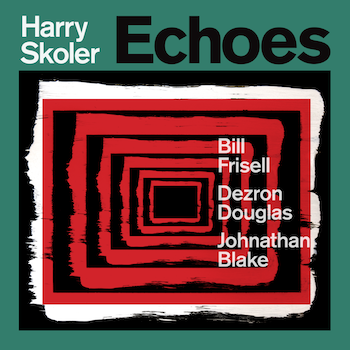 For such a little instrument, the clarinet sure carries a lot of baggage in jazz. It’s hard now to imagine that the clarinet was once, within living memory, as central to popular music as the electric guitar (or, alas, the sequencer) is today. Young girls screamed for Benny Goodman. Artie Shaw married an A-list movie star (who left him only for Frank Sinatra).
Boston’s own Harry Skoler, a professor at the Berklee College of Music, may not have the girls screaming (Or maybe he does? What do I know), and he’s not married to Sydney Sweeney, but he’s a fine player who is a consolidating force in the history of the jazz clarinet. He carries the tradition with him lightly while staying firmly grounded in the present day.
On Echoes, there are tributes to Benny Goodman, Teddy Wilson, Marian McPartland, and Lionel Hampton, so you might expect this to be a trad-jazz album along the lines of Skoler’s excellent Reflections on the Art of Swing: A Tribute to Benny Goodman. But Echoes also has tributes to Rahsaan Roland Kirk, Jimmy Giuffre, James Williams, and Miles Davis. You don’t assemble a state-of-the-art band with Bill Frisell on guitar, Dezron Douglas on bass, and Jonathan Blake on drums — and hire Walter Smith III to produce — if you plan on playing “After You’ve Gone” and “Stardust.”
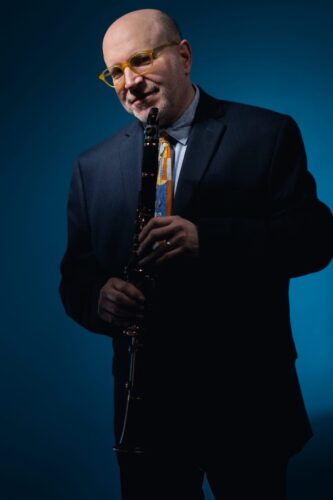
Clarinetist Harry Skoler Photo: courtesy of the artist
Skoler and Smith wrote all of the compositions, and they are clearly on the same page. The melodies are careful, often moody, and offer a rich bed of harmonies precisely articulated by Frisell’s guitar. This isn’t free jazz. No one is screeching, bashing, or pushing past the chord changes. Frisell is on his good behavior, keeping the effects to a minimum while retaining a wide, expressive sonic palette. The music swings obliquely, thanks in large part to Blake’s responsive direction.
“Waiting Patiently (for Benny)” is more Giuffre than Goodman, a minor tune in 6/8 time. It has a short and simple melody, then it’s off to seven minutes of detailed exploration. Skoler’s solo is actually more abstract than Frisell’s. Even more experimental is my favorite track on the album, “Everything’s Cool, Everything’s Cool! (for Rahsaan).” It has a riff-based melody with a sideways-funky backbeat. Skoler plays sounds rather than notes in part of his solo, and Frisell makes tasteful use of old-school backward tape loops, with that weird phrasing effect that makes you think of the Beatles. It’s not overdone, and it adds just enough exotic spice to keep the album from getting too familiar.
“Thank You (for Teddy)” is very slightly reminiscent of “Deep Purple” (which Wilson never recorded, to my knowledge). It’s an example of how the tempos, colors, and approaches can smoothly morph in the course of a performance without the song losing its core identity. “Never Played in Syracuse! (for Miles)” doesn’t particularly strike me as similar to any of Davis’s many styles, but it’s an uplifting piece that allows Frisell to plug in some distortion and solo in something different from the Jim Hall-like linear style he uses elsewhere on the album.
There are many other highlights. While it’s tempting to wish that producer Walter Smith III had brought along his tenor to a few of the sessions, that would probably have disrupted the delicate consistency of this dark-toned, cautiously experimental sonic experience.
Two quick notes about individual tracks featuring two of today’s other top clarinetists.
Drummer Gustavo Cortiñas’s The Drum Also Sings (Desafio Candente) is a multicultural tribute to Max Roach. “Psalm 23” features Angel Bat Dawid on vocals and on clarinet. It’s an intense track. Dawid reads a poetic variation on the famous psalm (“The Lord is my shepherd; I shall not want”), then after a brief clarinet interlude, she begins screaming/singing the text over the chattering of the increasingly intense drums. Your spiritual mileage may vary, but I find it completely at odds with the serenity of the psalm. Once Dawid is fully engaged, she exchanges sections with her own brief clarinet soloing, of a piece in style and substance with her vocals. Dawid is an absolutely fearless musician, but those hoping for something substantial from her on clarinet may be disappointed here.
Bassist Tal Mashiach has released a single with poll-topping clarinetist Anat Cohen, “Titu,” from his forthcoming album Who’s Around? (Anzic). Mashiach is putting down his bass this time to play acoustic guitar. The song is a delight — a bright and bouncing samba with a melody played just a fraction behind the beat to give it momentum. Cohen has a classic woody tone very different from Skoler’s or Dawid’s, reminiscent of Artie Shaw’s. It’s a sound perfect for the more mainstream jazz that Cohen has mastered so well. She flies through her solo with grace and ease. There’s a long unison passage with clarinet, upper-register piano, and acoustic guitar. They sound marvelous together, and it makes me visualize three joyous choreographed dancers heading for a big finish and applause.
Allen Michie works in higher education administration in Austin, Texas. You can find an archive of his reviews and articles at allenmichie.medium.com.
Tagged: "Echoes", Anat Cohen, Angel Bat Dawid, Bill-Frisell, Dezron Douglas, Gustavo Cortiñas, Harry Skoler, Jonathan Blake, Red Brick Hill, Tal Mashiach
1 Comment
Leave a Comment

I can also recommend clarinetist Virginia MacDonald’s new “In Search Of…” on Cellar Records. Creative modern jazz with cool compositions, featuring Geoffrey Keezer on piano, Ira Coleman on bass, Curtis Nowosad on drums, and Laura Anglade on wordless vocals.