Book Review: “Elites and Democracy” — A Perceptive X-Ray of Power’s Circulation
By Thomas Connolly
Why democracy cannot escape elites—and how they quietly reshape power from within.
Elites and Democracy by Hugo Drochon. Princeton University Press, 264 pp, $35
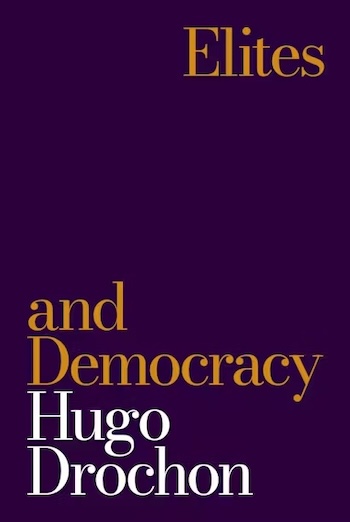 Liberals have sprained their arms patting themselves on the back for their inclusiveness. Meanwhile, MAGA has broken arms in efforts to destroy DEI. “Unitary executive theory,” the euphemism for autocracy, appears to be the ideological excuse for destroying democracy. The reality behind this bullying is not as simple as it may appear. Billionaire fascist wannabes are the obvious culprits, but the causes of the collapse may be more insidious. Yes, voters are also to blame: “If you don’t vote, you can’t complain.”
But in his compelling book, Hugo Drochon argues that democracy contains the seeds of its own demise because it inevitably nurtures elites. Today, the word “elite” has become a rhetorical Molotov cocktail the right and left toss into any debate. But it is crucial to understand the subtle ways in which elites operate and how they can turn democracy against itself. Drochon poses an ancient question: who really rules? He answers it with a clarity that feels, just now, like a form of intellectual resistance.
Drochon’s subject is elite theory, an often-maligned body of thought associated with Vilfredo Pareto, Gaetano Mosca, and Roberto Michels. For decades, their work has been treated as representing a cynical affront to faith in democracy or a shout-out from a more comfortably hierarchical age. Drochon sees something valuable in this line of thought: not an attack on democracy, but an X-ray of its weaknesses. His argument, carefully developed and sustained, is that democracy has never been free of control-minded elites; it has only failed to be honest about their existence.
The book’s chapters weave together the major strands of elite theory. Drochon reviews the works of Joseph Schumpeter, Robert Dahl, C. Wright Mills, and Raymond Aron, underlining how they emphasize that democracy has always been a competition between elites. He draws on more recent thinkers, but it is the late-19th-century theorists who provide the core of his investigation of the power of elites in democracy.
He spotlights Pareto’s vision of the “circulation of elites.” Ruling groups are never permanent; they decay, are displaced, and are then replaced by new contenders, who often resemble those they supplant more than they would care to admit. Elites, in this view, do not disappear; they simply rotate. Once a governing class grows complacent or cut off from new social energies, they are replaced by a fresher, more agile upper crust. Pareto observes that the new bosses tend to practice the same habits of preservation and control as the old. Circulation of position is not a matter of radical rupture, but an exchange of roles at the summit — there is no redistribution of power below. One of Pareto’s better-known dictums is the 80/20 rule (the so-called Pareto Principle): in a democracy, a small minority accounts for determining most outcomes. If any aspect of elite theory has seeped into general awareness, it is this one. It is invoked in boardrooms, self-help manuals, and management seminars — without an acknowledgement of its unsettling implications about concentration and control.
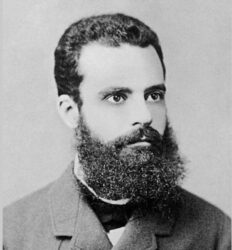
Vilfredo Pareto in 1870. Photo: Wikimedia
Mosca, more soberly institutional, emphasizes the inevitability of a “political class,” a minority that organizes and governs a majority that, by its nature, cannot. As for Michels, he brings a tragic precision to the table, positing his “iron law of oligarchy”: that even the most democratic organizations, given time, generate their own hierarchies and habits of control. (For example, arts organizations often come to blows with their boards of trustees.) Drochon does not treat these ideas as scholarly artifacts. He reads them as tools for understanding how power persists, adapts, and, when necessary, cloaks itself in a democratic guise.
Thankfully, Elites and Democracy is navigable for the novice, making the elements of elite theory plain to readers. But the book’s most admirable virtue is that it is acutely aware that the question of elites should no longer be confined to seminars or debates about early 20th-century fascism. It has seeped into the political mainstream and is now taking diseased, often weaponized forms. “The elite” has become both an accusation and an alibi, invoked by those who would challenge concentrations of power and by those who would consolidate them.
Drochon’s analysis sheds a sharp light on political developments. Applying his argument to the current landscape, organizations such as the Heritage Foundation and policy frameworks like Project 2025 can be understood to be yet another elite, inserting itself malignantly into democracy. The latest versions openly assert their programmatic arrogance. These are not demonic conspirators, but methodical planners, shaping or dismantling the administrative state and, by doing so, exerting influence that guarantees that electoral victory translates ruthlessly into governing power.
Drochon might point to a contemporary counterpoint in the electoral setback of Hungary’s Fidesz Party, long associated with Viktor Orbán. It is a fall that Pareto would have appreciated — even entrenched elites are vulnerable to circulation. When rulers and their retinues misread the public mood, they can be displaced. That does not mean the rule of the elite has collapsed; it has simply been reconfigured. What happened in Hungary exemplifies the book’s central paradox: democracy does not mean the absence of elites or their simple triumph. It is an arena where elites compete, adapt, and are eventually replaced, often toppled by the same powers that were ostensibly created to contain them.
Drochon’s logic can be applied retrospectively to a revolutionary moment when elite miscalculation proved to be decisive. In terms of the Russian Revolution, the myopic liberal leadership that forced the Tsar’s overthrow grasped neither the mechanics of authority nor the peril of the power vacuum they had created. Governmental authority, once loosened, did not drift toward liberal moderation, but tightened under the chokehold of Lenin and the Bolsheviks. It is the perfect example of a new elite replacing a muddled, aspirational democracy. Some contemporary demagogues have internalized that savage lesson with unsettling precision. They recognize that authority is not merely inherited or electorally granted; it is compelled by co-opting democratic institutions.
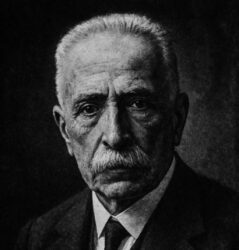
Gaetano Mosca. Photo: Wikimedia
Drochon doesn’t point this out, but his analysis suggests an unsettling conclusion. The sinister genius of the current assault on the American Republic is that Trump and company do not reject democracy outright. Its strategy is far more diabolical: the idea is not to dismantle democracy, but to deform it so completely that it serves undemocratic ends. Elections are not abolished; they are exploited. Representation is not denied; it is reconfigured. Populist language becomes a means of constricting rather than enlarging the political sphere. Drochon argues that we must reject the current realpolitik of democracy — a competition between elites — for what he calls “dynamic democracy” — a “continual challenge to elite rule.” He offers this as a “way of conceptualizing that change—for instance, between [Machiavelli’s] lions and foxes—and an indication of where to look to identify that change, namely in the interaction between social movements.” This is a tricky solution. How do we know when a challenge is legitimate?
The book’s central, unsettling insight is that democracy can be used against itself. The very mechanisms that promise accountability have been used as tools for entrenchment. If elites are inescapable, it becomes imperative to understand how they operate, how they justify themselves, and how they may be checked. To Drochon’s credit, this framework restores complexity to a debate that has too often been reduced to banal slogans. Yet, as his historical analysis forcefully shows, the recycling of elites on top is almost guaranteed — the challenge to any ameliorating populist dynamism is great.
Elites and Democracy is, in the end, a book about limits — the limits of popular rule, the limits of institutional structure, and the limits of political rhetoric. But it is also, and more importantly, a book about recognition. Looking at the weaknesses of democracy clearly, Drochon suggests, does not diminish its value — it is to take it seriously. Today, when truth telling is an endangered species, that honest scrutiny may be the book’s most meaningful contribution.
Tom Connolly is Professor Emeritus of Humanities and Social Sciences at Prince Mohammad Bin Fahd University. He recently edited a historical study (in English) of the 19th- and 20th-century Jewish community of Döbling for the Österreichischen Akademie der Wissenschaften, Institut für Kulturwissenschaften. His book Goodbye, Good Ol’ USA: What America Lost in World War II: The Movies, The Home Front and Postwar Culture is forthcoming from Houghton Mifflin/PMU Press.
Tagged: "Elites and Democracy", Gaetano Mosca, Hugo Drochon, Princeton University Press, Roberto Michels