
Books
This was an artist who approached his singular craft with equal measures of exuberance and precision.
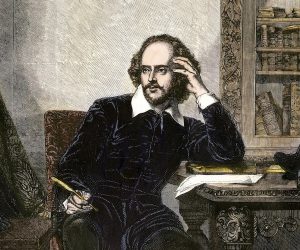
Shakespearean’s version of the Bard comes off as somewhat Monty Pythonesque — we are usually marching along with “Men Men Men.”
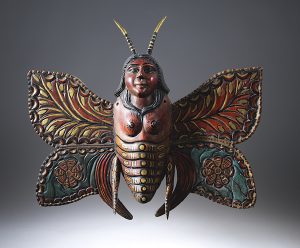
In this deeply enlightening study, Anthony Alan Shelton aims to set the record straight about how mask culture developed in Mexico as well as in Andean cultures.
No writer, historian, or filmmaker ever took me nearly as close to Abraham Lincoln the man as did Stephen B. Oates. I have always been indebted to him for that.
The essays in this excellent volume consistently show that nostalgia is about something, and it matters.
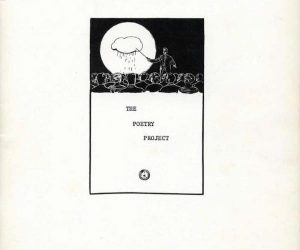
Host Elizabeth Howard talks with poet and performer Kyle Ducayan, executive director of the Poetry Project at St. Mark’s Church in the Bowery, about the purpose of poetry.
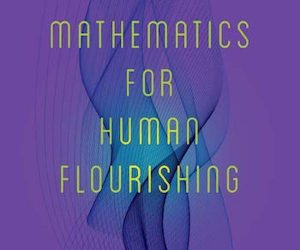
Put bluntly, Mathematics for Human Flourishing is quite possibly the most profound meditation on mathematics I have read.
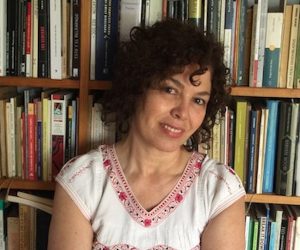
In Maria Baranda’s poetry there is the constant oscillation between beauty and ugliness, elegance and terror, the empowering journey and the overwhelming nightmare.
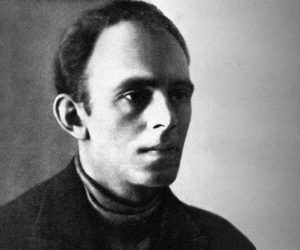
Russian poet Osip Mandelstam’s “ancient language” is rendered into real contemporary poetry in English that succeeds in speaking eloquently to the inner eye and ear.
Book Review: Elizabeth Warren and Alexander S. Vindman — Gifted with a Moral Compass
The idea of America is elusive and sometimes, like right now, in danger of disappearing. That is why I have found myself turning for comfort to two books that can give us some perspective as to how to move forward.
Read More about Book Review: Elizabeth Warren and Alexander S. Vindman — Gifted with a Moral Compass