Latin Jazz in the Moment: Marlon Simon and Omar Sosa Live
By Brooks Geiken
On Resistencia! and We Are Not the Headliner, two inspired ensembles explore the possibilities of rhythm, improvisation, and collective expression.
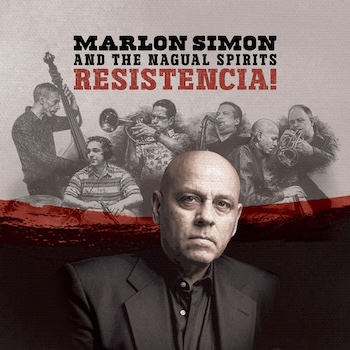 Two years ago, I commended Venezuelan drummer, composer, and bandleader Marlon Simon and the Nagual Spirits’ On Different Paths, a bright, uplifting Latin jazz album that drew on classical music and musical traditions from Cuba, Venezuela, and the United States. This year, Simon and the Nagual Spirits return with a live album, Resistencia!, that builds on its predecessor and soars to new heights. Recorded earlier this year at @exuberance in Philadelphia, the performance draws on Simon’s arrangements and gives them room to expand and breathe.
Joining Simon are his brothers, Edward on piano and Michael on trumpet and flugelhorn—a gifted musical family indeed. Percussionist Carlos Maldonado and soprano and tenor saxophonist Ivan Renta also play in Arturo O’Farrill’s Afro Latin Jazz Orchestra. Completing the ensemble: Michael Boone on acoustic bass and Dr. Alex Norris on trumpet.
Who exactly are the Nagual Spirits? The group takes its name from the shapeshifting guardian spirits and shamans of Indigenous American folklore—the world encountered in Carlos Castaneda’s best-selling books during the 1970s. It is an apt name for musicians who succeed in shifting tempos and reshaping sounds in intriguing ways.
The disc starts with an introductory excerpt from Simon’s “Variations on Ericka’s Theme,” dedicated to the memory of his daughter Ericka. Fragments of the theme return three more times, woven skillfully and poignantly throughout the album. Simon also honors his parents, mamá Daisy Morillo and papá Hadsy Simon, in the bossa nova tune “Missing Them.” Another standout, “Rumba Para Andy,” pays tribute to the late bassist and bandleader Andy González, who, alongside Manny Oquendo, was for many years the heart and soul of the groundbreaking Latin jazz band Conjunto Libre. González would no doubt have been proud to be associated with such a fine piece of music.
Edward and Michael make optimum use of their gifts throughout the album. Michael, fresh off a flight from the Netherlands, supplies crackling sparks on trumpet and flugelhorn, while Edward fills the music with abundant lyricism. Boone makes his acoustic bass a forceful presence on “Variations on Ericka’s Theme.” Renta, Norris, and Maldonado help give visceral shape and substance to Marlon’s complex compositions. At the drums, Marlon drives the ensemble, making the music vibrate with passion and purpose.
Two spoken interludes bring listeners into the room. In the first, Simon introduces the musicians, praises their playing, and shares some background about each. In the second, he discusses the music and the album’s title. He describes the music as an act of resistance to a society that prizes hits while overlooking artistic endeavors that are outside of the mainstream. As he explains, “my intention was not to make a political statement, but rather to honor the sheer resilience it takes to keep a roof overhead and keep the music alive.”
The only composition not written by Marlon is the first full-length piece on the album, the delightful “Fiestas,” composed by his brother Edward. It begins with what sounds like a tumble down the stairs, jolting the listener into the varied, emotive world of Resistencia! The nine-minute “Africando” romps through an African rhythm before detouring into a pair of Cuban rhythms. At just two minutes and forty-six seconds, “Walking” offers a tantalizing glimpse of what could be a much longer piece. “Straight Ahead” delivers exactly what its title promises: straight-ahead jazz in 4/4 time.
With barely two hours of rehearsal the day before the recording, Simon and the Nagual Spirits brought tremendous feeling to seven demanding compositions. Resistencia! is another bold Latin jazz statement in a year rich with outstanding releases.
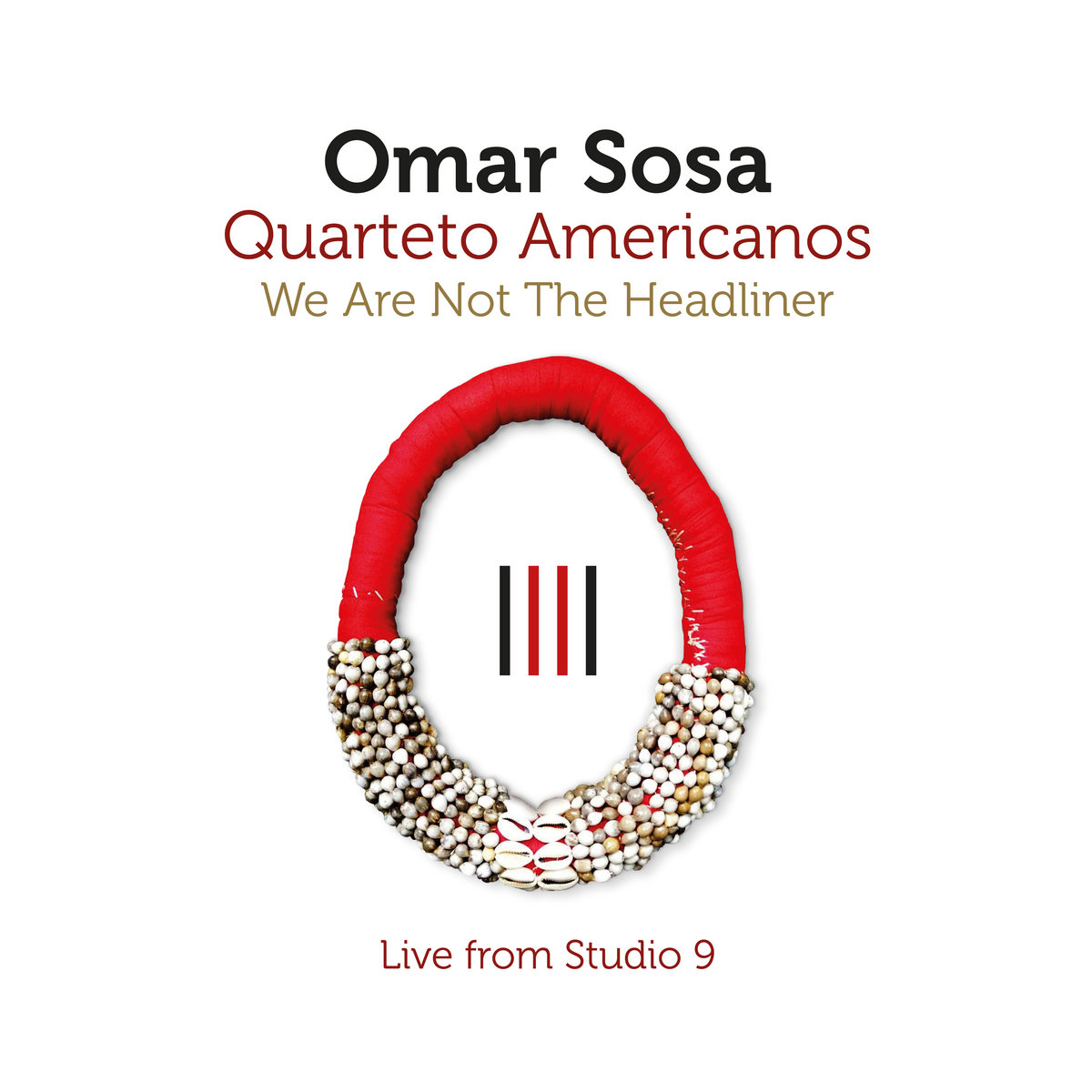
Another notable live album recorded earlier this year is Omar Sosa’s We Are Not the Headliner. At Studio 9 in North Adams, Massachusetts, the Cuban pianist and his Quarteto Americanos explored eleven original compositions. The ensemble features Sheldon Brown on tenor and soprano saxophones, bass and Turkish clarinets, and flutes; Ernesto Mazar Kindelán on baby bass; and Josh Jones on drums. Drawing on a broad palette of styles, the quartet fuses its various influences together in fresh, provocative ways. Sosa, who lived in the Bay Area for several years, has been touring with these three Bay Area musicians for the past few years.
In June 2024, I heard Sosa and the Quarteto Americanos in Healdsburg, California—a rollicking, freewheeling performance that opened my eyes and ears. In contrast, this recording reveals a mellower, more meditative side of the group. The group’s eclecticism is one aspect of its beauty: the musicians respond to the moment, following wherever the music leads. Sosa puts it best: “Whatever meets the path, creates the path.” To my ears, that means embracing the situation at hand and moving forward together. As the fitting lyric goes, “Siempre pa’ ‘lante y nunca pa’ ‘tras”—always forward, never backward.
Four tracks feature spoken-word passages: Nahuatl poetry on “Meditative”; Omi Guillermo González reciting a Yoruban prayer on “Africa in My Fingers”; Reggie Stephens delivering hip-hop on “Hella Changüi”; and Guillermo Gómez Peña reading an excerpt from Declaration of Poetic Disobedience on “We Say Part 2.” These voices deepen the music’s expressive range.
The disc opens with the gentle “Meditative,” Brown’s distinctive Turkish clarinet weaving in and out of the melody. East Bay funk surfaces on “Africa in My Fingers,” propelled by Jones’s steady beat. Then comes a surprise: Sosa, Kindelán, and Brown slip into a staccato unison passage between the beats—an ingenious bit of rhythmic interplay.
“Hella,” an East Bay expression that suggests abundance, meets changüi, a traditional Cuban musical form, in “Hella Changüi.” The sprawling, danceable track blends Stephens’s rap, Elnar “Tito” LeLiebre’s vocals and percussion, and the tres playing of Kai Lyons and Camilo Landau.
Throughout We Are Not the Headliner, Sosa and the Quarteto Americanos bring spoken word and Cuban music into an inventive dialogue. The result is a stirring expansion of the expressive possibilities of both.
Editor’s Note: Omar Sosa is performing at Groton Hill Music Center on November 19 with saxophonist and chekere player Yosvany Terry and drummer Julian Miltenberger. The Trio will be playing a selection of tunes across a range of Sosa’s albums, including ‘My Three Notes’ and ‘Alma.’
Brooks Geiken is a retired Spanish teacher with a lifelong interest in music, specifically Afro-Cuban, Brazilian, and Black American music. His wife thinks he should write a book titled The White Dude’s Guide to Afro-Cuban and Jazz Music. Brooks lives in the San Francisco Bay Area.
Tagged: Afro-Cuban jazz, Cuban music, Edward Simón, Marlon Simon, Marlon Simon and the Nagual Spirits, Michael Simon, Omar Sosa, Quarteto Americanos, Resistencia!, Venezuelan jazz, jazz reviews, latin jazz, live albums, spoken word