Concert Review: In Worcester, Trey Anastasio and Billy Strings Trade Licks to Benefit Divided Sky
By Paul Robicheau
Across two nights at the DCU Center, the guitarists turned Phish staples, bluegrass jams, and a surprise Metallica cover into a showcase for their chemistry, all to benefit Anastasio’s residential recovery program.
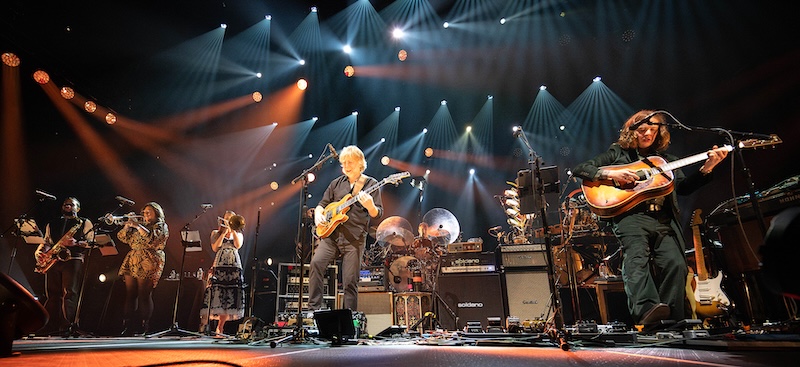
Trey Anastasio Band with Billy Strings at DCU Center. Photo Eric Eisner.
Phish leader Trey Anastasio has served as an enthusiastic mentor to today’s jam juggernauts Goose and Billy Strings. Anastasio even invited fellow guitar virtuoso Strings to make a rare sit-in with Phish during the band’s two-night 2024 stop in the transformative bluegrass star’s native Michigan. But fans of both flocked to Worcester’s DCU Center this past weekend to revel in the rare opportunity to see the two guitarists go head-to-head for two full shows.
The Friday and Saturday concerts were a benefit for Divided Sky, a nonprofit residential recovery program that Anastasio co-founded in Vermont after a 2006 drug arrest set him on the path to sobriety. Strings made a fitting partner for the benefit, having also overcome addiction, which ran in his family. The guitarists were adeptly backed by the seven other musicians of the Trey Anastasio Band at the DCU Center—formerly the Worcester Centrum, an Anastasio-anointed “ratty arena” where Phish has played many memorable nights, dating back to New Year’s Eve 1993.
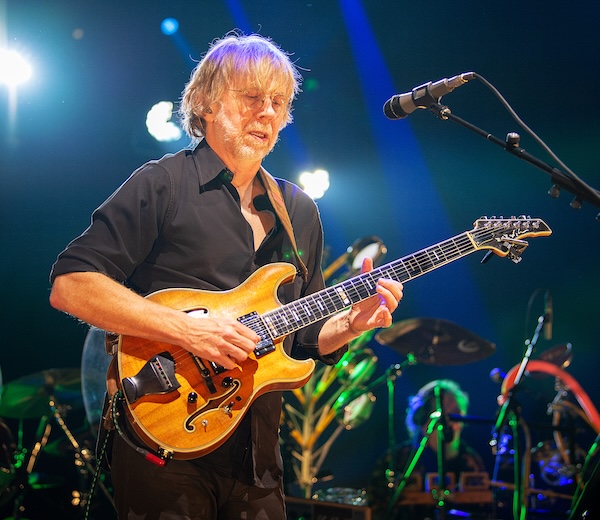
Trey Anastasio at DCU Center. Photo: Eric Eisner.
The Trey Anastasio Band has long been underestimated as a straightforward soul-groove revue compared with the abstract jamming adventures of mothership Phish. But TAB proved its mettle this weekend with enough inspired jams and cross-band soloing across two decidedly different shows to satiate fans of both Anastasio’s and Strings’ primary outfits.
The first night found the ensemble charging out of the gate, leaning on bedrock choices from the repertoires of both Strings and Phish. Strings, who plays only acoustic guitar (albeit through effects pedals) in his bluegrass quintet, was given leeway to rip on electric guitar in the Phish vehicles “Sand,” “The Moma Dance,” “Stash” (including its sinewy opening lead), and “What’s Going Through Your Mind” during that first set alone. Anastasio simply egged him on with a wide grin. And while Strings played acoustic on his post-bluegrass launchpads “Meet Me at the Creek” and “Hide and Seek,” those songs—as adapted by the Anastasio Band—shifted from shuffles into explorations that peaked with the two guitarists meshing in flight.
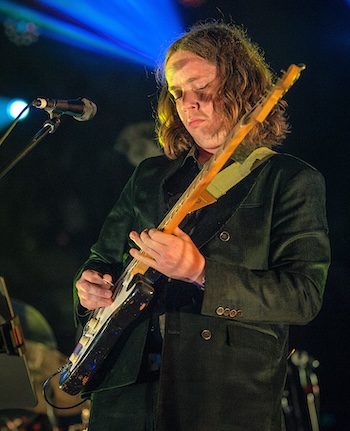
Billy Strings at DCU Center. Photo: Eric Eisner.
Saturday was a different story, with a largely laid-back first set that dipped into a few covers early on while favoring blues and bluegrass-tinged ballads. In a zesty opening workout of “Set Your Soul Free,” buoyed by backup vocals from the horn section, Strings turned toward drummer Russ Lawton and jack-of-all-accessories Cyro Baptista and swung his hips during their percussion break. Yet overall, Strings didn’t assume as dominant a role as he had the previous night. For his first turn at the mic, Strings sang his countrified new story tune “Mill Town Flood,” slipping in a brittle, cyclical acoustic solo. He then led the bluegrass standard “Nellie Cane,” which Phish has also covered over the years. Anastasio capably sang the Band chestnut “It Makes No Difference,” and Strings finally seized the reins on the blues standard “It Hurts Me Too,” building to a peak with probing flurries of deep, snarling electric licks before letting loose with a shout.
Even tunes that began in seemingly lightweight territory blossomed into highlights of the first half. On Anastasio’s sentimental “Drifting,” he sang of a storm lifting, in keeping with the benefit’s purpose, before he and Strings traded sustained notes and took the tune into trill city. The usually funky Phish vehicle “Wolfman’s Brother” likewise grew from a breezy swing into a jam topped by playful ping-pong picking.
Saturday featured fewer Phish songs than Friday, though a slow, sparse “46 Days” rose in temperature when Anastasio and Strings fused furious cross-notes, their feet quivering atop their pedals. Except for his guest turns with other bands, Anastasio has spent most of his career as the sole guitarist onstage. What stood out over the weekend was how often he and Strings wove guitar harmonies into compelling conversational faceoffs that built deliciously in tone and tension. Strings’ “Heartbeat of America” surged from a shuffle into a bluesy jag in which the two players’ lines intertwined like tendrils, recalling the Allman Brothers Band.
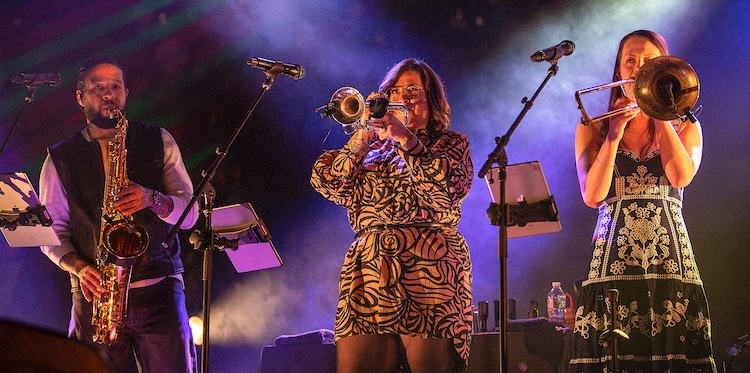
Kenneth Whalum, Jennifer Hartswick and Natalie Cressman of the Trey Anastasio Band at DCU Center. Photo: Eric Eisner.
Anastasio peppered Saturday’s show with more tunes from his solo band, like the toss-off “Burlap Sacks and Pumps” and the rhythmic twist-and-cut rave-up “Push On ’Til the Day.” Trumpeter Jennifer Hartswick, trombonist Natalie Cressman, and tenor saxophonist Kenneth Whalum lent a funky fanfare to that first-set closer, while Anastasio hopped at the stage edge as he did during the second-set finale, “First Tube.” As usual during that tune, he waved his feedback-squealing guitar like a Jedi lightsaber and raised it overhead in showy triumph. Strings, whose quick, nimble runs had played off Anastasio’s power chords, could only grin.
Anastasio also nodded to the reason for the weekend’s concerts in Saturday’s second set. The Divided Sky co-founder slid into “Dark and Down,” another slow blues on which he sang, “I’m falling, but I’m floating, no power left to land,” only to lift the song with soulful, crying stabs on his guitar. And after a churning “Mr. Completely,” the guitarist droned into a free-tinkering space where the horns floated, Baptista worked a bird whistle, and Strings twirled his pedalboard knobs until the dissonance dissolved into another gentle landing pad, “A Life Beyond the Dream.” “Don’t give up hope,” Anastasio crooned. “Keep dreaming.”
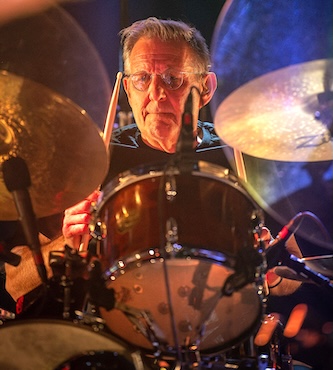
Russ Lawton of the Trey Anastasio Band at DCU Center. Photo: Eric Eisner
The encores that capped the weekend’s nearly three-hour shows yielded especially sweet treats. The guitarists launched each encore as an acoustic duo, swapping originals and covers. The Everly Brothers’ “All You Have to Do Is Dream” proved a vocal stretch for Anastasio and Strings on Friday, but the night ended with the weekend’s most startling move: Metallica’s “Master of Puppets,” a nod to Strings’s youthful metal roots. Anastasio provided sturdy lead vocals over that dual-riffing monster—itself a song about addiction. The guitarists went from stringing together delicate melodic harmonies to making way for a fierce solo by Strings, who throttled his whammy bar as the horns injected novel textures.
Saturday’s encore went in a different direction, with a beautiful blend of acoustic guitars on the Beatles’ “Here Comes the Sun” and another curveball in the Yes hit “Roundabout.” Strings nailed the ringing acoustic harmonics at the start and in the middle of that ’70s prog classic. Bassist Dezron Douglas and drummer Lawton (playing off his toms) dug into the bridge, and keyboardist Ray Paczkowski laid into the signature organ solo as the group went for horn-goosed syncopation.
But the weekend wasn’t quite over. The ensemble segued into the Phish favorite “Carini,” with Strings taking obvious delight in lashing through its dark chords alongside Anastasio and feathering fleet notes into screaming clusters. “The thesis that you’re writing is a load of shit,” Anastasio sang, adding the sly update, “Well, I’m glad AI finished it.” The guitarists took the band into fast-strummed white noise as Lawton’s accented beats helped steer the song to a close, Anastasio rubbing his guitar neck against his mic stand. “Thank you so much, everybody—a good time,” he announced, an understatement for such a one-of-a-kind weekend: a chance to share in the communion of two jam greats for a worthy, personal cause.
Paul Robicheau served more than 20 years as contributing editor for music at the Improper Bostonian, in addition to writing and photography for The Boston Globe, Rolling Stone, and many other publications. He was also the founding arts editor of Boston Metro.
Tagged: Benefit Concert, Billy Strings, DCU Center, Divided Sky, Phish, Trey Anastasio, Trey Anastasio Band, bluegrass, concert review, jam bands