Jazz Commentary: Beyond the Cover — Meshell Ndegeocello Makes Familiar Songs Her Own
By Rick McLaughlin
A great cover does more than reproduce the original. Singer Meshel Ndegeocello’s bold reinterpretations make the case for reinvention over imitation.
 As a music superfan, I have never been able to get my fill. As a kid, I had a big cassette collection, which turned into a big CD collection, which then inspired a big LP collection. I stream tons of music, although I try to be somewhat cool about it by avoiding the worst platform(s). I love to listen to a wide variety of things, and I frequently find myself wishing that I could play that music. And I do: Either/Orchestra plays Ethiopian music, Listen to This plays electric-era Miles Davis, and Ensemble Eclectica Boston plays music by John Dowland and Abbey Lincoln—and many things in between. There’s also the jazz tradition of playing “standards,” which are covers by a different name, using a different set of musical values.
What makes these groups different from the classic “cover band” is interpretation. The groups I play in start with a given recording but venture into new territory; cover bands stop where that journey begins. I have been asked to leave a couple of cover bands because I don’t see a reason to stick to the original; it’s an exercise in futility. Why perform a note-for-note cover of something if that thing is the defining work of the period? Why play a note-for-note interpretation of an original when there are often staggeringly creative musicians in the band who could make something fascinating? For a wedding? Sure, I guess. To earn tips from tourists hanging out at a beachside bar on the Cape in the summer? Sure, I guess. To use the original as a frame of reference or a study, and then do something else live? Absolutely. But from an artistic perspective, I just don’t see a reason for “sound-alike” cover bands.
Albums by great artists consisting mainly of covers are never the artists’ best work. Pin Ups is easily David Bowie’s least awesome record. It’s charming because it is David Bowie, and it is fun to listen to him sing “See Emily Play,” but it’s not so different from the original that there is much to be gained—not from the listener’s perspective, anyway.
Rush’s album of covers, Feedback, is the last thing a curious listener should hear by the band.
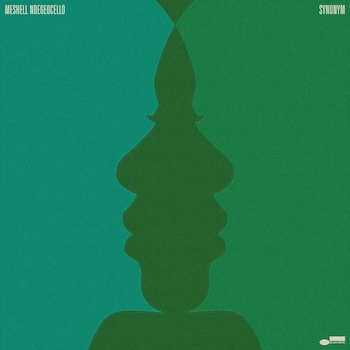
There are exceptions, but they all have the same thing in common, and that’s where Meshell Ndegeocello’s new album, Synonym, comes in. Each of these exceptional albums is by an artist who is able to transform the original into something completely different. Okay, not completely different—otherwise, it wouldn’t be a cover—but so different that it might even be difficult to spot the original version in the new interpretation.
Johnny Cash’s Rick Rubin–produced American series, and American IV in particular, demonstrates this. Here, Johnny Cash interprets music that he would never have performed except under these circumstances. In Cash’s case, the power of his musical personality is greater than the identity of the songs, making those songs Cash songs.
I recall Stevie Wonder saying on a morning television show a few days after Aretha Franklin’s passing that she “was the kind of artist who would take a song and not give it back.” And if you compare his original version of “Until You Come Back to Me,” so polite and sweetened, to her bouncing, gospel-infused version, they are only structurally the same song.
Closer to the jazz universe, there is also Billy Childs’s masterful Map to the Treasure: Reimagining Laura Nyro, but it says right there in the title what is happening: reimagining. Another great series of recordings is Hal Willner’s collection of “cover” albums, in which the interpretations take the listener so far from the original that sometimes the original seems irrelevant.
My first time through Synonym was nonlinear. I couldn’t believe what I was hearing, so I jumped around. “Do You Want Me” caught my attention because I remember thinking some not-so-kind things about that song when it came out. Her interpretation caused me to listen differently. “Islands in the Stream” already came with predetermined expectations, thanks to the iconic duet between Kenny Rogers and Dolly Parton. Ndegeocello and Chaka Khan defied those expectations—who sang what, and when—and made me focus on things I had never thought about in that song before. “Guilty,” which, along with “Islands in the Stream,” is a Barry Gibb song, sounds almost nothing like the original, even though its shell is still the same.
Let’s all listen to the new Meshell Ndegeocello album and be curious enough to find the originals so we can compare her interpretations to what came first. As audiences, let’s expect artists to follow her lead and take a song to unexpected places. And as musicians, let’s never play in a note-for-note cover band. Unless it’s a wedding. Or we’re on the Cape.
Bassist, composer, author, and educator Rick McLaughlin has anchored the Grammy-nominated Either/Orchestra for over 25 years, performing alongside Danilo Pérez, John Zorn, and Mulatu Astatke in a career spanning four continents. His credits include his acclaimed debut Study of Light, a Bob Moses co-production, and bass work with saxophonist Grace Kelly and Guggenheim Fellow Felipe Salles. He has written for Berklee’s FUSION and DrumPro magazines, and his book The Holistic Bassist anchors his company, Holistic Sound. McLaughlin is Professor of Harmony and Jazz Composition at Berklee, where his Stevie Wonder course landed him on the Obama-produced podcast The Wonder of Stevie.
Tagged: Aretha Franklin, Billy Childs, Chaka Khan, David Bowie, Hal Willner, Jazz, Johnny Cash, Meshell Ndegeocello, album review, artistic originality, cover bands, cover songs, musical interpretation, reinterpretation, soul