
Concert Preview: Don Was Brings Pan-Detroit Groove to Cambridge and Groton
By Scott McLennan
The Blue Note Records president, producer, and bassist leads his Pan-Detroit Ensemble through original material and a freewheeling tribute to the Grateful Dead’s Blues for Allah at the Sinclair and Groton Hill Music Center.
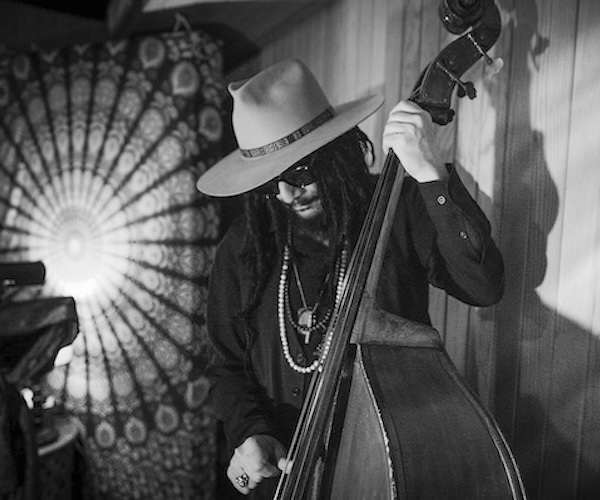
Detroit-raised bassist, producer, songwriter, and record executive Don Was. Photo: Miryam Ramos
Don Was is synonymous with music. Caught in music’s thrall as a kid growing up in 1950s and ’60s Detroit, he tapped into the city’s thriving blues and jazz scenes while seeing performances by George Clinton, the Stooges, and MC5. Was got into the craft of writing songs and playing bass, finding success with the band Was (Not Was). He later became a go-to record producer, taking the helm of venerable Blue Note Records in 2012.
Today, Was does a bit of it all. His perspective on making music may sound contradictory. To be good at music, Was advises, you need to be yourself—be the individual you are meant to be, absorb plenty of influences, but make sure the art you produce is your own. He recalls how, during his stellar run producing records for Willie Nelson, Bob Dylan, Brian Wilson, Leonard Cohen, Kris Kristofferson, and the Rolling Stones, Was became stricken with writer’s block:
I’d sit down to write and last about 10 seconds before saying, ‘What’s the point? Brian Wilson is less than a mile away from me.’ Finally, after about five years, I was in the studio with Willie Nelson and lamenting the fact that I could never be Willie Nelson, and it hit me: Willie Nelson could never be me. Your only real prayer as an artist is to take the thing that makes you different from everyone else and emphasize it, not hide it. We tend to hide it and consider it a marketing problem when you veer too far from what is fashionable in the moment.
Still, to unlock music’s magic, the individual must collaborate within a group.
We are basically social creatures, but we are so sealed off from each other. I’ve lived in L.A. for 12 years and have no idea who my neighbor is. But playing music with other people gives us that interaction; we become family. An audience picks up on that. I learned from playing with Bob Weir that if you open up to the audience, they start to become a member of the band, and their energy has an impact on your choice of what the next note is that you play. That energy exchange is the greatest feeling.
Was will put his words into action with a pair of upcoming concerts by his Pan-Detroit Ensemble, which performs Oct. 16 at the Sinclair in Cambridge and Oct. 17 at the Groton Hill Music Center in Groton.
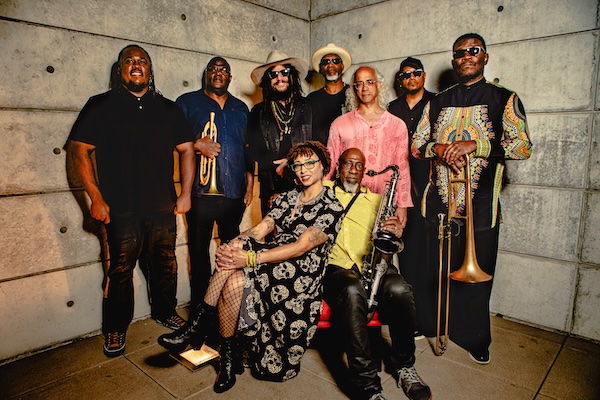
Don Was and the Pan-Detroit Ensemble. Photo: Kory Thiebault
The group will play songs from its debut album, Groove in the Face of Adversity, released last year, and cover the Grateful Dead’s Blues for Allah album in its entirety.
On the one hand, Was and the Grateful Dead’s Bob Weir enjoyed a rich musical partnership in their band Wolf Brothers, alongside drummer Jay Lane. Still, deciding to play the Dead’s 1975 album—steeped in musical exploration that veered considerably from where the band had been trucking on previous records—does not seem like an obvious choice.
Was explained that the Pan-Detroit Ensemble was booked last year to play a Grateful Dead-themed festival in Georgia. The promoter suggested that the band perform Blues for Allah, which at the time was celebrating its 50th anniversary.
When the Pan-Detroit Ensemble launched its 2026 tour in January, the first show fell on the day Weir died.
We had to tell a room full of Deadheads that Bobby was gone. To be honest, I was devastated and did not feel like playing,” Was said. “But I remembered Bobby telling me about the night Grateful Dead guitarist Jerry Garcia died. His band was booked to play in New Hampshire, and he went out and played. Making good music is healing and soothing.
Thus, the Pan-Detroit Ensemble carried on, with the nightly reading of Blues for Allah serving as a tribute to Weir—made all the more fitting because Was’s favorite Dead song is Weir’s “The Music Never Stopped,” from that record.
But be forewarned: Was will not be presenting a note-for-note recreation of Blues for Allah. It sounds as if he could not do that even if he wanted to.
“‘King Solomon’s Marbles’ presented a real challenge,” Was said about one of the album’s more angular instrumentals. “I never took it seriously as a song. Then I listened closer and realized, ‘Oh, there is a form.’ It’s as clear-cut as ‘Ripple,’ just with a crazy time signature I couldn’t groove to. But then I noticed Jerry’s riff to open the song is basically ‘Inner City Blues’ by Marvin Gaye. Well, we know how to do that, and we put it into that groove. Was it sacrilegious? Well, the people in Georgia who first saw it were delighted. That’s our whole approach—keep the spirit but put a twist on it.”
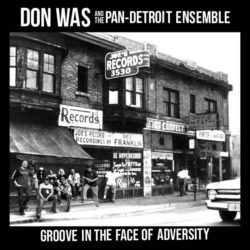
Was took the same approach when putting together the record Groove in the Face of Adversity. The group, which includes sax player Dave McMurray, trombonist Vincent Chandler, trumpeter John Douglas, drummer Jeff Canady, percussionist Mahindi Masai, guitarist Wayne Gerard, vocalist Steffanie Christi’an, and new recruit Phil Whitfield on keyboards, brings its distinctive jazz and blues stylings to vintage fare from Kenny Barron and Yusef Lateef, Fat Freddy’s Drop, Curtis Mayfield, Cameo, and even Hank Williams.
The Ensemble delivers a smoldering rendition of Williams’s “I Ain’t Got Nothing but Time,” a song that’s so solidly built it can easily be brought from the country genre into this group’s sonic neighborhood.
“What makes a good song is its ability to let you hang your own emotional inner life on it,” Was said. “Hank Williams could distill a lyric down to its most basic morsel and tap into that raw emotion.”
Was says the band is always self-assessing and thinking about where to go next, especially as it prepares to make its sophomore album.
“There is always something new with music. It will never let you down,” Was siad. “It’s a cool way to spend your life.”
Scott McLennan covered music for the Worcester Telegram & Gazette from 1993 to 2008. He then contributed music reviews and features to The Boston Globe, Providence Journal, Portland Press Herald, and WGBH, as well as to The Arts Fuse. He also operated the NE Metal blog to provide in-depth coverage of the region’s heavy metal scene.
Tagged: Blue Note Records, Blues for Allah, Bob Weir, Boston music, Cambridge music, Detroit music, Funk, Grateful Dead, Groove in the Face of Adversity, Groton Hill Music Center, Hank Williams, Jazz, Pan-Detroit Ensemble, The Sinclair, blues, concert preview, live music, on Was, rock