
Jazz Album Reviews: Ella and Bennett Revisited — April Varner Rises, John Pizzarelli Holds Back
By Allen Michie
April Varner, a rising star in this new generation of female jazz singers—which happily seems full of them—pays homage to Ella Fitzgerald; John Pizzarelli’s recording is an early entry in the no-doubt long list of tributes celebrating Tony Bennett’s 100th birthday.
Ella – April Varner (Cellar)
Dear Mr. Bennett– John Pizzarelli (Green Hill)
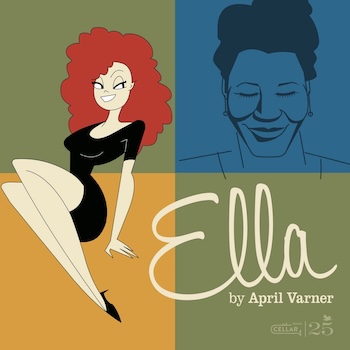
Wrestling with what Harold Bloom called the “anxiety of influence” (in a completely different literary context) can be tricky business. Is it a good idea to invite comparisons between yourself and the best that have ever done it? There’s a spectrum between outright imitation on one extreme, and the euphemism of “inspired by” on the other extreme. Both have their dangers and rewards.
Of the two new albums out this month paying tribute to two of jazz’s very greatest singers (no modest ambition here), one of them aims for that sweet spot in the middle where the little details of imitation arise affectionately from the inspiration. The other is a respectful cover album closer to the “inspired by” side, paying tribute to the honoree’s good taste and style more than his sound.
April Varner has a relaxed and unforced vocal style. She has access to a natural spoken quality to her singing at times, like talking on pitch, which you can hear on “Bewitched.” She can also sound a bit like Keely Smith when she polishes off a phrase with some vibrato. Maybe she’s not one of our great ballad singers just yet, but she can swing, and that’s more than enough for now.
Ella has an impressive cast with some of today’s great jazz players at their peak: Emmet Cohen on piano, Yasushi Nakamura on bass, Ulysses Owens, Jr., on drums, Brian Lynch on trumpet, William Hill III on piano, and others. Owens produced, and the sound is straightforward and unfussy (which suits the music, which is also straightforward and unfussy).
The album starts where Ella herself started, with “A-Tisket, A-Tasket.” Varner’s alto strips some of the cutesy girlishness from Fitzgerald’s original 1938 version with the Chick Webb Orchestra. It alternates between a Latin feel and driving swing, a format used to good effect in many places on the album. Owens, a great choice for this gig, gets some solo time on drums.
There are several arrangements by Lynch for the small big band setup of two trombones, two saxes, and three trumpets. One is “I’ve Got You Under My Skin,” done here as a celebration rather than a Diana Krall-style seduction. Varner slides around the Latin and swing beats easily. “Night and Day” is another track where Varner’s technique and excellent intonation can be appreciated—she offers some subtle substitutions in the melody, giving the song a more contemporary flavor and marking her own territory against Fitzgerald’s.
Ella also serves as a tribute to several of Fitzgerald’s many tremendous bandmates over the years. Cohen reaches into his Oscar Peterson bag in “A-Tisket, A-Tasket,” and he recalls Ellis Larkins in the more baroque stride accompaniment on “Dream a Little Dream of Me.” Bassist Nakamura plays some trademark Ray Brown licks on “Cheek to Cheek,” which he plays in a duet with Varner for the first chorus, suggesting the real-life cheek-to-cheek duet that Brown and Fitzgerald made as a married couple from 1947-58 (they remained close friends and musical soulmates ever after).
One of my favorite tracks is one of my least favorite Fitzgerald songs: “Mr. Paganini.” It’s a clever song the first time you hear it, but it can wear a bit thin with repeated listenings. Varner’s version keeps it fresh with tempo shifts, and each one swings harder than the last. We finally get to hear Varner cut loose with some scatting; it’s a great example of how she takes elements of Fitzgerald’s phrasing and harmonic vocabulary and says something of her own with it.
This one is recommended listening for the bazillions of Fitzgerald fans out there, and it’s essential listening for the growing number of April Varner fans.
John Pizzarelli is an entirely different breed of jazz singer. It’s best to see Pizzarelli as a top-drawer guitarist who sidelines in singing. Unfortunately, his tribute to Tony Bennett, Dear Mr. Bennett, reverses this order. The vocals are front and center; the guitar mostly serves as accompaniment, with the occasional short solo. Pizzarelli has a high, thin, very hip, and wry Manhattan voice. He’s the Dave Frishberg of the guitar. His pitch is sometimes merely adequate. It’s a natural, friendly, guy-next-door voice—quite the contrast to Bennett’s resonant, auditorium-filling tenor.
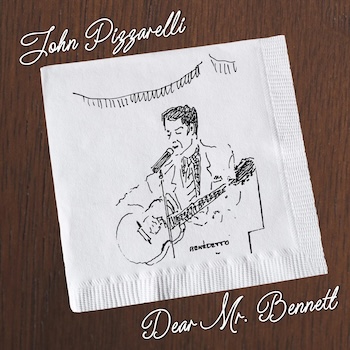
Pizzarelli’s father, guitarist Bucky Pizzarelli, was a frequent sideman for Bennett. John also played with Bennett occasionally, including for some radio broadcasts. Bennett rightly saw the two Pizzarellis as fellow true believers in the Great American Songbook, and the album cover is a sketch of John that Bennett drew on a cocktail napkin during a gig. Dear Mr. Bennett is an early entry in the surely long list of tributes that we’ll see celebrating Bennett’s 100th birthday on August 3.
Pizzarelli is an old hand at this kind of thing. If you’ve enjoyed his many previous records, you’ll enjoy this one, and there’s little deviation from the formula. It’s all very Café Carlyle (which is thanked in the album credits). He’s joined by Isaiah J. Thompson on piano and Mike Karn on bass, his regular bandmates for the last six years.
Bennett was an actor at heart—he always delivered every song like he meant it and lived it. Pizzarelli can’t do that, and he wisely doesn’t try. His emphasis is on the beautiful structure and sound of the songs themselves, their chord changes, the nature of their swing, and the witty poetry of the lyrics.
There are a few moments that stand out from the trio’s standard cabaret approach. “Firefly” has an old-timey, 1920s feel so you can release your inner flapper girl. It’s only 1:27, so you can stop doing the Charleston before you get caught. “Boulevard of Broken Dreams” is done as a slow tango, as there is no competing with Bennett’s epic showcase version. “Shakin’ the Blues Away” is an up-tempo swinger, and it has one of the better guitar solos.
The standout track is “It Don’t Mean a Thing (If It Ain’t Got That Swing).” There’s finally an uncharacteristic risk in the guitar solo and some variation of the sonic palette. I won’t spoil it for you, but it’s an ironic hoot. There’s a string of tight unison passages spread out among the trio, including scatting along with the guitar solo (à la George Benson). Mike Karn takes a walking bass solo so you can appreciate just how cool he’s been all along.
Usually, however, the paradigm is set with covers like “I Left My Heart in San Francisco.” Of course this has to be on any Bennett tribute album, but it’s a blessing as well as a curse, because Bennett’s version is one of the very few records that is perfect in every way. It’s covered here, rightly, with the same gently swaying swing. But, without Bennett’s drama and expertly building vocals, you need to come up with something new and convincing to say to replace it. At just 2:29, there are no solos. Why not at least use the masterful chops in this trio to put their fingerprints on it?
What Pizzarelli can do, unlike Tony Bennett, is play the guitar expertly. It’s disappointing that there’s not more of that here. Most of the songs are short—half of them are under three minutes—and Pizzarelli never really stretches out. The fine pianist, too, is kept on a short leash. As Bennett would say it in song, “The Best is Yet to Come.”
Allen Michie works in higher education administration in Austin, Texas. He is bewitched, bothered, and bewildered that he has never been to San Francisco.
Tagged: "Dear Mr. Bennett", "Ella", April Varner, John Pizzarelli, Mike Karn
I agree with your review on both, although I will say Varner has obviously more time to do things than John does just giving the age difference. I saw his father Bucky in the Blue Note many years ago with his partner Slam Stewart.