Film Review: “The Only Living Pickpocket in New York” — A Love Letter to a City That Won’t Love You Back
By Noah Goldstein
Noah Segan’s melancholy crime drama pairs a quietly compelling John Turturro with richly textured New York locations, tracing an old-school thief’s struggle to survive in a city moving on without him.
The Only Living Pickpocket in New York, directed by Noah Segan. Screening at Coolidge Corner Theatre, Brookline, and Alamo Drafthouse Cinema, Boston.
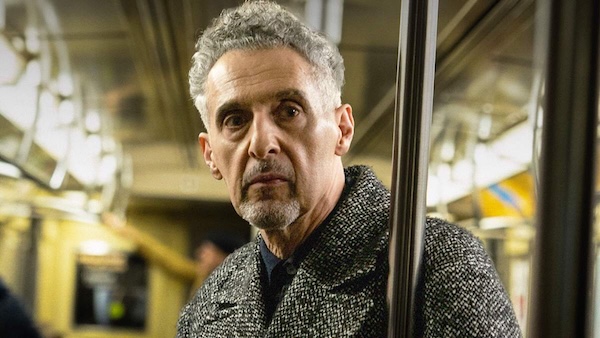
John Turturro in a scene from The Only Living Pickpocket in New York. Photo: Sony Pictures Classics
LCD Soundsystem may not come up as often as Sinatra or Jay-Z in conversations about the acts that made New York, but James Murphy’s band is inseparable from the city’s late-2000s reinvention. The song that most firmly binds them to it is also their most disenchanted: “New York, I Love You, But You’re Bringing Me Down.”
It’s a fitting opener for Noah Segan’s second feature, The Only Living Pickpocket in New York, a film suspended between reverence for the city and grief for what—and whom—it leaves behind. At its center is a man whose hometown has moved on without him: veteran pickpocket Harry Lehman (John Turturro, in fine form), who probably isn’t much of a disco-punk fan.
Harry wears his obsolescence with pride, from his ever-present houndstooth overcoat to the jazz-funk records he dances to beside his bedbound wife, Rosie (Karina Arroyave). His tastes may belong to another era, but his hands haven’t lost their touch.
An early sequence establishes his credentials: a meticulously groomed businessman discovers only when he reaches for his wallet to pay for lunch in a Manhattan high-rise that Harry lifted it on the subway. By then, the haul has reached a Bronx pawnshop run by Harry’s longtime friend and even longer-standing accomplice, Ben (Steve Buscemi). Unfortunately, the wallet contains no cash, and the flashy Swiss watch Harry also swiped turns out to be fugazi. In this New York, apparently, only the over-50s carry anything worth stealing.
It’s one of the script’s deft little ironies. Segan began in front of the camera and has worked with Knives Out director Rian Johnson, a producer here, since 2005’s Brick. He has a feel for character on the page and draws compelling performances from his veteran cast. But it’s his collaboration with Lady Bird cinematographer Sam Levy that gives the film its texture, turning what could have been a routine exercise in nostalgia into a study of a man outliving his world.
Levy shoots the subway with a guerrilla immediacy that recalls The French Connection. It’s Harry’s unofficial office, a place to ply his trade and hold court with petty-crime detective Allen Warren (Giancarlo Esposito). Their easy rapport suggests a history stretching back well before cybercrime became the department’s priority. They seem more like old friends than adversaries now, though Harry still observes enough professional etiquette to sit on his hands while they talk.
Much has been made during the film’s press run of Levy’s use of the same lenses Gordon Willis employed on The Godfather. That lineage becomes especially pointed when Harry steals a bag from a lovingly restored 1960s muscle car belonging to arrogant twenty-something Dylan Diamond (Will Price), whose family connections make him a particularly unfortunate mark. For all the car’s vintage allure, the only thing Diamond wants back is a USB drive containing nearly a million dollars in crypto. Harry’s grasp of the technology is shaky enough that he calls it a “USP”; his efforts to dispose of it lead Diamond’s vape-suckling goons straight to Ben’s shop. Forced to surrender Harry’s address, Ben unwittingly puts Rosie in their hands.
With Rosie held hostage, Harry sets off across the five boroughs to recover the drive. Segan uses the ticking clock to balance the story’s emotional weight with flashes of humor, though his affection for the city—particularly the outer-borough corners so often eclipsed onscreen by Midtown—occasionally threatens to overwhelm his interest in the man navigating it. Still, Turturro keeps the film anchored. His Harry is pensive but never inert, always sizing up the next angle. When Tatiana Maslany arrives late in the film as his estranged daughter, Eve, she quickly emerges as his strongest scene partner. Their confrontation gives the story a more intimate reckoning: the city isn’t the only thing Harry has lost touch with.
The final act is tidy in construction, if far from pretty in consequence. Diamond insists there can be no happy ending for someone who crosses his family, but the film finds room for surprises—not least in the casting of a Hollywood heavyweight as the syndicate’s matriarch.
When the story is over, the Manhattan skyline remains. The shot recalls the final image of Chantal Akerman’s News from Home; whether deliberate or coincidental, the resemblance crystallizes Segan’s preoccupation. People disappear, buildings rise and fall, and the city endures—not by preserving the lives that made it, but by continuing without them.
Noah Goldstein is a student at Tufts University pursuing a dual degree in Film and Media Studies and Cognitive Brain Sciences. He covers the film and music beats for the Tufts Daily and occasionally writes on sports. He is originally from New York City.
Tagged: Character Study, Crime Drama, Giancarlo Esposito, John Turturro, New York Cinema, New York City, Noah Segan, Nostalgia, Rian Johnson., Sam Levy, Steve Buscemi, Tatiana Maslany, film review