Music Interview: Keeper of the Flame — A Conversation with Grahame Lesh
Grahame Lesh on growing up Dead, Bob Weir, Bravo’s “Real Housewives,” the birth of Terrapin Crossroads, and why the Dead will never die.
Grahame Lesh & Friends’s Halloween-week run: Boston on October 29 and Nantucket on October 30 and 31.
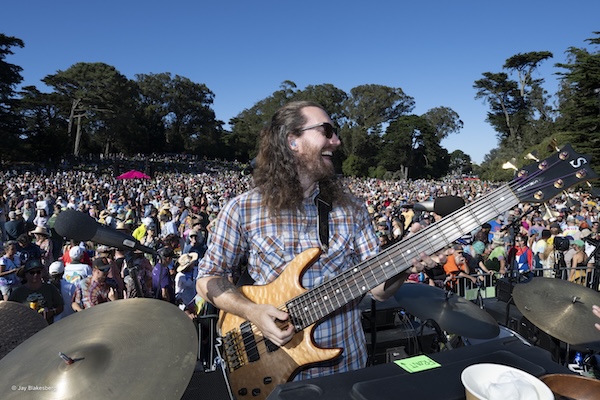
Grahame Lesh. Photo: Jay Blakesberg
The late, great Phil Lesh had a metaphor for the ever-growing organism that is the Grateful Dead.The Dead’s bassist would “talk about the Grateful Dead as a grandfather oak,” son Grahame Lesh tells me in our recent phone interview from his Marin County, Calif., home.
“The roots are what the original band members back in the ’60s were inspired by. The trunk is the band members themselves. And all the branches and leaves are every musician inspired by the band — all the cover bands, original bands who love the Grateful Dead, me.”
Phil’s bandmate, the late Dead founding member and rhythm guitarist Bob Weir, famously had a 300-year vision for the Dead: centuries from now, people would still be singing their songs.
Some oaks can live longer than that.
And Grahame Lesh is a scaffold branch.
I last saw Grahame Lesh play with his dad at what would become Phil Lesh’s last show in Boston, in July of ’23.
Jupiter, that ol’ Roman god of rain, wind, and thunder, lurked in the heavy seaside air that night. Maybe you were there. Midway through the show by the ocean at Leader Bank Pavilion, the rain became torrential. It puddled around our feet and streamed down the aisles. Thunder bled into the father’s bass and the son’s guitar. Lightning flashed with strobing stage lights. The Lesh men didn’t stop until the venue shut them down. A mighty oak battling Jupiter’s wrath.
Ironically, Phil and Grahame duetted on “Jupiter” that year — Grahame’s music set to unearthed lyrics from Grateful Dead lyricist Robert Hunter and recorded by Grahame’s band Midnight North.
All the ocean in a broken cup
Pour and pour, still it don’t fill up
Wind on the water could mean rain
Thunderbolts ripping up the plain
When I call Lesh, he tells me he recently revisited “Jupiter” with his other band Grahame Lesh & Friends and recorded a take for their upcoming album, Vol. 2 – Juno, out December 4.
Juno will be available on Bandcamp, vinyl, and CD. It’s “the second in a series of Grahame Lesh & Friends projects reworking and rediscovering old material that we either think didn’t get a fair shake or that no one ever played,” Lesh tells me.
“The songs are built out of the legacy of the roots of the Grateful Dead and its surrounding music, but hopefully doing something unique on it.”
The grandfather oak is, spiritually, Lesh’s family tree. While there are many offshoots and branches of that oak, Grahame Lesh devotes his life to keeping the old oak growing. His bough is heavy with leaves and continuously climbing up, up, up toward sunlight.
A keeper of the flame, he performs the Dead’s music to fans around the country, most recently with the Jerry Garcia Symphonic Celebration alongside the Boston Pops in June. (Arts Fuse review)
Catch Grahame Lesh & Friends October 29 at Paradise Rock Club, and October 30 and Halloween night at The Muse in Nantucket. (“We’ve got a few costume ideas. I don’t want to say too much before we know whether we can pull it off.”)
I called to talk about growing up Dead, unearthing Hunter lyrics, David Crosby, the birth of Terrapin Crossroads, Bravo’s “Real Housewives,” why the Dead will never die, and more.
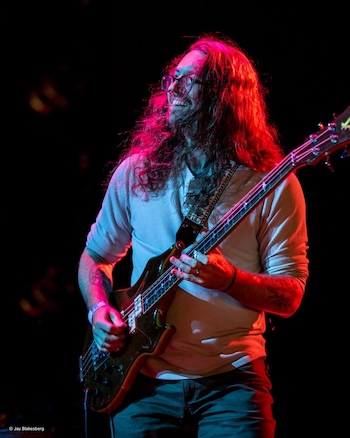
Grahame Lesh. Photo: Jay Blakesberg
The Arts Fuse: I know you were young when Jerry died, but did you travel with the Dead?
Grahame Lesh: I did. I was born in December ’86, so I was very small when In the Dark came out, which blew the Dead up to their late-career post-“Touch of Grey” level. That’s the time I remember. I was 8 when Jerry passed, so I remember a lot of first sets — my mom wasn’t really staying for the whole show with two little kids.
AF: [laughs] True.
Lesh: [laughs] But we went to most shows. We went on tour with the band. I was lucky that the band and my family had the resources to bring two kids on the road. My dad being an older parent helped. I can only imagine him trying to lug kids around in that crazy scene in the ’60s. By the ’80s, there was the support and the infrastructure for us to be a family on the road.
AF: Some kids might rebel against the family business. Did you always know that you wanted to follow in your dad’s footsteps?
Lesh: I always wanted to play music; I just didn’t know what form it would take. My folks put my brother [Brian] and me into piano and music lessons pretty early, just as a foundation, and I’m extremely grateful for that.
That set me on a path to having music as part of my life, no matter what form it would take. I always had bands in high school and college, and they didn’t all sound like what I play now. They weren’t as connected to the Dead. But it’s impossible to escape all the Dead music I listened to, and everything else around the house.
Then my folks started a music venue when I was a few years out of college. That was Terrapin Crossroads [in San Rafael, Calif.]. That gave me and my brother the opportunity to perform with my dad and get more involved in the family musical scene.
AF: How old were you when you first started playing with your dad?
Lesh: We’d done occasional benefit shows for my high school, small local gigs when I was 16, 17. I’d sit in with Phil & Friends for fundraisers for local charities. But our first big show was in 2010. We went to Woodstock with my dad and performed at one of Levon Helm’s rambles.
AF: Wow, those Midnight Rambles were iconic.
Lesh: Yeah, that’s where we met [Levon’s daughter] Amy Helm and got in touch with that scene. Levon’s setup was the inspiration for my folks starting Terrapin Crossroads restaurant. Seeing Levon and Amy perform together — all of us hanging out with Levon afterwards in his kitchen — that was special. My folks were like, “Oh, we want that. Where people come to us.”
Once Terrapin opened, my other band, Midnight North, started. We all grew up in this Bay Area music scene that coalesced around Terrapin.
AF: Do you have any particular memories of playing with your dad that you look back on now?
Lesh: Not any one particular. So many. And we got to do it a lot, which was wonderful.
AF: I have to ask: what’s your favorite Grateful Dead show? Is it a classic like Cornell ’77? Something more obscure?
Lesh: The real classics everyone talks about — Cornell, Veneta ’72, Europe ’72. The ones where there’s great footage or a way to revisit tend to be what drifts to the top. What’s cool is the Dead have been reopening the vault, so we can get some of these things on vinyl pretty easily.
AF: I interviewed Dead archivist Dave Lemieux on the release of the Boston show and the new app, Play Dead, which all fits into what Weir envisioned: the 300-year plan. What do you think makes the Dead’s music so timeless?
Lesh: First, they’re amazing songs. But there’s a vibe that permeates the whole thing — a freedom that permeates the attitude of the fans, the community, the band members and how they approached the whole thing.
Jerry said following the Dead is like running away with the circus. There’s nothing else like that anymore. Everything’s so connected, it’s hard to get lost and be yourself. This is still a space — Dead & Company showed that, and Terrapin Crossroads, and my dad’s shows — where everyone can be themselves and just be there for the music and the community.
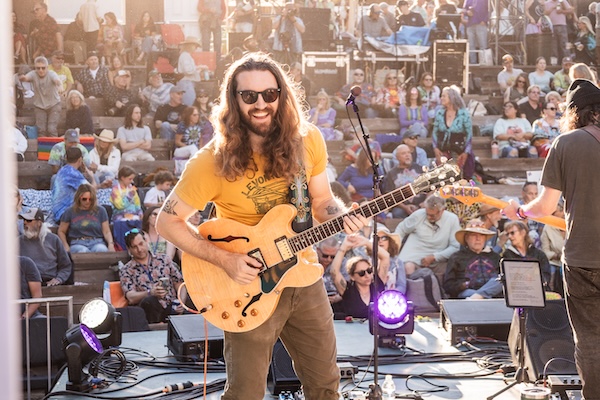
Grahame Lesh. Photo: Sam Watson
AF: True. But even without live shows or following bands: why do we still listen on vinyl? Tape it? Stream it?
Lesh: There’s just so much of it. You can turn on a different show and hear a totally different performance of [the same song].
It’s basically impossible to get to the bottom of it or listen to it all, because there’s so many years of people playing this music and putting their own spin on this music.
AF: That’s a great point. The Dead famously didn’t like the studio — they were all about live shows, and they didn’t care who taped. In the end, that might be why they outlast other bands from the ’60s, and why the listening is so endless.
Lesh: That’s especially important now, where everything is so cookie-cutter. It’s a race to the middle in so many ways. There’s nothing like live music — or recorded live music — because you don’t know what you’re going to get.
AF: You mentioned cover bands earlier — they’re like leaves on the grandfather oak. The roots were the Dead’s inspirations, you said.
Lesh: Yeah, my dad came up as a classical composer, basically. Jerry loved bluegrass — so much of his unique guitar-playing came from bluegrass banjo. Pigpen was a bluesman. Bob studied jazz piano players to get his rhythm-guitar style. [Billy] Kreutzmann’s jazz drumming chops, and Mickey’s world music, and Bob Hunter coming from the beat and folk tradition — it’s synthesized together. Those are the roots.
Even before John Mayer joined Dead & Company, he was a fan, so his original music fits on the tree.
AF: You just released a new take on “Jupiter,” which first appeared on Midnight North’s ’23 record, Diamonds in the Zodiac. “Jupiter” is your music set to Robert Hunter lyrics.
Lesh: Yeah, my dad passed along a big set of lyrics many years ago. I wrote the music to that song almost 10 years ago. “Jupiter” is our second trip to that planet because I recorded it once with Midnight North and now I’m recording it with this band.
AF: It was written by Robert Hunter for your dad?
Lesh: Yeah, for a project [Phil Lesh’s Planet Jams] like 25 years ago. The history of the project is long, but basically, there’s a set of lyrics that my dad started to write music to, but it never really got anywhere.
There’s lots of [unused] stuff out there. Bob Hunter put a lot of them in his book — stuff he never finished, or that Jerry and the band never got to. So I think it’s important for the music to keep moving forward, for all the leaves and branches to keep growing.
AF: That’s a great way to put it. So tell me more about Vol. 2 – Juno. This is another leaf off the grandfather oak. It sounds like you unearthed some treasures.
Lesh: Yeah, so “Wave to the Wind,” one of my dad and Hunter’s songs with the Grateful Dead, was played a few times in the ’90s, but never really got a fair shake.
“The Wall Song” is a David Crosby song. We actually got Graham Nash to sing on it. My dad and Jerry and Billy Kreutzmann played on the original recording of “The Wall Song,” so that’s super special.
“Mountain’s Other Side” is written by our keyboard player Damian [Calcagne] based on a jam from the 1970s PERRO [The Planet Earth Rock and Roll Orchestra] Sessions, which was the Dead, CSNY, Jefferson Airplane, all in different rooms of one studio for months. David Crosby’s first solo album came out of that. A bunch of Jefferson Airplane stuff came out of that.
But there are songs and jams that never went anywhere. So Damian wrote to one — Jorma [Kaukonen] thinks it was his riff originally. But they’re all stoked to see music made over 50 years ago turn into something else.
There’s a whole bunch of music out there that we know of. I don’t think we’re gonna run out of material anytime soon. And eventually we’ll just write our own, and add to the repertoire that way.
AF: Did you have a certain moment as an adult, with your dad, where you thought: This is what I want to do?
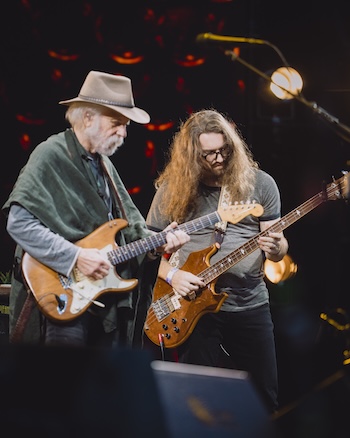
Bob Weir and Grahame Lesh. Photo: Chloe Weir
Lesh: The Dead 50th [Fare Thee Well concerts in 2015] blew my hair back. I realized: This is bigger than I thought. My dad had done enormous shows since Jerry died. But nothing quite like five-nights-at-a-football-stadium big.
The 50th was the first time I experienced the height of what the Grateful Dead had been when I was too young to grasp it. Plus, the 50th was when all these people came out of the woodwork as being Deadheads.
Not just the famous people — the John Mayers. But friends I grew up with. The depth of it surprised me.
AF: Speaking of Mayer — do you think Dead & Co. would ever come back, with John or other people joining?
Lesh: I don’t know. I think that’s up to John and Mickey. Dead & Co. was a large amount Bob. So if anything comes next, it’s going to be very different. I don’t know what — I’m just speculating. But it’s a big deal to lose these guys. Whatever comes next has to reckon with that.
AF: Very true. And I have to ask: Bravo’s Andy Cohen — John Mayer’s buddy — is a huge Deadhead. I love the story you told on Watch What Happens Live with Andy Cohen. Apparently your dad was shopping for jewelry in the background of a Real Housewives of New York episode?
Lesh: [laughs] Yeah, it happened years ago, and my mom had known about this forever.
AF: I love that. I’m picturing her watching TV and saying, “Oh my God, that’s my husband”?
Lesh: [laughs] Yeah. She was watching and recognized the jewelry shop. Then she was like, “Whoa! There he is!”
I’m a fan of Andy’s — I met him at the Dead 50th; he and John are obviously good friends; he’d had some of my other friends on, like [Dead photographer] Jay Blakesberg. So there was just enough connection for me to go on. As soon as my mom heard I’d be on, she’s like, “You have to tell him! No one knows this but me!”
This interview has been edited and condensed.
Lauren Daley is a freelance culture writer. She can be reached at [email protected]. She tweets @laurendaley1 and Instagrams at @laurendaley1.
Tagged: Bob Weir, David Crosby, Dead & Company, Graham Nash, Grahame Lesh, Grahame Lesh & Friends, Grateful Dead, Jerry Garcia, Lauren Daley, Midnight North, Nantucket, Paradise Rock Club, Phil Lesh, Robert Hunter, music interviews