
Musician Interview: Eli “Paperboy” Reed Comes Home to Cambridge With “Getting There”
By Robert Duguay
Ahead of his October 2 Regattabar show, the Brooklyn-based soul singer reflects on Boston’s supportive early-2000s music scene, working with Swamp Dogg, and the pleasures and challenges of drawing from a deep catalog.
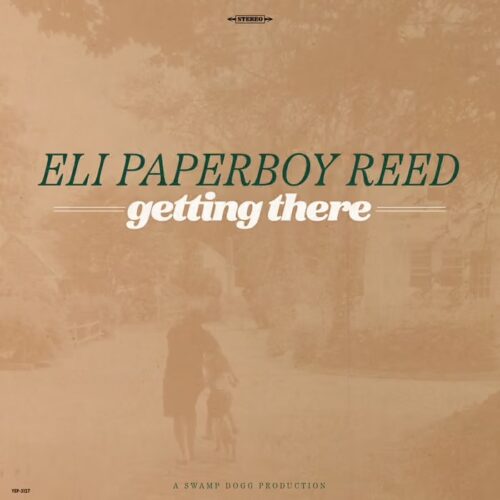
A few years before soul music experienced its bombastic late-2000s revival, Eli “Paperboy” Reed was honing his chops in the style throughout Boston. Now based in Brooklyn, Reed continues to tour widely and release records. His latest album, Getting There, arrived September 11 via Yep Roc Records, and he is currently on the road in support of it.
On October 2, Reed returns to the area he once called home for a show at Regattabar in Cambridge. The performance begins at 7 p.m. and will no doubt be a weekend highlight for fans of vibrant, deeply rooted music.
Reed and I recently spoke about making the new album, his time in Boston versus his current New York City surroundings, performing in unusual settings, and balancing old and new material as he builds a durable set list.
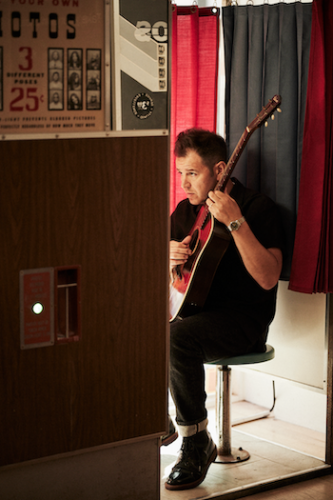
Eli “Paperboy” Reed. Photo: Rex Creative
The Arts Fuse: You brought in Swamp Dogg to produce Getting There. He has a distinctive musical history, having worked in styles ranging from soul and country to R&B, disco, and even hip-hop. How did you initially connect with him and ask him to be part of the recording process?
Eli “Paperboy” Reed: We met on tour in Europe during a run we did together in 2014. I’ve been a big fan of his, both as a producer and as an artist. He saw my show and liked what I was doing; I liked what he was doing, so we stayed in touch. I thought this was a good moment for us to get together, especially on a record like this, which reminded me a lot of his style.
AF: When it came to the producer-recording-artist dynamic in the studio, what was it like working with Swamp Dogg? Did he take you out of your comfort zone? Did he unlock something in your approach to music you hadn’t explored before?
EPR: We both wanted the same thing, so it wasn’t exactly like he was trying to push me to do something I didn’t want to do. It was more about us working together to do what was best for the record. Both of us are very song-focused, so we wanted to do what made the most sense for each song.
AF: You’re currently based in Brooklyn, but you grew up in the Boston area. As a musician who started his career here and is now part of the Brooklyn scene, what would you say are the biggest differences between the two cities?
EPR: I haven’t really been part of the scene in Boston for 20 years now, so it’s hard for me to say what it’s like these days. When I was growing up there, I was in my early 20s. There were a lot of young bands and a lot of good music. I was playing in a lot of punk venues, and it was really fun.
When I came to New York, there was a nascent soul-music scene, and I got to be close with a lot of people who were part of that. Daptone Records was getting going at that time, but now it’s really different.
New York has so many different scenes for so many kinds of music, and the scene I was part of in Boston was pretty small. But I think it was great for nurturing what I was doing at the time. There were a lot of cool people I was interested in playing with, and everybody was open to a lot of musical diversity on the bill and things like that. I don’t know what the Boston scene is like these days, but back then it was definitely a supportive atmosphere.
AF: You just mentioned starting out in punk venues. You have a show coming up at Regattabar in Cambridge, which maintains a very different atmosphere. A great many jazz musicians have played there over the years. What are your thoughts on returning to the area where you started out, and on the upcoming performance?
 EPR: When I was living in Boston, I used to busk in Harvard Square from 2005 to 2006, from April until October, if I wasn’t doing anything else. When I was playing there, it wasn’t far from where Regattabar is, so it’s funny to be able to go back and play in a swankier place in Harvard Square than I’m used to.
I’ve had a pretty long career, which is amazing, so I’ve been able to play everything from indie-rock festivals to blues festivals and jazz festivals, as well as theaters, punk venues, and all sorts of places. I’ve always looked at it this way: I’m going to do what I know how to do, and wherever I am, I hope audiences will respond, whatever the surroundings.
AF: What are some of the most unusual places you’ve performed during your career?
EPR: Oh man, I’ve played in so many different places. I’ve played in bullrings in Spain. I played at a festival on top of Mount Fuji. I’ve played in Tasmania. In a way, it all kind of runs together. (Laughs.) I’ve played in ancient Roman amphitheaters. There are some amazing venues around the world. But, like I said, surroundings aside, you just do what you do. That’s kind of the way it is.
AF: You have a fairly large discography, which means you have a lot of music to choose from when putting together a set list. It can be tricky to blend new music with older material over the course of a performance. How have you been approaching that challenge. Are you interested in creating a cohesive experience onstage?
EPR: It’s always a challenge figuring out what to play, especially when you have so much music to choose from. I let the new music take the lead as much as I can. Every time I start a new bout of performing, I go back into the vaults to figure out what I want to play—whether it’s stuff from older records that I haven’t played in a long time, covers, or different things that different iterations of the band call for.
It’s wonderful to have so much to choose from, but at the same time, it does take some work to figure it out.
Rob Duguay is an arts & entertainment journalist based in Providence who is originally from Shelton, CT. Outside of The Arts Fuse, he has also written for DigBoston, Aquarian Weekly, Providence Journal, Newport Daily News, Worcester Magazine, New Noise Magazine, Manchester Ink Link, and numerous other publications. While covering mostly music, he has also written about film, TV, comedy, theater, visual art, food, drink, sports, and cannabis.
Tagged: "Getting There", Boston music, Eli “Paperboy” Reed, Music interview, Regattabar Cambridge, Soul music, Swamp Dogg