
Arts Commentary: The Last Laugh — Stephen Colbert, Comedy, and Cultural Resistance
By Matt Hanson
How Stephen Colbert’s late-night run became a casualty of corporate power, political retaliation, and the thin skin of America’s oligarch class.
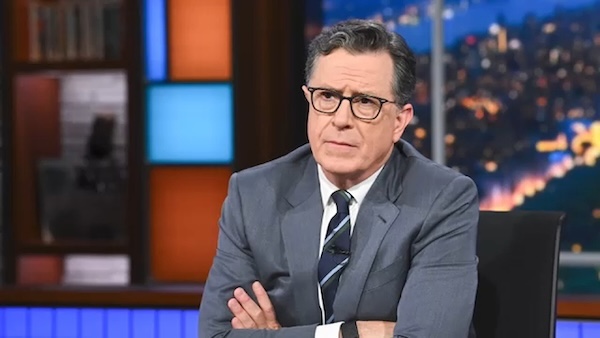
Stephen Colbert on The Late Show with Stephen Colbert. Photo: YouTube
It started, appropriately enough, with a joke. Last summer, during an episode of The Late Show with Stephen Colbert, Colbert cracked wise at the willingness of CBS’s parent company Paramount to settle a dubious lawsuit with President Trump to the tune of $16 million. This sure seemed to be designed to grease the wheels of an impending merger with Skydance Media, owned by billionaire Trump supporter David Ellison. Colbert did exactly what gadfly comics are supposed to do: he called it the “big fat bribe” it was, and added in a silly dance, for good measure. Three days later, the powers-that-be decreed that The Late Show would end — despite the fact that it had been the top-rated late-night show for 11 years. Financial considerations, explained the corporate higher-ups, but this should be taken with an eye roll as big as the UFC cage the president is currently building on the White House lawn.
The excuse was grounded in a reasonably true fact: late-night TV as a format is dying off. Obviously, the days are long gone when the entire country watched Johnny Carson every night, let alone Jay Leno or David Letterman. Still, given that The Late Show was top-rated in its time slot, with an average of 2.7 million viewers per night, there was clearly an audience for what Colbert was doing in NYC’s venerable Ed Sullivan Theater. Unless you’re willing to take calculating billionaire supporters of the notoriously thin-skinned POTUS at their word, it’s hard not to conclude that Colbert was being punished for no more than pissing off the oligarch class. As if a comedian would ever consider such a thing.
It’s quite ironic that much of Trump’s political momentum — and the right-wing echo chamber more broadly — was fueled by complaints that “free speech” is endangered because liberal types are allegedly too sensitive about people who are “just making jokes.” It’s by no means unfair to argue that cancel culture can go too far. But Colbert’s sudden cancellation (and the president’s public gloating about it) is only the latest shining example of the hypocrisy that festers in that argument. What’s good for the satirical goose is good for the gander.
Colbert’s brilliance goes back to his days as The Daily Show’s all-star correspondent, where he lampooned the phony gravitas of TV journalists and the pompous rectitude of politicos by delivering hilariously absurd, outrageous premises with a perfectly straight face. Colbert and his peers (most of whom have gone on to great careers themselves) mastered the art of playing the political commentator as an absurdist straight man, which did exactly what great satire should do: make people laugh while also thinking twice about what they’re laughing at.
I’m old enough to remember when fake ads for The Colbert Report would pop up on The Daily Show, where Colbert pretended to play a Fox News bloviator. Could such a daring conceit be pulled off? The Colbert Report ended up running for over nine years and winning Emmys and Peabody Awards. This time, Colbert played up his boorish ignoramus persona to the hilt, a different way of putting a lampoonish spin on the day’s events. “Stephen Colbert” presented himself to his guests and his audience spouting conservative talking points (which Colbert himself didn’t agree with) that he could then improvise and riff on. This caught unsuspecting guests off guard, forcing them to banter more cleverly to keep up with the host’s ironic self-aggrandizement. His years at Chicago’s famed Second City improv group weren’t wasted.
When Colbert took over The Late Show, it was refreshing to have him present himself as Stephen Colbert, a human being who, it turns out, was well worth hanging out with. The comedian showed himself to be a charming, funny, and unexpectedly reflective presence on your TV screen night after night. He is, in fact, a deeply devout Catholic from South Carolina, a doting father, and a world-class Lord of the Rings nerd.
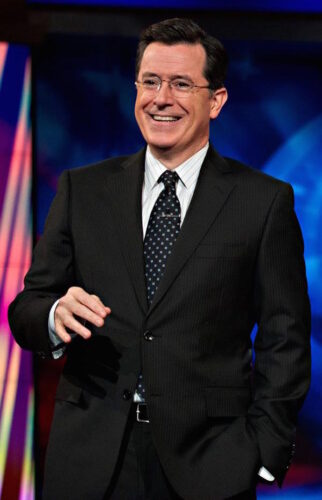
Stephen Colbert, in 2011, on the set of The Colbert Report. Photo: Wikimedia
I have always enjoyed late-night TV, but the interviewing-celebrities format quickly becomes vapid. Playing with the form is crucial; you shouldn’t just nod along to whatever famous and pretty people are saying. Colbert used his finely honed improv skills whenever possible to shake things up. He talked politics with the likes of John Dickerson, danced with legendary musicians like David Byrne, and had guests recite poetry or sing sea chanties via Zoom during Covid.
As part of his Colbert Questionert, he coaxed guests into answering questions they might not have otherwise been asked on a talk show, ranging from what they thought was the best sandwich to what music they would choose to listen to for the rest of their lives. He even grilled them on what happens when we die. I wouldn’t have expected Ted from Bill and Ted’s Excellent Adventure to have such a moving answer to one of life’s most profound questions.
Under Colbert’s guidance, The Late Show delivered all the expected newsworthy wisecracks and guest banter, but it was also, consistently, the most literate, thoughtful, and socially conscious late-night show on air. The talented live band helped the great Jon Batiste gain nationwide recognition as well, and we should also lament the loss of a key space for musicians and comedians to get national exposure.
One of the quotes from Margaret Atwood’s novel The Handmaid’s Tale that has become resonant in the past decade is “Don’t let the bastards get you down.” The last episode doubled its usual YouTube viewership by doing exactly that. Colbert used every available tool in his entertainer’s bag: he was vulnerable, gracious, sarcastic, and warm. He sat down with none other than Sir Paul McCartney to reflect on the many years that had passed since he and the lads first performed in America and changed rock and roll forever.
Everyone understood that what Colbert and the crew had created over 11 years was going to end, and that this shutdown wasn’t their fault. The humorless, greedy moneymen who either already rule so much of the airwaves or control everything around us — or at least want to (something Jon Stewart anticipated years ago) — were going to get their way yet again. Land of the free, indeed.
Yet this is, in a sense, also wrong, or at least not quite the case. Despite the threat of corporate conglomeration, opportunities for resistance — independent, critical, collective — won’t be stamped out. One of these means of rebellion is how one chooses to react. Joy can be subversive. The pleasure one takes in the self-affirmation of creativity, art, and humor is a very good way to repel the gloom.
The audience, Colbert, and the crew knew perfectly well in that last show that they were on the losing end of a game they couldn’t win. The rules were being rewritten. Yet they refused to kowtow. Apprehension about the future of late-night TV was touched on when other hosts came out for a bit. They faced their uncertain futures, as wittily represented by a swirling, green-lit multidimensional portal. The point is, everyone left that studio with their heads held high, laughing. That’s victory.
Amusingly, Colbert soon reappeared hosting a public-access show from a small town in Michigan, taking plenty of shots at his former network, which was apparently pissed off. CBS complained about his use of their copyrighted material, which surely couldn’t have had anything to do with their refusal to let other shows on their network mention this newsy, fun event. Colbert’s replacement is billionaire Byron Allen, who, it is reported, paid CBS for the time slot for his new show Comics Unleashed. In a preview I saw, one comedian questioned why we call it carrot juice when there’s no juice in a carrot to speak of. Unleashed!
Meanwhile, Colbert has now established a new YouTube channel, built up a tremendous amount of public goodwill, and was apparently tapped to write the script for a new Lord of the Rings movie, which is a lifelong dream. CBS’s growing troubles include slumping ratings for its news product, a miasma empowered by the dismantling of its flagship news magazine 60 Minutes, which is cracking under the pressure of new producer Bari Weiss’s MAGA-friendly demands. So, who’s got the last laugh now?
Matt Hanson is a contributing editor at The Arts Fuse whose work has also appeared in The American Interest, The Baffler, The Guardian, The Millions, The New Yorker, The Smart Set, and elsewhere. A longtime resident of Boston, he now lives in New Orleans.
Tagged: "The Late Show with Stephen Colbert", David Ellison, Paramount+, Skydance Media
I had no idea my neighbor is famous!
Stephen Colbert was the highlight of my day! I always loved his opening monologue, and he was an awesome host. I hope CBS suffers a huge loss of viewers.
I always enjoyed watching Stephen Colbert. I loved the humor he gave to subjects that were beyond funny, they were
truly ridiculous. Stephen could tell the truth in a way to make us laugh instead of cry because we were just the small people
in the other sides BIG LIVES. Stephen will be missed by all who just need and want a good laugh at the end of the day.
I can give up CBS shows as easily as they gave up Stephen Colbert.