Dance Review: Dancing Between Traditions — Vimoksha’s Lush and Luminous Fusion
By Jessica Lockhart
A Boston-based ensemble blends Indian classical forms with contemporary dance to probe birth, patriarchy, and migration.
Vimoksha Dance Company at the Institute of Contemporary Art, Boston on April 18.
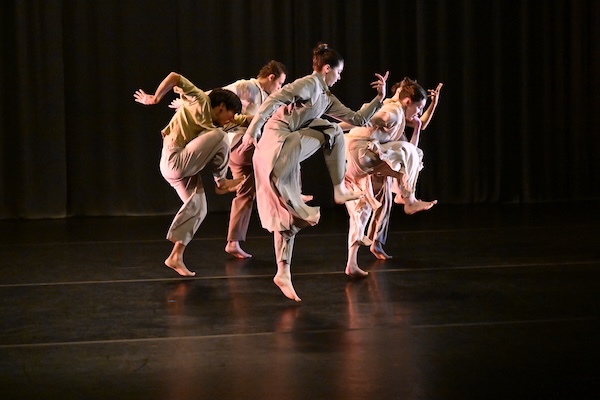
Vimoksha Dance Company performing Moksha Patam. Photo: Olivia Moon Photography
The Vimoksha Dance Company was formed in 2010 by Chavi Bansal, who was born and raised in India. In Sanskrit, “Vimoksha” means liberation or freedom. Bansal embraces the company’s name: her works explore themes of passage, birth, and new beginnings in the performance at the ICA. This soul-searching troupe blends traditional Indian movements with Western contemporary dance, and the result is quite beautiful, at times haunting.
The dancers drew on the intricate gestural movements of some classical Indian dances, such as Bharatanatyam, Kathak, or Odissi, but in understated ways. You noticed the gestures, but they were coupled with modern movements that countered the postural precision of Indian dance. The result was, as the dancers swooped and swung their bodies through space, or came tumbling down to the floor, a rich fusion of severity and lushness. This beautiful combination of small and large movements was put in the service of conveying the storytelling themes of Vimoksha.
The program offered three dances. The first was “Moksha Patam,” which is the name of a 13th-century Indian game of vice and virtue. The five dancers evoked what happens as the game is being played. We see the dancers make their choices and then watch how the dancers deal with the consequences. Bansal’s choreography in this program followed a scenario: the ensemble moved from big, full-bodied expressions to more inward movements that became increasingly quiet and reflective. The intent was clear: the drama charted the highs and lows of being immersed in the gaming world. Winning was great — but losing was crushing. The original sound score (which ranged from the hypnotic to stomping tabla beats) was composed by Jake Meginsky, who is a Professor of Music in Dance at Smith College.
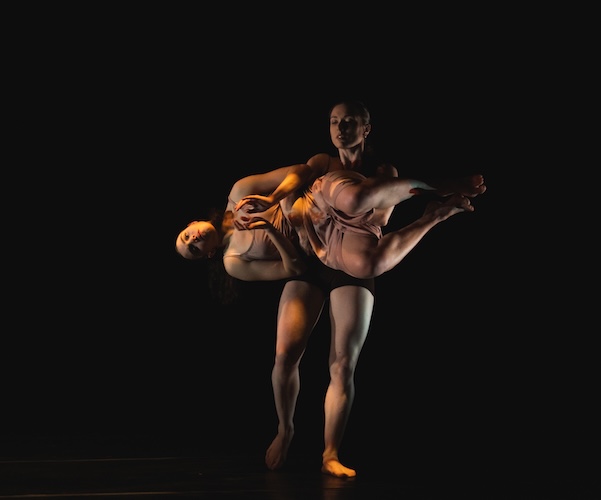
Vimoksha Dance Company performing Touched by Water. Photo: Olivia Moon Photography
“Touched by Water” was the second dance on the program. It addressed issues of motherhood and patriarchy. Two female dancers were dressed in black shorts and nude-colored tops; the latter, at first glance, made it look as if they were bare-chested. Hmm… young daughters? Then two more dancers entered, wearing flowing multilayered clothes with scarves… mothers? This dance didn’t shy away from directly representing birth: the dancers squatted, their legs wide, their pelvises pushing. Accompanied by sounds of water, the intent seemed to be to evoke the experience of the fetus in the womb. But not all was celebratory: a mother hugged her female child, suggesting the anxiety that comes when giving birth in India — there is social pressure to produce male heirs.
The final dance, “Salt Soaked,” explored the topic of immigration. Bansal immigrated to the United States, and during the performance we hear, woven into the original music score by Inga Chinilina, recordings of her and others speaking about their memories of migration and journey. Seven women dancers begin walking like pedestrians, occasionally stopping to look around them. The sound of water arrives, and that changes their movements — the dancers are now frantic and searching. This full-bodied piece, like the others, showed off the strength and dynamics of this skilled dance company.
The evening’s overall tone was of quiet intensity, a focus on strength and determination. Difficult subjects were approached with grace and thoughtfulness rather than anger or theatrics. The performance was presented by Global Arts Live, whose tagline is “Performance That Shapes Our World.” In these stressful times, filled with global tensions and wars of choice, it was a treat to experience this Boston-based dance company’s aesthetic mashup, a celebration of the lives and art of people in India and America.
Jessica Lockhart is a National Endowment for the Arts Fellow in Dance Criticism and has a BA in Communication from the University of Southern Maine. Lockhart is a Maine Association of Broadcasters award-winning independent journalist. Currently, she also works as program director at WMPG Community Radio.