Film Fest Preview: The Independent Film Festival Boston — Demanding and Creating Independent Audiences
By Michael Marano
This year’s Independent Film Festival Boston kicks off this week, and it offers a grand selection of must-see indie films that set audiences free from the soulless product of corporate franchises.
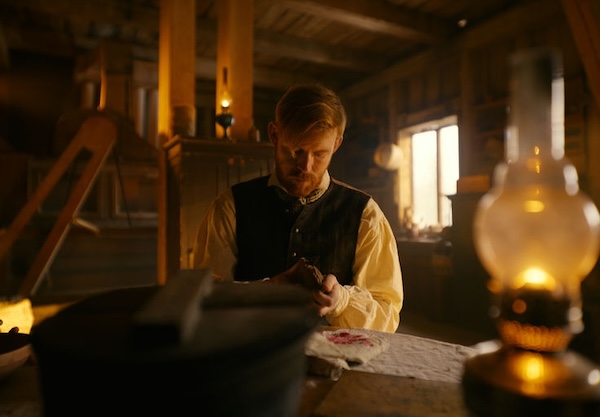
A scene from Katariina Aule’s Breadsong. Photo: Independent Film Festival Boston
Once upon a time, you could think of movies as “commodities produced by studios for audiences.”
Quaint, isn’t it?
The idea of movies being produced for people to see?
Because in this world of mergers, takeovers, “vertical integration,” IP management and franchise farming, movie studios are just one wing of vast, corporate enterprises that Frank Norris could never have dreamed of, putting tentacles not across the landscape of the West, but through your brain. Corporate franchise movies exist not to be the endpoint of an exchange with an audience, but a connecting point for consumption of the next product. How many Harry Potter movies were just fascia to connect to the next entry? Maybe half of them? Did you ever walk into a Marvel movie with no idea what’s going on with a character, because you missed maybe a hundred hours of streaming shows tangential to the movie you paid to see?
Or is the Marvel movie you paid to see tangential to the streaming shows?
This “synergy” of IPs dominates corporate film production and creates a circuit, feeding into itself. If the movies are not an endpoint, a commodity produced for an audience, but are instead just a means to ensure the integrity of the circuit of franchise wrangling, then the commodity studios produce isn’t movies for audiences.
The commodity that corporate IP management manufactures is the audience itself. As Marshall McLuhan said, of both literal electrical circuits used to transmit media and metaphoric corporate media circuits: “The circuit as such is a form that feeds back and feeds us into the circuit.”
A circuit is a closed system. And there can be no advancement in a closed system. This year at CinemaCon, the world’s largest trade show for the film industry, Steven Spielberg himself, the guy who is responsible for the Jurassic Park, Indiana Jones, and Jaws franchises, which have generated untold billions, said: “If all we make is known, branded IP, we’re going to run out of gas… [T]here is nothing more important than giving the audience visual stories, and they can be in any form, but we need to tell more original stories.”
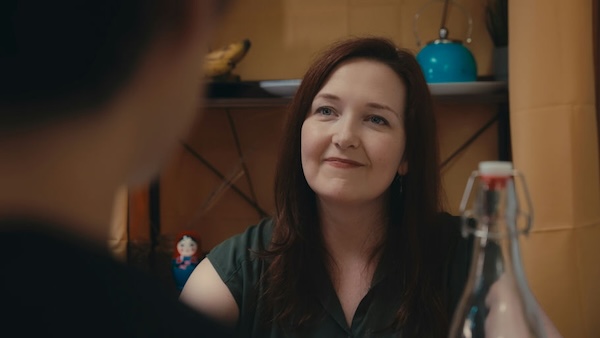
A scene from director Masataka Ishizaki’s The Xenogender. Photo: Independent Film Festival Boston
So with this in mind, what does “Independent Film” mean?
Yeah, a common definition would be: “A film made outside the major studio system.” And maybe that was a working definition a few years ago, when the studio system made movies as a commodity, instead of manufacturing audiences. But in this age of the IP management and franchise farming, a better definition would be “movies made outside the conglomerate system that feeds back its audience into itself.”
So, yeah. The movies are made independently.
But much, much more importantly… the audience is made independent of the system that would make them a manufactured commodity. Independent films necessitate and create independent audiences.
The 23rd Independent Film Festival Boston kicks off this week on the 22nd and runs through the 29th with a grand selection of films that break “the circuit” and free their audiences from it. Here are a few very choice entries I caught before my deadline.
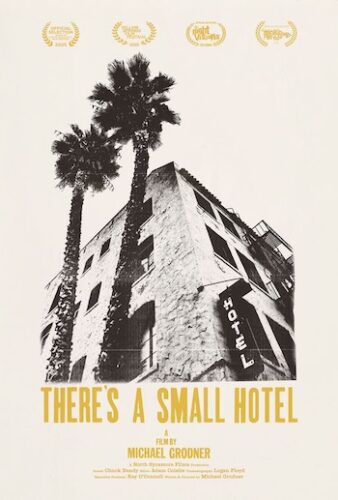
The true spirit of indie cinema is neatly concentrated in Michael Grodner’s short documentary There’s a Small Hotel (screening April 26 and 27 at the Somerville). On the surface, this is a profile of LA’s Brevoort Hotel, known as “The Chelsea West,” a place packed full of artists, musicians, poets and other creative misfit types that evokes a real “John Rechy’s City of Night” vibe. But that vibe is increased exponentially when it’s revealed that the Brevoort is managed by none other than Joe Dallesandro, gay icon of the 1960s and 1970s and star of Andy Warhol films like Flesh, Heat, Trash, Andy Warhol’s Frankenstein, and Andy Warhol’s Dracula. Beyond being a portrait of a hotel and the pretty amazing guy who runs it, There’s a Small Hotel is a snapshot of a creative era of underground expression that seems an impossibility today. In its short and sleezy-sweet 20-minute runtime, There’s a Small Hotel emanates the same feel as do the best novels about LA, as if Bukowski, Chandler, and the aforementioned Rechy got drunk and bashed out a short story on an old Olivetti in a bar off Melrose.
Feeling crappy and depressed about the state of the world? John Portman’s animated short The Beast of the Seine (screening the 26th and the 28th at the Brattle) is a warm and fuzzy little gem, a shot-in-the-arm yarn about a heroic Newfoundland dog in 1908 Paris who saves a kid from drowning. There’s a Graham Greene-ish turn that I won’t spoil, made all the better because this is a “kind of sort of” true story. The Pepe Le Pew-type jokes, based on how stereotypical Americans see the French, summon a few good chuckles.
On the opposite end of the emotional spectrum, for animated shorts, Olivia Moon’s Draft Paper is a deeply melancholy piece also screening on the 26th and the 28th at the Brattle. It looks beautifully hand-drawn in pencil, and is about a guy who hand-draws in pencil. A fashion designer for a dress company in NYC at the start of WWII starts a side gig covering up the nudie tattoos of sailors about to ship off to war. What starts out as a way for him to apply on skin his designs his bosses won’t let him create in cloth becomes a mediation on isolation and loss.
Katariina Aule’s live-action short Breadsong, screening on the 23rd and on the 28th at the Somerville, is a science-fictional little gem from Estonia, telling the story of a hardscrabble family of farmers in the 19th century that feels like a Rod Serling Twilight Zone episode with the production values of Pelle the Conqueror. The children of the family, upon eating (possibly arcane or argot-laden?) bread, channel some kind of message that drives their desperate parents to yet-more desperate measures to survive a brutal winter. The visual senses of cold and hunger get into your bones and your belly, all while still looking oddly beautiful.
Your Cookie (screening on the 23rd and on the 26th at the Somerville), The Xenogender (screening on the 26th and on the 28th at the Somerville), and Noumena (screening on the 26th and on the 28th at the Somerville) are three kind of depressing, but in a good way, live-action shorts exploring the zipless world of urban dating today among young people. Your Cookie could be a one-act play, a study of two characters done in a few deft strokes. The Xenogender is at once about being foreign both in terms of nation and in terms of how one identifies as a species. Noumena hits much like a good Raymond Carver story, ending on a beautifully executed moment of revelatory sadness.
The comedic shorts Hail Mary (the 23rd and 27th, at the Somerville) and High Street Hangover (the 26th and 28th, at the Somerville) are two explorations of losers in their ruts, folks who hit rock bottom and have to decide whether or not to break out the jackhammers to keep digging. In Hail Mary, two idiots hatch a “get rich quick” scheme by posing as exorcists, and in Hangover, a young woman who gets loaded the night before realizes, to paraphrase Danny Glover, she’s “getting too old for this shit.” Both shorts are coming-of-age stories for people who are past the age when they should be experiencing these bildungsroman moments, but… better late than never?
G.O.A.T. (26th and 28th at the Somerville) is a Dutch short exploring an emotional crossroad not for an individual young person, but for a couple entering middle age. Married farmers bring a pregnant goat to a regional competition, which opens some pretty profound wounds. There’s a lot of weight to these 8 minutes.
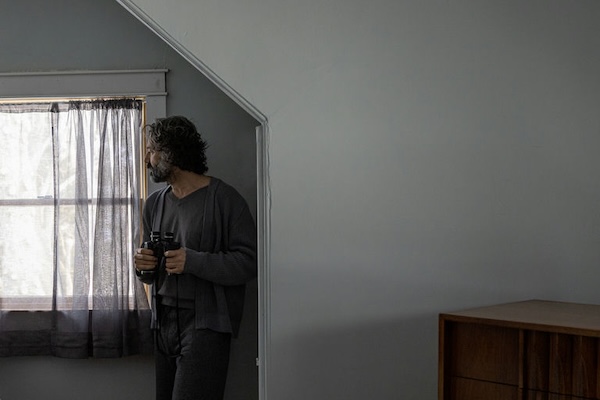
A scene from Pourya Azarbayjani Dow’s As I Am. Photo: Independent Film Festival Boston
The film that will probably make the biggest splash at the festival this year is Pourya Azarbayjani Dow’s feature As I Am, screening April 25 at the Brattle, and filmed in Hingham. This starts out full of ambiguity and mystery, a story about Iranians in the US and the legacies of the tyranny established in Iran after the 1979 Revolution. The first hour or so hits a lot of the same notes as Jafar Panahi’s masterpiece from last year, It Was Just an Accident. Though As I Am is full of a cold, winter-in-New England feel, in contrast to the beating, oppressive sunlight of It Was Just an Accident. Amir has come to the South Shore from Tehran and rents a place near the home of Iranian immigrant Fariborz. Is Amir after payback? Is Fariborz harboring some kind of Costa-Gavras-level secret? The mystery plays out to about the halfway point, and then the story takes a surprising turn—not just in terms of the narrative itself, but in terms of how the narrative is structured and presented. Audiences might be divided on this Brechtian choice, but there’s no denying the hook of the film’s laying of groundwork.
So, as the 23rd Independent Film Festival Boston presents and celebrates independent film, we should also celebrate not just the films themselves being independent from the studio “circuit,” but the audiences seeing these films being made independent from being manufactured commodities, components of a system that even Spielberg says is doomed to “run out of gas.”
Break free of the circuit.
Proclaim your independence from franchise farming and IP management. You get enough of that corporate mentality at work. You don’t need it at the movies.
Author, critic, and personal trainer Michael Marano has been covering film festivals since 1990. He finds them to be the most exhilarating and exhausting things in his entire professional life.