Arts Remembrance: The Musical Mission of Joel Cohen
Joel Cohen’s galvanizing presence left an enduring mark on Boston’s musical culture.
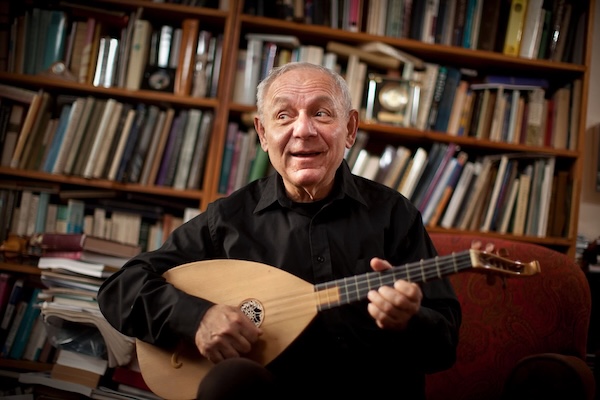
The late Joel Cohen. Photo: The Boston Camerata
There was a time when the expression “Early Music” meant little to Boston audiences. Or, for that matter, to American audiences in general. The city had embraced Baroque music early—the Handel and Haydn Society was, after all, started in 1815. But the krumhorn, viola da gamba, serpent, cornetto, and other early instruments were not part of our musical lingua franca. And music by the likes of Lassus, Du Fay, Ciconia, and other early musical geniuses was known to few.
Joel Cohen, who died last week at age 84, was arguably the key catalyst in turning Boston into an international center for Early Music and for “historically informed performance.” The Boston area is now home to a number of renowned vocal and orchestral early music groups, dozens of smaller but equally talented ensembles, and the unique Boston Early Music Festival.
Cohen directed The Boston Camerata from 1968 to 2008 and was director emeritus until his death. He was a skilled musician, but just as importantly, a humanist-scholar. He dug deeply into musical archives, but wasn’t interested in obscurity for its own sake. He was a storyteller, and his programming and program notes always situated the work in its social and cultural context. For him, music was truly an international language, and his expansive curiosity extended into an exploration of the intersection of Western, Islamic, and Jewish musical traditions.
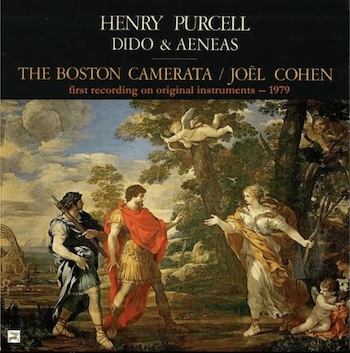
Cohen didn’t restrict his repertoire to Early Music. He also performed and recorded early American music—including albums with members of the Shaker community. He was a longtime advocate for historically informed performance in the United States, including using period instruments in Baroque music. In 1978, he was the first to record an historically informed “Messe de minuit” by Marc-Antoine Charpentier. Then, in 1979, came the first period-instrument recording of Purcell’s Dido and Aeneas.
My own initiation into this music was through a chance meeting with Cohen in the early 1970s. He was a man on a mission. When he learned that I played the trumpet, he suggested I procure a cornetto and see how it felt (the cornetto, originally carved of wood—mine was ebonized plastic—had a trumpet-type mouthpiece and seven finger holes). I was attracted to the music, and made enough progress to play for Cohen’s Camerata “B” team and to perform with some ensembles at halls and in Brattle Street living rooms. The music, costumes, and ambiance were great but, after a year, I returned to my jazz roots.
In 1993, I interviewed Cohen for the Jewish Advocate Some of the information I gathered is not otherwise available online, so I’ll share it below.
His parents met while his father was stage-managing a Gilbert & Sullivan production for which his mother was playing the piano. They started Joel on piano, but his progress was desultory, so he switched to guitar. At Brown University, he realized that the music he most enjoyed playing was originally written for the lute—the precursor to the guitar. At this point, he heard a concert of Noah Greenberg’s New York Pro Musica, a pioneering Early Music group, which reinforced his belief that this was the direction he wanted his musical career to go.
After receiving his master’s at Harvard University and playing with The Boston Camerata, which had been formed in 1954, he studied with Nadia Boulanger in Paris. He took over leadership of the Camerata upon his return to Boston in 1968. He looked back on the 1960s and early ’70s fondly, recalling: “This was a moment for cultural innovation. There was an openness…It was a good period to be daring and innovative in the arts.”
Cohen saw himself as a “musical maverick,” with a two-fold mission: “to discover beautiful music that has been long neglected…and to share this joy of discovery with my musical colleagues and the outside world.” At the end of his 1985 book Reprise: The Extraordinary Revival of Early Music, he exhorted: “Will the performers continue to grow and to search out the best solutions, the finest challenges? Let us so hope; we need the past to keep our souls in balance. Strike the viol! Touch the lute! Wake the harp! Inspire the flute! And throw yourselves onto those tightropes!”
His galvanizing energy needs to be acknowledged.
For a complete list of Cohen’s accomplishments, go here.
— Steve Provizer writes on a range of subjects, most often the arts. He is a musician and blogs about jazz here.
 You never know who you’ll be seated next to at Symphony Hall.
So it happened that, in November 2022, I found myself talking with a rather loquacious gentleman to my left about Erich Wolfgang Korngold’s only symphony, a work on which he had some profound thoughts. It was only after he introduced his companion, Anne Azéma, to me that I put two and two together and realized that the Joel Cohen with whom I’d been conversing was the Joel Cohen, formerly of The Boston Camerata and a shining star in Boston’s musical—and the global early music movement’s—firmament.
As fate would have it, that evening was the only time I would be privileged with a face-to-face chat with Cohen (who articulated some of the points we’d discussed in his fine review of that night’s concert for the Intelligencer). But as I’ve reflected on the occasion since his passing last month, it’s occurred to me that the essentials of my very brief direct experience with the man—his thoughtfulness, articulateness, wide-ranging intellect—are reflected in his considerable discography with the Camerata.
That collection is, just about any way you measure it, a remarkable body of work. There are some canonic items to be found in it (Dido and Aeneas, a lovely collection of John Dowland’s music) as well as icons that any diligent music student will—or should—recognize and appreciate (L’homme arme, Le Roman de Fauvel, Tristan & Iseult).
But looking at the whole, two threads seem to stand out in Cohen’s recorded work: one, a commitment to celebrating and understanding a specific place; the other, an embrace of identity.
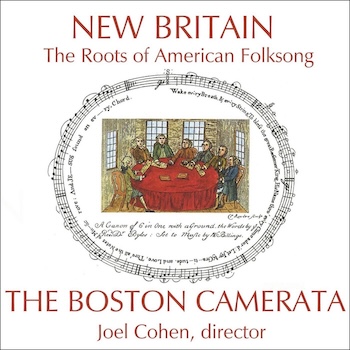
 Cohen’s interest in the music of the Americas was singular and, especially in its exploration of the pre-Revolutionary era, could be revelatory. Nueva España shines a fascinating light on the intersection of 17th-century Spanish, African, and indigenous American musical cultures. New Britain traces the roots of North American folk song. Meanwhile, The Liberty Tree highlights the feisty spirit of American song leading up to the Civil War. Other recordings track the development of spirituals, folk hymns, and other totems of American sacred music traditions.
Simultaneously, Cohen opened a hitherto closed window onto Jewish musical practices of the Medieval and Baroque eras. The earliest of those recordings, 1978’s Jewish Baroque Music, remains, after nearly half a century, the outstanding document of sacred works by Salomon Rossi, Louis Saladin, and Carlo Grossi (the last a Gentile who wrote on commission for the Jewish community in Modena, Italy). The Sacred Bridge presents Jewish and Christian music of the Middle Ages in dialogue—a sort of musical corollary to the surviving visual art and architecture from Andalusia’s Al-Andalus period.
Taken together, Cohen’s is a rich and vibrant recorded legacy, one that gives lie to the supposition that the historically-informed performance practice movement is little more than an advertising gimmick. In his hands, it was anything but—and it’s a measure of the Cohen’s considerable gifts as a musician that he not only concocted such expansive, sometimes headily intellectual projects, but brought them to life so vigorously and musically across several decades.
That he could do so in our midst for so long was our good fortune. So are these albums, which ensure that his life and work will remain, for all who encounter it, an indefinite blessing.
— Jonathan Blumhofer is a composer and violist who has been active in the greater Boston area since 2004. His music has received numerous awards and been performed by various ensembles, including the American Composers Orchestra, Kiev Philharmonic, Camerata Chicago, Xanthos Ensemble, and Juventas New Music Group. Since receiving his doctorate from Boston University in 2010, Jon has taught at Clark University, Worcester Polytechnic Institute, and online for the University of Phoenix, in addition to writing music criticism for the Worcester Telegram & Gazette.