Arts Remembrance: Actor Sam Neill — Charm, Gravity, and a Hint of Mischief
By Peg Aloi
Handsome yet not easily typecast, Sam Neill built a quietly remarkable career playing heroes, villains, lovers, weirdos, and everything in between.
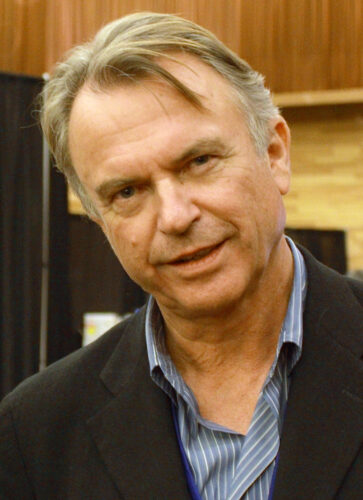
The late Sam Neill at the 2010 Vancouver International Wine Festival. Photo: WikiMedia
I think my first film memory of Sam Neill, who died at the age of 78 on July 13, was in the electrifying true crime drama A Cry in the Dark (1988), directed by the excellent Australian filmmaker Fred Schepisi. Neill played Michael, the husband of Lindy Chamberlain (Meryl Streep), who was wrongly convicted of murdering her own baby, who had gone missing during a family trip in the Australian outback. Lindy’s trial inspired horrific tabloid rumor-mongering and smear campaigns. In this role, Neill is a marvel of mixed emotion. Under duress during the courtroom proceedings, he channeled the character’s stress by surreptitiously scratching his scalp until it bled. After ravenous news cameras catch him pulling his hand away after his wife takes it, Michael then firmly takes her hand on the day of her sentencing, knowing his support will be seen by the world. Heavily pregnant when sentenced, Lindy gives birth in prison — only to have her daughter taken away. When Michael brings the child to see her mother — glimpsed through a prison window — it is a joyful and heartbreaking moment.
The following year, Neill starred in Philip Noyce’s Australian thriller Dead Calm, starring opposite Nicole Kidman as a grieving couple who take a vacation on their small yacht. They rescue a man (Billy Zane) whose boat is sinking; he turns out to be a psychopath. I showed this film in an Australian cinema class I created at Emerson College a number of years ago. Neill also graced our classroom screen in Gillian Armstrong’s My Brilliant Career (1979), John Duigan’s Sirens (1994), and, of course, Jane Campion’s The Piano (1993).
Neill’s career was prolific, varied, and consistently excellent. In a recent clip from Letterboxd the performer briefly describes his four favorite movies, which include The Big Lebowski (“a perfect film on every level” that he wishes he’d been in), Fargo (“I like those Coen Brothers”), 20,000 Leagues Under the Sea (he later became friends with James Mason), and the film that gave him his first leading role, Sleeping Dogs (1977), the first New Zealand film ever made in color. Neill is considered a New Zealander, but he was born in Northern Ireland in 1947 to an English mother and a New Zealand-born father. The family moved to New Zealand in 1954. Neill earned a degree in English literature and started acting soon after finishing his university studies at Canterbury and Victoria. Commenting on Sleeping Dogs, Neill said he was “a newbie who had no idea what he was doing.” But that initial glimpse of his golden boy good looks and edgy physicality indicates that he was clearly destined for success onscreen. Two years later, he landed the romantic lead role in My Brilliant Career opposite the stellar Aussie actress Judy Davis.
Yet the roles Neill is most widely remembered for aren’t the sort of characters that one might expect from someone whose looks emulate those of another famous handsome leading man, Robert Redford. Neill was unspeakably good looking, to be sure, but his appetite for complexity and uniquely mercurial talents propelled him beyond playing simple heartthrob or affable protagonists. There was something quirky about him: he could be goofy, menacing, eccentric, unknowable, and also very, very funny.
Most moviegoers will recall his iconic scene in Jurassic Park, when he first lays eyes on a gigantic tree-eating dinosaur. A paleontologist visiting this unusual place with his partner, played by Laura Dern, he stumbles and falls to the ground in awe—overwhelmed, disbelieving, thrilled, and ecstatic. “They move in herds,” he murmurs, his lifelong research theories confirmed. Another role that might have surprised some filmgoers was his taciturn, abusive husband in The Piano. Campion, a New Zealander herself, often made a point of casting high-profile actors from New Zealand or Australia — when it seemed appropriate for her to do so. It took a while for her to cast Nicole Kidman in a lead role, but when she did, in The Portrait of a Lady (1996), the result was stunning. In The Piano, Neill seems to be a mild-mannered man, but when he realizes his wife, Holly Hunter, is disobeying his wishes by playing the piano, his punishment is unthinkably brutal.
I’ve always found it intriguing when actors choose to play characters who are not only unlikable, but evil and terrifying (like Hugh Grant in Heretic). Neill really delivers when he plays these dastardly roles. He’s also been cast as iconic characters from history and lore (two standouts for me were his Cardinal Wolsey in the phenomenally good series The Tudors, and Merlin in the well-executed fantasy series of the same name). His versatility perhaps went undersung for most of his career, but it was this range that defined his choice of roles and made his myriad, many-faceted performances possible. More recent roles of his I loved were his turns in 2016’s Hunt for the Wilderpeople (an eccentric and delightful film by New Zealander Taika Waititi), and his excellent work in the series Peaky Blinders. Looking at his list of roles online, it’s stunning to see how busy this guy was, and how many performances I now want to see for the first time, or revisit.
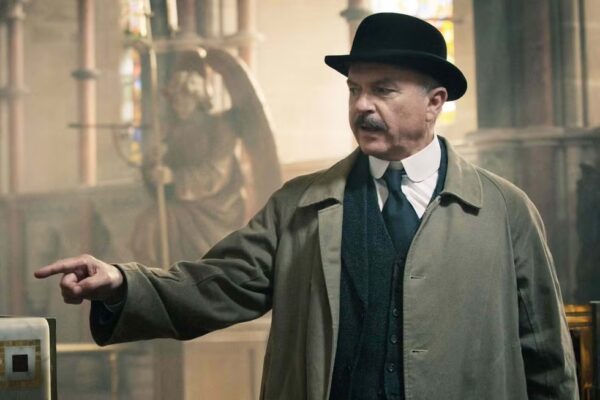
Sam Neill in Peaky Blinders. Photo: BBC
Sam Neill wasn’t just a fine actor. He’s also remembered for being an extremely cool guy: kind, generous, funny, and with a fulfilling personal life that he didn’t mind sharing with fans on social media. He started a winery in New Zealand in 1993 called Two Paddocks, which was also the name of his Twitter account (he announced he was leaving the platform in 2023, after owner Elon Musk had made it an unbearable site for many, but assured fans he’d still be active on Instagram). But, before that, Neill had often shared silly and wonderful photos of himself with his pets and farm friends, including cats, ducks, sheep, and pigs. His love of animals and of nature endeared him to many; he was also an unapologetic liberal-minded activist who spoke out against inhumane government policies. Last year, in an interview, Neill said, “It’s not a happy place, America, and I wasn’t happy there. I’m interested in the condition of America now. It beggars belief what’s happening there now. When you hear a slogan like Make America Great Again, it makes a sort of weird sense because America could be great again, but at a community level, not with sort of strange billionaires making weird decisions.”
Neill was public about his battle with cancer, which he won. HIs recent death after a sudden bout of pneumonia has led some to speculate that he might have contracted a COVID infection. We may not ever learn, definitively, what killed this great actor at the age of 78, but we do know that his life was rich and full, that he was adored by millions, loved and admired by his industry colleagues, and celebrated for his talent and his many finely wrought performances on screen. I will remember his golden good looks, his mischievous smile, his impressive career, his buoyant personality, his good, good legacy, and his love of ducks and pigs.
Peg Aloi is a former film critic for the Boston Phoenix and member of the Boston Society of Film Critics, the Critics Choice Awards, and the Alliance for Women Film Journalists. She taught film studies in Boston for over a decade. She has written on film, TV, and culture for web publications like Time, Vice, Polygon, Bustle, Dread Central, Mic, Orlando Weekly, Refinery29, and Bloody Disgusting. Her blog “The Witching Hour” can be found on substack.