Local Author Interview: “Love Is What We Carry” — Andrew Krivak on Storytelling, Memory, and “Mule Boy”
By Preston Gralla
In conversation, Andrew Krivak discusses inherited grief, immigrant roots, and the unusual form of his latest novel.
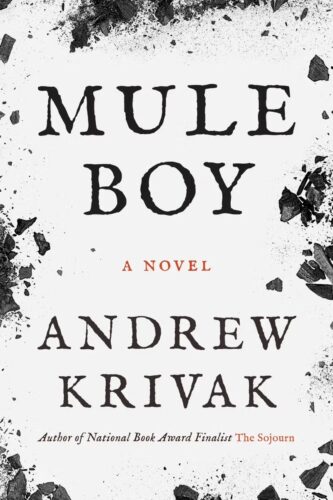
In this first of an ongoing Arts Fuse series of interviews with Boston-area authors, I talked with Andrew Krivak, who recently published his fifth novel Mule Boy. It tells the story of Ondro Prach, son of Slovak immigrants, who, at age 13, works in a Pennsylvania coal mine leading a mule to haul coal from mine shafts up to the earth’s surface. Prach survives a 1929 mine disaster that kills four men and wrestles with its consequences for the rest of his life. The book has been hailed by critics from The New York Times and Wall Street Journal, selected as an NPR “Book of the Day,” and included in the New York Times Book Review’s “What to Read Next” section.
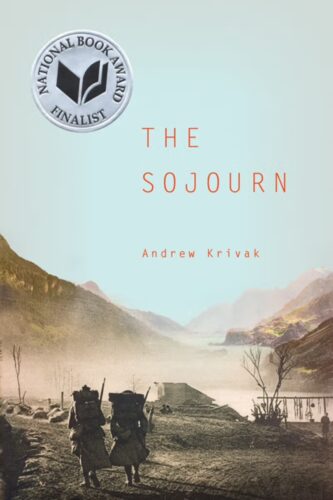
Krivak is a poet and novelist and was a National Book Award finalist for his novel The Sojourn. He is visiting lecturer on English at Harvard University, and lives in Somerville with his wife and three children.
Arts Fuse review of Mule Boy
Arts Fuse: This book is not just one person’s story — it’s also a larger story about family, community and a way of life. Why did you feel you had to tell it?
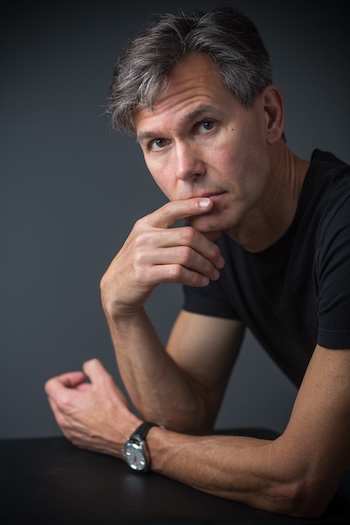
Poet and novelist Andrew Krivak. Photo: courtesy of the author
Andrew Krivak: My father’s father died in a coal mine in a collapse [like the one that occurs in the book] when my father was three. He lived in Northeastern Pennsylvania, and with my grandmother had four children. My grandmother was five months pregnant with her daughter at the time. I’ve often thought, “What was it like in those last days, hours, minutes.”
My grandmother went to where my grandfather was laid out, up from the mine, still alive. The doctor said he’d be okay. He wasn’t sure if he’d ever be a miner again, but he’d live. My grandfather grabbed my grandmother by the hand and he said, “No, Anna, tonight I’ll be with God.” And he died. The scene is much like what happens in the novel when Ondro Prach’s father dies. I used my grandfather’s last words in it.
As a writer, I’m interested in what I call the inheritance of loss. The last thing we’ll leave with those who love us is a strong and abiding sense of loss. I’ve seen that in my own life and my own family. And so, I wondered if I could capture that and also capture the industry that took both of my grandfathers. Five novels in, I decided I knew how to write this book. I don’t think I could have written it until I had written four prior to it.
AF: Why did you give it the title Mule Boy?
Krivak: There’s a line from Wendell Berry’s poem “Elegy” in which he writes that the ones that have gone before us, we lift them up, love is a fulcrum dust upon which we lift them up. I initially wanted to take the title “Fulcrum Dust” from the poem. And as I was working through it, my editor and I realized that one of the main characters in the book is Wicked the Mule. “Mule Boy” kept coming up as a sort of leitmotif refrain.
This man has so much to carry from the age of 13, right up until his later years of life. It’s a novel about what one carries both in tragedy and in joy. I decided “Mule Boy” was the way to go. It’s about what this man Ondro Prach has to carry.
AF: He carried the mine collapse with him his entire life. He isn’t able to move beyond it. What was important about writing about someone trapped in the past like that?
Krivak: I need to back up a bit here. I think I’m only a writer because of the stories my grandmothers told me. My mother’s mother especially. We’d sit in her kitchen, and she would tell us stories about the old country, growing up in what was Austria-Hungary, and then Czechoslovakia after the war. And it was miserable. It was terrible. Everyone would say, “Oh, Elizabeth, why don’t you want to go back?” And she’d say, “Why would I go back to that misery?” I listened to those stories. I knew my way around books. I always had in the back of my mind, “I wonder if I could write what she told us.” A lot of that informs all the novels I’ve written.
By the time I got to Mule Boy, I wanted to see if I could approximate oral storytelling on the page. First and foremost, Ondro Prach is a storyteller. Anyone reading Mule Boy should know that the telling of the book takes place in one day. It’s just a day. But he’s able to go back and forth in time as an old man because people who want to know what it was like [when the mine collapsed] come to him and say, “What was it like? What did you do? What did you fail to do? Tell us the story of our fathers and grandfathers and husbands, their last days, hours, minutes.” And he himself is trying to answer that question. His answering the question is really my answering the question. It’s why I gave him the name Ondro, because that’s Andrew in Slovak.
AF:How did you try to replicate oral storytelling in the book?
Krivak: Reviewers say it’s one long sentence, but that’s not entirely true, because there’s no period anywhere in the book. There’s a spoken thought, and then there’s a comma, which is an intake of breath before speaking the next thought. All I wanted to do was to keep that story going.
 AF: I noticed that you often used the word “and” as a way to transition to the next paragraph.
Krivak: That has biblical origins. In the Hebrew scripture, the particle waw gives a real speed to the Hebrew. In Matthew’s gospel as well, the Greek word kai, which means “and” begins a lot of the paragraphs. Matthew’s gospel cooks with speed. He’s got to get to the end. I love reading that kind of formal prose. It just seemed natural to me.
AF: I think that if some people were told a book had no periods, no quotation marks and very few punctuation marks, they’d say, “Goodbye, not for me.” And yet I found that reading it was as easy as breathing. Along those lines, I have what may be an out-of-left-field question. Do you play any musical instruments?
Krivak: I do. In fact, I’m only a writer because I’m a failed musician.
AF: I ask that because I was struck by the book’s pacing and rhythm, the way it foreshadows, speeds up and slows down. That’s especially true in the next-to-last chapter, which ends with what to me is the equivalent of a gigantic Beethoven chord played in a concert hall. The final chapter is what it feels like after the musicians stop playing and the chord’s reverberations slowly fade.
Krivak: That’s exactly right. I did study piano as a boy. I suffered a bit from it. It wasn’t cool to be a piano player when you’re a boy in Northeastern Pennsylvania. I got my thumb crushed playing football, and my piano teacher said, “You got to make a choice. You play piano or you play football.” I quit football and kept playing the piano. And that was not easy.
I remember listening to Mrs. Moran tell me at the keyboard on those humid afternoons, “No, Andrew, slow, slow. Now fast, now fast, slow, slow. Feel that crescendo.” Then I was a student at St. John’s College Annapolis. Sophomore year is a music year. You begin with counterpoint and thinking about music. But by the end of it, you’re reading, you’re listening to those great Beethoven symphonies, the Eroica, and studying sonata. So, you’re exactly right. You’re the only person who’s actually heard or said that, I should say.
AF: In the book you describe a very specific culture, not just mining culture, but Slovak immigrant culture. I’m wondering how much of that culture still lives in you.
Krivak: A great deal. I grew up listening to Slovak. Both my parents spoke Slovak. And not only Slovak, but a particular dialect called Šariš. You can still hear it today. My mother spoke it, my father spoke it. It’s a particular dialect from Eastern Slovakia. And my grandmother’s English was good, not great. She got by. But entirely Slovak. And my father’s mother as well. I mean, it was a really deep, cultural ethic growing up in that community. There are three important things in that culture: food, work, and the church. In that order. Food is first.
AF: It sounds as if Slovak is one of the “food-is-love” cultures.
 Krivak: Yeah, for sure. And great food. The church was very Catholic, in a good way, not in a you’re-going-to-hell kind of way. More in a kind of mystical way. You’re coming to mass, and you’re going to listen and let that mystery envelop you. So, all my life, church was a wonderful place for me. I say that because I was a Jesuit for eight years. I studied to be a priest in the Jesuit order. I studied Slavic languages, Russian, Czech, and Slovak. And my Slovak was pretty good. It was my parents’ secret language; they would talk to each other in it. Maybe it was my own tenacity to figure out what all the secrets were, but I learned Slovak.
When I was in church on a Sunday and I’d listen to the lector read the readings and then the priest read the gospel, it was astounding to me. I’d love listening to Slovak read, especially really good Slovak. I mentioned that to one of the priests and he said,” Ah, yes, they say that God may speak Latin, but the angels speak Slovak.” And I thought, “That’s amazing. I’ve got to use that one day.” So, I have.
AF: We have a president who is nostalgic for the time when coal was king and is using his power to bring it back despite its dangers and its acceleration of climate change. As a descendant of coal miners, do you think this is something he should be doing? Do you think he’s honoring their memories?
Krivak: Absolutely not. My answer goes back to what my grandmother said to my father: “I will not let another one of the men in my family die in the mines.” Nobody who had been in the mines wants to see coal come back. The truth is there’s no reason now to burn coal. There is nothing romantic or even possible about going back to that. It’s time to move on. All this nostalgia is clearly just a desire to get votes.
What a lot of people forget is that miners didn’t just go down and grub around in the dirt and have coal come up. Miners were incredible craftsmen, they weren’t just laborers. You could argue they were scientists in many ways. They knew exactly where the seams were. They knew how much dynamite to put in. They knew what to do and what not to do. Yeah, it went badly sometimes, but it goes badly for everybody. It sometimes goes badly for NASA.
My mother always used to say that a miner is one of the most skillful men who ever worked in America. She really respected her father, who died of black lung. She respected the work he did, and the work she saw him do. People forget that a miner was his own business. He was given money for the coal he brought out of the ground. The mine would pay him, and then he would pay his buddies, he would tip the mule boy.
The pathos of the novel is about men who knew what work was, men who did their work well, men who died doing that work, and who left the legacy of loss to of those people who came after them. That was not just the four people who died in Mule Boy. It was hundreds of thousands, if not millions, of men who died as a result of the mines.
AF: Your grandparents were immigrants. What do you think they would have made of the way immigrants are being treated today?
Krivak: My grandparents taught us to have a great deal of empathy for people who were looked at as being different in society, racially different, ethnically different, religiously different. As the expression goes, you don’t know what’s going on down where the spirit meets the bone. And so they understood that struggle, the struggle of the immigrant. And I don’t think they ever really forgot. My brothers and sisters haven’t forgotten. The people I know who are [from where I grew up], they haven’t forgotten either. To me, [the way immigrants are treated by the current administration] it’s just a manipulation of politicians who traffic in hypocrisy.
Note: This interview has been edited for length and clarity.
Preston Gralla has won a Massachusetts Arts Council Fiction Fellowship and had his short stories published in a number of literary magazines, including Michigan Quarterly Review and Pangyrus. His journalism has appeared in the Los Angeles Times, Dallas Morning News, USA Today, and Boston Globe Sunday Magazine, among others, and he’s published nearly 50 books of nonfiction which have been translated into 20 languages.