
Film Review: “No No: A Dockumentary” — Could Use a Touch of Madness
No No: A Dockumentary presents a textured portrait, on and off the field, of ’70s pitching phenomenon Dock Ellis.
No No: A Dockumentary, directed by Jeffrey Radice. At the Coolidge Corner Theatre, Brookline, MA.
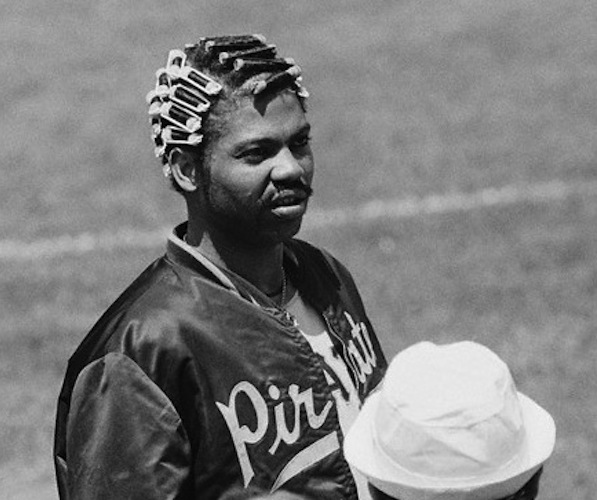
Pitcher Dock Ellis … in curlers.
By Betsy Sherman
The ingesting of a couple of video appetizers may be in order before viewing Jeffrey Radice’s No No: A Dockumentary, a compelling look at the impact on and off the field of ‘70s pitching phenomenon Dock Ellis. Both are over-the-top (and hilarious) takes on Ellis’s June 12, 1970 no-hitter pitched for the Pittsburgh Pirates against the San Diego Padres, a feat that he later said was accomplished while he was “high as a Georgia Pine” on LSD. The first is James Blagden’s animated short Dock Ellis & the LSD No-No, which illustrates Ellis’s recounting of the day’s events in an NPR interview; the second is Robin Williams’s bit about Ellis’s revelation in his 2009 special Weapons of Self Destruction.
As is fitting, Radice’s movie opens with game clips, distorted and set to Hendrix’s “Star Spangled Banner.” It returns to the no-hitter as part of the biographical chronology. However, by that time, the event has become more than just fodder for a gag: it serves as compelling evidence of this outspoken and gifted young man’s iconoclastic status in major league sports. Ellis, in the late ‘60s and into the ‘70s, was an athletic counterpart to blaxploitation anti-heroes on the movie screen and bands like Sly & the Family Stone, whose funky songs were blasting from stereos.
Dock Phillip Ellis, Jr. (1945-2008) grew up in Los Angeles. His father had a shoe repair shop in Compton. Junior may have succumbed to gang life in that area if not for his smokin’ arm and ability to throw a pitch that dipped and, in the words of a childhood friend, “dropped to the damn dirt.” The movie concentrates on his years on the Roberto Clemente-era Pittsburgh Pirates, with fond and colorful recollections from several teammates. By 1976, Dock was pitching for George Steinbrenner’s Yankees; later, he played for the Rangers, the Mets, and the Pirates again.
Ellis was especially sensitive to, and wary of, expectations that he and his fellow African-American athletes show deference to a baseball establishment that was at the very least paternalistic, if not downright possessed of a plantation mentality (would that that were all in the past, Mr. Sterling). He’d speak his mind, and do so with such flair that he was called the Muhammad Ali of baseball. Dock’s unusual rebellions, such as in interlude during which he wore curlers in his hair, had their ancillary benefits: the sweat that gathered under the curlers served as the propellant for spitballs. Ellis was inspired by a Sandy Koufax quote that pitching is the art of intimidation. In the film, fellow hurler Jim “Mudcat” Grant says that “they didn’t get the intellect of Dock.” Directly or indirectly, by his insistence on being treated with respect as an individual, Ellis accelerated the move toward greater players’ rights and free agency. Moreover, his bluntness in calling out racial barriers in baseball helped break them down.
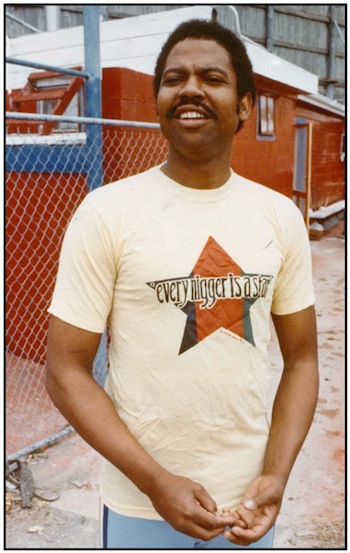
Dock Ellis — making a statement about baseball’s plantation mentality.
About the drugs — well, drugs, especially stimulants such as dexamyl, were a fact of life for pretty much every big-leaguer, as Ellis attests and teammates confirm. It’s just that Ellis appeared to have brought an especially badass spirit to his indulging. Their use makes for many entertaining tales, but also likely contributed to the chilling instances of domestic violence recounted in the film by two of Dock’s ex-wives. Fortunately, Ellis confronted his dark side, gave up drugs and alcohol, and became a counselor in order to help others do the same. He died at age 63 of liver disease.
No No: A Dockumentary presents a textured portrait, but there’s something odd about it. There’s interview footage with a middle-aged Ellis, but somehow these clips don’t feel like, “OK, we’re shifting gears from the other interviewees and hearing from the person the movie is about.” They just sort of blend in. Then I read that, while Radice did get to talk to Ellis on the phone before he died, he didn’t have an opportunity to interview him for the film; the interviews used are from the HBO archives. In that context, Radice does a skillful job of assembling archival sources, but there are limitations. The movie’s emotional high point is when Dock becomes choked up reading a letter Jackie Robinson had written him as moral support during a period of controversy. Unfortunately, it’s only audio, and it begs the question — why aren’t we seeing Dock’s face? (Although we do get to look at Robinson’s handwriting.) Radice may have been reticent about inserting a “making of the documentary” element into the movie, but a confession about his own drive to continue making the film in the wake of the passing of its subject may have lent a needed touch of madness to this winning, but a bit too sober, feature.
Betsy Sherman has written about movies, old and new, for The Boston Globe, The Boston Phoenix, and The Improper Bostonian, among others. She holds a degree in Archives Management from Simmons Graduate School of Library and Information Science. When she grows up, she wants to be Barbara Stanwyck.
Tagged: African-American, Baseball, Dock Ellis, Jeffrey Radice, documentary
1 Comment
Leave a Comment

While over all positive, this review comes off under informed at best. It’s an uncalled for tarnish on the Rotten Tomatoes score for the film. Being critical of a documentary for not being able to interview someone who is deceased is downright insulting. Clearly Sherman doesn’t ‘get it’ and fortunately is in the minority. Her grasp of documentary filmmaking is obviously limited in scope. Not doing any actual research before writing a review is also impressively lazy. The origin of Dock reading the letter from Jackie Robinson is detailed here:
https://deadspin.com/5910220/what-dock-ellis-taught-me-about-drugs-spitballs-hair-curlers-race-and-america
A cursory web search is all that is needed to find this information. Not liking something is one thing, but Sherman’s own misunderstanding and assumptions hurt this film and its legacy. Wonderful example of the dilapidated state of ‘journalism.’