
Posts
Ambitious, by turns captivating and exasperating, this sprawling book is like an enormous photomontage—that popular German art form of the 1920s—made up of textual mosaics from newspaper articles, diary entries, letters, novels, or, on occasion, FBI files.
“People often ask what is the biggest change in the arts in Boston over 30 years, and it all has to do with technology. Diminished funding, economic downturns, and 9/11 all changed things. But what’s really driven change is technology.”
“Through the Looking Glass” is a glorious celebration of American fine art and a much-needed boost to the MFA’s Americas wing collection. Amid the drab puritanical portraits and the remarkably unremarkable display of colonial dressers, Chihuly’s glassworks are testaments to the beauty of vivacity. Chihuly: Through the Looking Glass. At the Museum of Fine Arts,…
If you haven’t before had the keen pleasure of reading David Foster Wallace, THE PALE KING is a fine gateway drug. Its 550 pages are broken into 50 sections, each digestible on its own without reference to the larger work The Pale King by David Foster Wallace. Little, Brown, 560 pages, $29.99 By Michael de…
If you are going to write about this very charged subject, the West and Islam, why would you choose as a representative of that great and ancient culture a woman who is stunted emotionally, clearly unreliable, and probably mentally unstable?
Updated Local artist, curator and arts educator Susan Erony, whose text piece on silk “To Gloucester with Love” is a setting of a Charles Olson poem, gave a model of an arts center talk on the evolution of text as visual art.
Luckily, there’s plenty to this film besides it’s Middle Eastern setting. INCENDIES focuses primarily on relationships and human drama, while politics form the film’s periphery.
The Zeitgeist Stage Company production has made me rethink Edward Albee’s HOMELIFE to the extent that the couple, well played by Peter Brown and Christine Power, generate a loving bond that adds some welcome tension (and humor) to the revelations of free-floating anxiety and confusion.
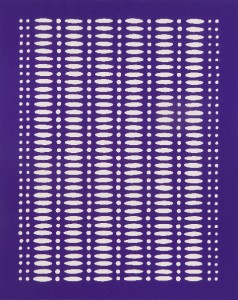
The ostensible theme of the exhibit “The Last Gesture” might be best regarded, then disregarded, as critic Charlie Finch’s attempt to channel his roiling cognitive slurry. The work itself doesn’t need it.
In the second of three articles inspired by Jazz Week 2011, the focus is on the full-time jazz venues that form the bedrock of the Boston scene.
Recent Comments