
Classical Music
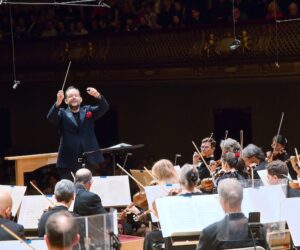
Last Friday night, conductor Andris Nelsons and the musicians came on stage together wearing red carnations as symbols of solidarity. The applause was immediate and fervent.

This a superb album, smartly programmed and brilliantly played.

By Aaron Keebaugh The Last Savage delivered good tunes, a delightfully twisted story, and all-around cheer. As a librettist, Gian Carlo Menotti held a critical mirror up to society, often probing the psychological fault lines of his operatic targets. Yet, though he would often question what he saw around him, his works, no matter how…
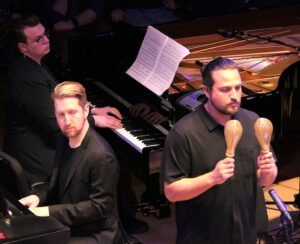
Steve Reich’s 1976 minimalist masterpiece, performed by Ensemble Signal, was a special event to see and hear live.
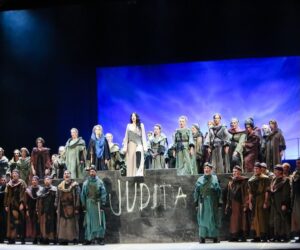
In its first commercial recording, Frano Parać’s “Judita” wrings compelling drama out of the biblical tale.
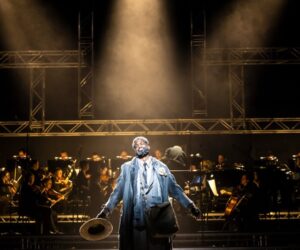
Lauded in histories of Broadway but rarely performed, “Love Life” proves to be an insightful and effective work of social criticism, nearly eight decades after its premiere.

“I would say Music for 18 Musicians was probably the most influential piece of American concert music of the last quarter of the 20th century. You could conceivably stretch that to the most influential piece of American concert music since it was written.”

If there’s anything the U.S. needs in 2026, it’s a recovery of Lincolnesque values—resolve, common sense, understanding, and charity. If such a renewal can get some impetus and sense of direction from a new recording, so much the better.

It’s hard to argue that the decision to forge careers as composer-pianists in the teeth of fin de siècle misogyny and rock-set views of musical gender roles wasn’t an act of defiance.
Arts Commentary: The Nelsons Case
Ultimately—and regardless of one’s take on Andris Nelsons as an artist—it’s hard to see how the institution’s long-term interests are served by last week’s developments.
Read More about Arts Commentary: The Nelsons Case