
Jazz Album Review: Dave Holland’s “Freedom Call” — A Vital Archive of a Restless Master
By Steve Feeney
A six-LP, three-CD collection reveals the bassist leading exceptional small groups in music of rigor, energy, and expansive range.
Freedom Call, Dave Holland, previously unreleased performances by his Sextet, Quintet, and Prism. Edition Records
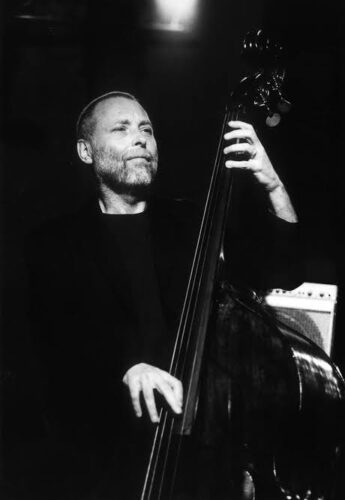
Bassist, composer, and bandleader Dave Holland. Photo: ECM Records
I’ve seen bassist Dave Holland perform in both electric and acoustic settings several times over the years. My earliest memory is of watching him and drummer Jack DeJohnette enjoy having what we used to call “a blast” as they worked out the rhythm behind a Miles Davis gig in Boston. Rarely have I witnessed two musicians having more fun. More recently, I’ve had the pleasure of watching Holland lead a quintet and a big band. In both settings, he seemed to relish every moment.
Holland’s mastery matured during his middle period, when he focused largely on small-group performance. Freedom Call captures that achievement: a collection of previously unreleased live recordings spread across six LPs or three CDs. Released to coincide with Holland’s 80th birthday, on October 1, the set draws on performances recorded between 2008 and 2014. (The box provides no information about the recordings’ precise dates or locations.) Its discs feature Holland compositions performed by three distinct groups, with only limited overlap in personnel.
There is a great deal of fine music on these recordings, and parsing them economically is daunting. Each, in its own way, contributes to a spirit of shared verve and studied intensity that makes Freedom Call a remarkable chronicle of the career of one of the decisive figures in modern jazz bass, whose career has spanned six decades and is still going.
The disc labeled Synergism features a quintet like the one I heard at the Regattabar in Cambridge years ago. Holland leads Chris Potter on soprano and tenor saxophone, Robin Eubanks on trombone, Steve Nelson on vibes and marimba, and Nate Smith on drums. It was a tight group that could easily fill a sizeable room with brimming energy.
“Pathways” features Holland’s characteristic mix of hyper-post-bop with a soupçon of funk. As throughout the set, the saxophonist is a rapid-fire wonder, his virtuosity at times bordering on head-shaking prolixity. That said, he and Holland get the balance just right during a duo interlude on “Souls Harbor.”
Potter again blows hard on “The Eyes Have It” before giving way to a Nelson vibes solo that rings and chimes with comparable—if less in-your-face—intensity. The leader’s singing bass solo is another gem.
Smith lays down an infectious funk beat before a playful Eubanks solo kicks things up with a hint of celebratory tailgate.
Eubanks rejoins Holland on the sextet disc Unity. The other members are Antonio Hart, another exhausting saxophonist, on alto sax; Alex Sipiagin on trumpet and flugelhorn; Mulgrew Miller on piano; and Eric Harland on drums. Notably, both Eubanks and Miller are alumni of Art Blakey’s Jazz Messengers, in many ways a progenitor of this band.
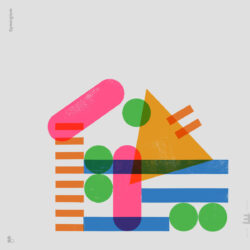
Cover art of Freedom Call.
A larger-ensemble energy surge animates pieces such as “Ebb and Flow.” Miller’s steadying harmonic center assists each soloist in soaring. When the pianist takes a turn at the front of the mix, the expansiveness he brings to Holland’s vision is extraordinary.
The bouncy “Step To It” employs dance rhythms, while “Mr. B,” dedicated to master bassist Ray Brown, settles comfortably into a classic swing feel. The underrepresented Sipiagin adds welcome upper-register moments on “Fast Track.”
Harland returns for the quartet recording Prism. He and Holland are joined by Craig Taborn on acoustic and electric piano and Kevin Eubanks—former Tonight Show bandleader and Robin Eubanks’s brother—on guitar.
This is the disc that, depending on your taste, may feel a bit outré, à la 1970s jazz fusion.
“A New Day” begins with a spacey vamp that drops the listener into the middle of what sounds like a Grateful Dead jam. The intensity builds as Eubanks hammers heavy electric-guitar chords. Taborn brings things back to earth in a fine trio segment with Holland and Harland. The latter two then take engaging solos before the guitar freakout returns with a vengeance, taking us back into fusion territory.
“Evolution” begins as a scrambled but accessible blues before the guitarist again reaches toward Mahavishnu-esque effusion. Taborn takes a more measured path on electric piano.
“The Empty Chair” begins as a subdued reverie before the guitarist, once again, goes big. Amid the tumult, “Confirmation Bias” features appealing acoustic work from Taborn. and the stalwart leader.
Overall, this formidable box set documents an important creative period in Holland’s development as a composer, bassist, and instigator of collective invention.
Steve Feeney is a Maine native and attended schools in Maine, New Hampshire, and Massachusetts. He has a Master of Arts degree in American and New England Studies from the University of Southern Maine. He began reviewing music on a freelance basis for the Portland Press Herald/Maine Sunday Telegram in 1995. He was later asked to also review theater and dance. Recently, he has added BroadwayWorld.com as an outlet and is pleased to now contribute to Arts Fuse.
Tagged: Alex Sipiagin, Antonio Hart, Chris Potter, Craig Taborn, Dave Holland, Edition Records, Eric Harland, Freedom Call, Jazz, Kevin Eubanks, Mulgrew Miller, Nate Smith, Robin Eubanks, jazz bass, jazz box sets, jazz fusion, jazz reviews, live jazz recordings, post-bop