
Musician Interview: Clinton Fearon on Reggae, Resilience, and the Songs That Endure
By Noah Schaffer
Ahead of a run of shows with Boston’s Naya Rockers, the veteran Jamaican musician looks back on the Gladiators, Lee “Scratch” Perry, political “sleepwalking,” and a career still driven by curiosity.
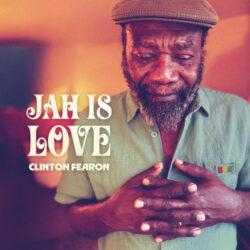 When Clinton Fearon first entered the Jamaican music industry as a teenager, he was just one of many talented youths who had a song and a dream. And while some of his peers would go on to greater fame, very few have matched the consistency and quality of his output, and even fewer are still making original and unadulterated roots reggae today.
Fearon, long based in the Pacific Northwest, has an ongoing musical collaboration with Boston’s excellent Naya Rockers, the band led by drummer Nathan Sabanayagam. Their next mini-tour starts Wednesday at the Ocean Mist in Wakefield before continuing at Portland, ME’s House of Music Thursday, at The Cut in Gloucester on Friday, and at Soundcheck Studios in Pembroke on Saturday.
When he was last in Boston, Fearon sat down with me to talk about his early days as a member of the Gladiators, his move to a solo career, and his most recent album Jah is Love, which continues his ongoing musical exploration of the human condition.
The Arts Fuse: Before we go into your history, I wanted to ask about “SleepWalking,” a song on your latest album. A lot of reggae artists don’t like to deal with “politricks,” but this is the relatively rare reggae song that addresses the state of democracy.
Clinton Fearon: How I view democracy is that everyone can have a say. And right now democracy is taking a beating from the very people who are supposed to be holding it up. The song is about how we have been sleepwalking away from our humanity. It’s happened little by little, so it’s almost gone unnoticed.
AF: Your prior album was one of several acoustic records you’ve put out, which is also not too common in the modern reggae world.
Fearon: Well, you know, I’m a reggae artist, but I’m folk too. My songs are Jamaican folk, and I also put a little jazz there, some blues, some funk. Acoustic is where it starts, under a mango tree with your guitar gathering ideas, those are some of the sweetest moments. After Bob [Marley] passed, they put out some recordings of just him and a guitar working on songs. If a song is good, it can be heard a lot of different ways.
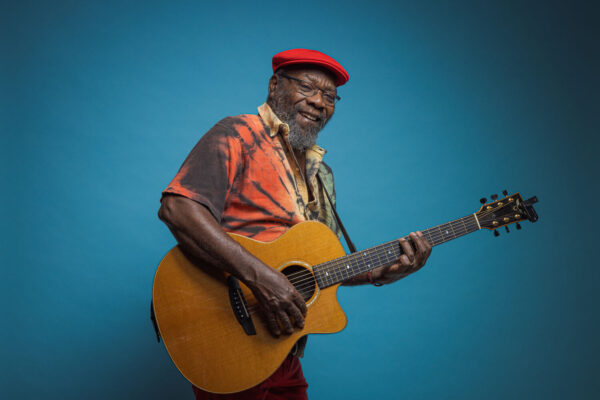
Clinton Fearon. Photo: courtesy of the artist
AF: Speaking of folk, country music has a strong following in Jamaica. Did you hear a lot of it growing up?
Fearon: Yes, country, and gospel, that’s what you hear on Sunday mornings. And Jamaican music is really bedded in gospel whether we want to believe it or not. Some of it who are doing it don’t even realize it. Even if you don’t go to church, when you walk up the road, there’s a church going on here, and another going on there, and whether you like the church or not, you hear the hymns. My family were, partly, Adventists. So that was part of my [music] school, along with the men who sing [work songs] when they dig the yam field, and the nightingale, and even the trees that rub together and make a song when the wind blows.
AF: When did you write your first song?
Fearon: It not finished yet! [laughs] I was a young teen. I used to hear Prince Buster, Derrick Morgan, Millie Small, and they were singing rude songs, and so I started to write a rude song. But it never get finished! I had a song called “Jah Almighty” before I joined the Gladiators. There’s one before that, when I had a little group called The Brothers, they did auditions here and there, but we didn’t get any way with it, and it’s during that time I met the Gladiators.
AF: Speaking of auditions, anyone who has seen a reggae movie, such as The Harder They Come, has encountered the image of a would-be artist auditioning for a hard-nosed Jamaican producer. Did you have to go through something like that?
Fearon: I did something like that. We went to Coxonne [Dodd, the Studio One owner] first and wait, wait, wait for hours. Nothing. We go back another day, same thing.
Then we went to Treasure Island, and Gladstone Anderson and Peter Touch were doing the audition. And I have my little guitar doing my thing, and I start to play. And Peter says, ‘No man, just sing man,’ and Gladdy say ‘No man, make him play.’ So I [pass] the audition and went up to record it, but we have to wait our turn, and the Gladiators were doing a song upstairs and we’re waiting until them finish, and it took some while so we didn’t record that day. So we went back the next Sunday, and we saw [Treasure Island owner] Duke Reid stand up out by the door with a long gun in his hand and two shotguns at his side! And he says we have to come back [another time]. And one of the Brothers says ‘Well if that’s what we have to go through, with being greeted with guns, I don’t think we should come back.’”
AF: When did it become clear that the Gladiators would become more popular internationally than in Jamaica?
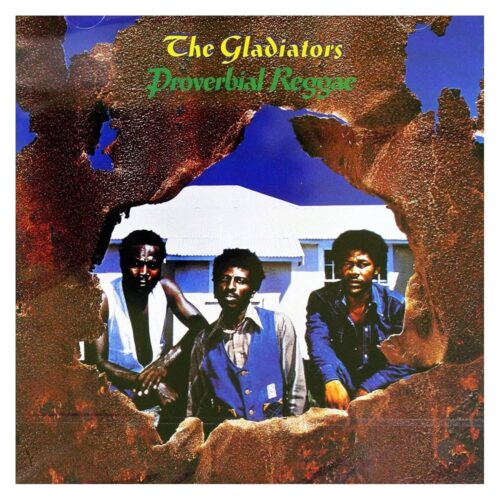
Fearon: That was 1976. We were actually going to break up. Errol Grandison, who had got me in the group, had already left because things were too tough. Nothing was happening for us and we thought we should just do our own thing but still support each other. But then we went in the studio and did Yourself with Albert, and we brought it to [producer] Prince Tony, and he went and got us a contract with Virgin. So then we weren’t going to break up! And we heard some songs are playing nicely in Europe for us. The first tour was maybe ‘78? That’s when I noticed that we’re playing a place in London called the 100 Club and people are standing everywhere and three people fainted because it was so hot! The album Proverbial Reggae sold 80,000 copies in Nigeria alone. Later on I’m looking at all of this and saying if it sold that well just there, and think of all the other places it sold, well hmm….
AF: Can you talk about working with Lee “Scratch” Perry?
Fearon: It was wonderful. The first time we worked with him was with Yabby You doing “Jah Vengence,” and he asked us to come back and play some bass and I did that for six months. That was quite an experience. I’m still young in the business and playing with different drummers and guitarists and feeling everyone’s musical taste. Scratch, I saw him in different moods. I worked with Earl “Chinna” Smith quite a bit too, on some wonderful recordings. We did some wonderful recording, whole albums with Junior Byles and Bunny Ruggs. One time with Buggy I asked Scratch ‘Can you give me a [studio] time,’ and it was just me and him and a drummer, and that was the first song where I said OK, I did a song for me! My production!
AF: Did that spur you go to go off and do your own thing?
Fearon: Not quite. I wrote a lot of songs when I was in the Gladiators, and some are still sitting on cassette. But my role in the Gladiators was to play bass and sing. I have several songs in the background, every now and then I would do one or two on an album. I love the Gladiators, but as the Gladiators grow, the ego gets big, and after ten years I feel like we’re not really growing anymore as a group. It was hard for me to leave, because I was the peacemaker. But when the switch came, it was when it changed to Albert Griffiths and the Gladiators. So I’m nothing? So I make my decision. There was a bredren in Seattle who did the tour who [I wanted to work with], and I had some time left on my visa. The tour ended in Florida and I went back to Seattle, and that was it.
AF: Seattle, where you’ve been based ever since, wasn’t really known as a reggae hotspot. Was it initially hard to find other musicians there?
Fearon: Yes, it’s hard. My bass player was a jazz player, but I decide it was starting all over again, so I said if you want to learn reggae I’ll be patient with you, and since then I’ve gone through several musicians to get it where it is today.
AF: In recent years there’s been a lot of discussion about non-Jamaican artists playing reggae. You’ve recorded and toured with many non-Jamaican musicians. Is that a concern to you?
Fearon: I’m concerned about good music. If the music is good, I’m good. If the music is bad, no matter whether it’s coming from Jamaica or from here, it doesn’t matter. You could be as white as that wall, or as black as the tar in the road. Music is like love, it doesn’t see any color. It’s like love: It won’t deceive you, but people will.
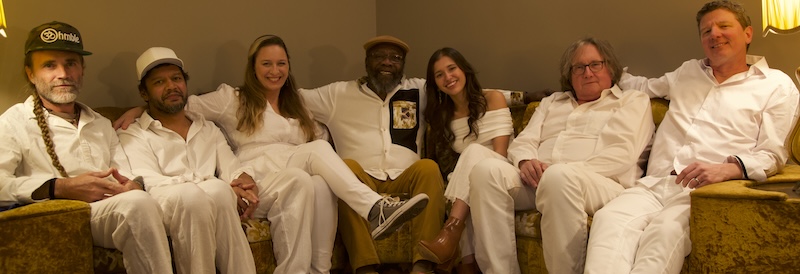
Clinton Fearon and the Naya Rockers. Photo: Archie Kasnet
AF: You usually work with your own Boogie Brown Band. How did you connect with Boston’s Naya Rockers?
Fearon: The group’s founder, Nathan Sabanayagam, is passionate. The first time I met him was in Jamaica at Chinna’s place, and he saved the session. And he reached out to me and reminded me who he was, and then we did “Guiding Star” and a track on his last album, Higher Education.
AF: Not a lot of artists are as prolific in writing meaningful songs so far into their career, and there are also many younger artists who would be hesitant to do as much touring.
Fearon: I’m a late bloomer. I’m just grateful that we’re able to go different places. I always see myself as a low-percentage artist. I used to be at ten percent, now I’m at 35 percent. I’m my worst critic – I always think I can be better.
AF: Let’s finish by going back to the new album. We discussed the social commentary, but there’s are also several very uplifting songs, including a tribute to nature (“The Real Bush Doctor”), the title track, and “My Best Friend,” which salutes the power of music. How do you find the space to stay optimistic right now?
Fearon: Well I had a song on the previous album called “Laugh Out Loud.” Because if we can’t laugh anymore, then we might as well just pack up and say give me the coffin. We have to find the time to live, no matter what.
Noah Schaffer is a Boston-based journalist and the co-author of gospel singer Spencer Taylor Jr.’s autobiography A General Becomes a Legend. He also is a correspondent for The Boston Globe, and spent two decades as a reporter and editor at Massachusetts Lawyers Weekly and Worcester Magazine. He has produced a trio of documentaries for public radio’s Afropop Worldwide, and was the researcher and liner notes writer for Take Us Home – Boston Roots Reggae from 1979 to 1988. He is a two-time Boston Music Award nominee in the music journalism category. In 2022 he co-produced and wrote the liner notes for The Skippy White Story: Boston Soul 1961-1967, which was named one of the top boxed sets of the year by The New York Times.
Tagged: Boogie Brown Band, Clinton Fearon, Gladiators, Nathan Sabanayagam
Clinton Fearon is the real deal as a musician and person. Been supporting him and his music for years, and he is a musical treasure! Thank you for the article as he deserves much more recognition.