
Dance Preview: Brinae Ali Dances Baby Laurence Back Into the Spotlight
By Debra Cash
At Jacob’s Pillow, Brinae Ali’s Baby Laurence Legacy Project reanimates a jazz tap master’s bebop musical brilliance through choreography, live music, and technology.
Brinae Ali: Baby Laurence Legacy Project at Jacob’s Pillow Dance Festival Doris Duke Theatre, Becket, MA August 12 through 16.
Free livestream at 8 p.m. ET on Thursday August 13, 2026 and available to watch on demand from Sunday, August 16 at 6 p.m. ET through Monday, August 17 at 6 p.m ET.
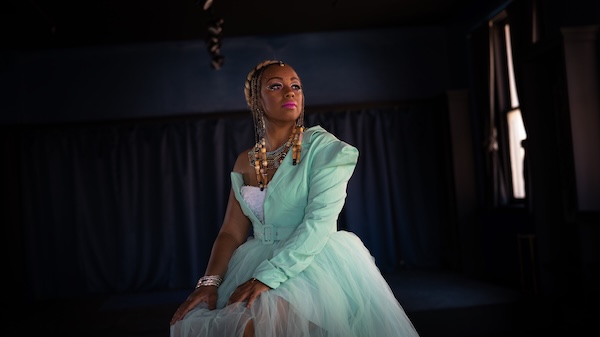
Tap dancer/historian Brinae Ali. Photo: Wendel Patrick
If you aren’t convinced that tap dancing is music, you need to know about Baby Laurence.
In 1959, Baby Laurence (born Laurence Donald Jackson) recorded an album — yes, audio only –that positions his artistry firmly among the finest of the era’s jazz instrumentalists. Listen to the swing of Baby in Birdland: his footwork sounds, at times, almost like snapping fingers, a joyful, cool clattering that is measured and relaxed at the same time.
Next week, traces of Baby Laurence’s legacy will inform the work of tap dancer/historian Brinae Ali.
Growing up in Flint, Ali (neé Alexandra Bradley) came up in a tap dancing family. While her father Bruce, didn’t start dancing until he was in his 30s, he made the most of it, dancing off-Broadway and going on the road in the European tour of Black and Blue in 1995. Returning home to Flint, he established a school that continues to exist, with classes, a festival, and a program that uses children’s natural love of rhythm to build literacy. With her dad as her first teacher, Ali experienced tap as not only a dance form but as an entrée to an intergenerational community and a way of life.
Ali co-founded the Baltimore Jazz Collective with her husband, Peabody Institute (and former Berklee) trumpeter Sean Jones, just a few months before the pandemic hit. Once people could gather again in 2023, the Collective unveiled Dizzy Spellz, which explored the “intersecting cultural and spiritual dilemmas” of Dizzy Gillespie through bebop, hip hop, and Afro-Cuban music. Her contributions included tap dancing, spoken word, and vocals.
But it was Baby Laurence, she told me during a recent Zoom interview, that “tapped [her] on the shoulder.”
The initial idea was simply to celebrate a Baltimore composer with a song or two. That modest one or two song project blossomed into a community engagement and then, with the help of a 2024 Pillow Lab residency at Jacob’s Pillow and a 2026 Joan B. Hunter New Work Commission, the evening-length Baby Laurence Legacy Project that will be presented at the Doris Duke Theatre next week. It reimagines Laurence’s work with new arrangements, choreography, and technology that triggers video samples of Laurence himself to toggle between past and present.
Baby Laurence, who was born in Baltimore in 1921 didn’t leave many traces of his dancing. He was a contemporary of many of the Hoofers Club members who shared his experience of performing with Big Bands and small jazz clubs in jazz tap’s 1930s-1940s heyday, but his death from cancer in 1974 absented him from the height of the national jazz tap revival that would attract and inspire a new generation later that decade.
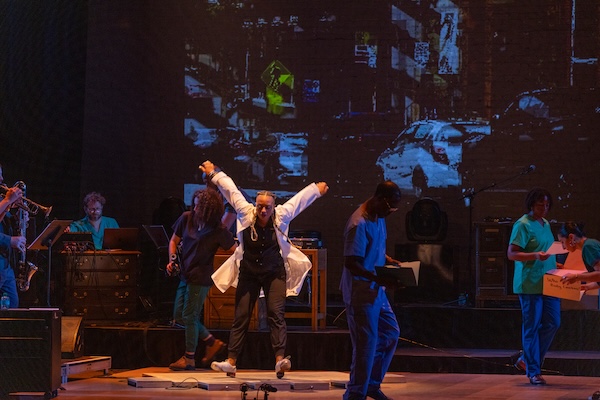
Brinae Ali in Baby Lawrence Legacy Project. Photo: Efrain Ribeiro
Tap history buffs can read a compelling brief chapter about him in Brian Seibert’s What the Eye Hears (I especially like the quote from fellow tap master Chuck Green who said about Laurence, “I called him Bravery, because he feared no sounds”) and more diffuse discussion of his work in Constance Valis Hill’s Tap Dancing America. Ali says that, when she began her research, most of what she could review directly was in Bill Hancock’s 1981 documentary short The Jazz Hoofer, (which I suggest would be worth watching for the snippets of his teaching alone).
In Baby Laurence, Ali and the Baltimore Jazz Collective heard the transmission of the bebop risk-taking that Baby Laurence picked up as a teenage singer at New York’s Onyx Club, when he translated Art Tatum’s piano playing into music for his feet. Soon, the sonic circle would expand to include Charlie Parker and Lester Young. In Jazz Hoofer. Laurence remarks “in 16 bars I would do 32 rhythms maybe, and possibly more, and this is what it’s about.”
“His compositions are insane,” Ali says. “It fits the music like a glove.”
Ali recognizes that there were – and are still – negative stereotypes about tap in the Black community. For many, tap remains principally associated with minstrelsy and “cooning” appeasement. She shares a story of how saxophonist and band leader Pharoah Sanders once bristled when hearing that Baby Laurence – a tap dancer! – was scheduled to open for him, and reportedly announced “I don’t want no vaudeville on my stage.” By the end of Laurence’s performance, of course, Sanders embraced him – and his distinctive bebop tap style. Ali laughs ruefully when she notes “I can’t believe Pharoah Sanders didn’t know better.”
“Baby Laurence was able to navigate this – he was always educating,” she says. The Baby Laurence Legacy Project is intended to share, and celebrate, one great jazz tap dancer’s complex and enthralling musical knowledge.
Debra Cash is a Founding Contributing Writer to the Arts Fuse and a member of its Board.
Tagged: "Baby Laurence Legacy Project", Baby Laurence, Brinae Ali, Sean Jones