
Local Author Interview: Lelia Farsakh — A Life in Exile, A Voice in Cambridge
By Preston Gralla
Palestinian scholar Lelia Farsakh reflects on a life shaped by displacement, her father’s legacy, and the political and personal stakes behind her emerging memoir.
In this second installment of an ongoing series of interviews with Boston-area authors, I spoke with Lelia Farsakh, a Palestinian political economist and professor of political science at the University of Massachusetts, Boston. Farsakh lives with her husband and children in Cambridge, and is at work on her memoir, excerpts of which have been published in the Boston-based Arrowsmith Journal.
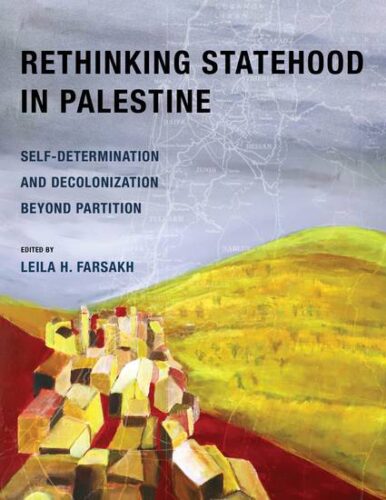
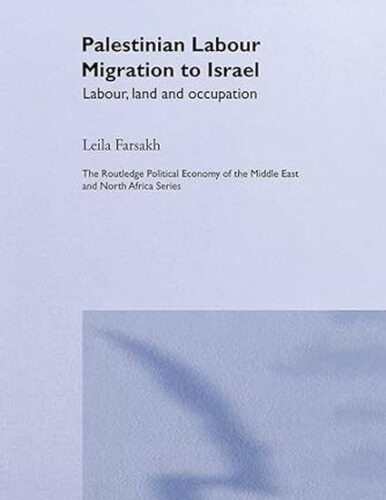
Farsakh’s research focuses on the Middle East and the Arab-Palestinian conflict. Her books include Rethinking Statehood in Palestine: Self-Determination and Decolonization Beyond Partition (University of California Press, 2021), Palestinian Labor Migration to Israel: Labour, Land and Occupation, (London: Routledge, 2005, second edition, 2012, translated into Arabic in 2011), and The Arab-Jewish Questions: Geographies of Engagement in Palestine and Beyond (Columbia University Press, 2020), co-edited with Bashir Bashir.
In 2001 she was awarded the Peace and Justice Award from the Cambridge Peace Commission.
AF: What do you want to accomplish in the memoir?
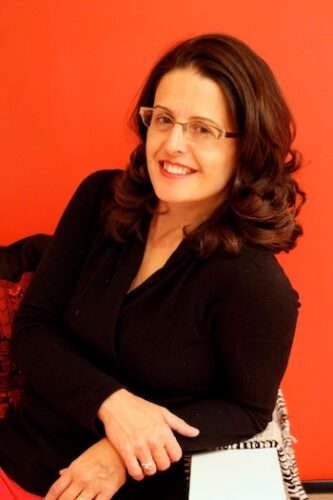
Leila Farsakh. Photo: courtesy of the artist
Lelia Farsakh: I’m trying to do several things. One is to give a history of the Israeli-Palestinian conflict since 1967. Basically, how the Palestinians were unseen in ’67, and then how they proved themselves on the international scene, how they accepted the two-state solution, how they tried to return and build the state, and then the state collapsed.
Another narrative is how did I become Palestinian although I was born in exile, explaining how Palestine was part of my life before I visited for the first time in 1977, and then how as I grew up, I made it an integral part of my life. And finally tracing when my parents were able to return to the West Bank, which was always my father’s dream. He was able to return and build a house but saw his dreams of Palestinian independence crushed and he paid for it.
AF: I’d like to start at the beginning. Where were you born, and what do you remember about your early childhood?
Farsakh: I was born in Jordan in 1967, just two months after the Six-Day War (in which Israel defeated a coalition of Arab countries and seized and still holds the West Bank, East Jerusalem, the Gaza Strip, and the Golan Heights). I was supposed to be living in the West Bank, but I couldn’t because my father was denied entry. So as a result, I had very much an Arab diasporic experience of being Palestinian.
The first thing I consciously remember is Black September (a civil war which Jordan fought against Jordanian Palestinians and expelled many of them). We were kicked out of Jordan and went to Kuwait in 1970. And then we moved to Dubai. The idea was we would live there for a few years and then go back to Palestine.
AF: What was Dubai like?
Farsakh: I never felt that Dubai was where I belonged. It felt like a very shallow life, a life about making money and showing money. We did not mix with the local people. Each ethnic community lived in its own space. My school was a Lebanese, Palestinian, and Syrian school, so we were still in an environment of Arab nationalists. Palestine is what mattered.
The Lebanese War was happening at the time and my school had lots of kids who escaped the war. So, Dubai felt like safe haven. My father was able to make money. We had stability.
AF: It sounds as if it never felt like home to you, and yet you had to live there for years.
Farsakh: I grew up in displacement, a continuous sense of displacement, looking for home. By the time I was six years old, I had already moved to four different cities and lived through three wars. My mother was Italian, but she fully accepted the patriarchal Palestinian narrative, so she was also exiled, and my father was exiled, and we were all working towards, “We have to go back to Palestine.” It’s not that my father said, “Okay, we’re coming to Dubai, we live in Dubai, forget everything. We lost Palestine. Let’s make this our home.” No, it was, “We’re going to support people back home. We’re going to send money to people back home.”
Palestine always remained very present with us. It remained present in the food. It remained present in the politics we talked. It was present in the families, the relatives.
AF: When did you first visit Palestine?
Farsakh: The Israelis had refused to give my father or any of my uncles a permit to go back, but they allowed my grandmother and unmarried aunt to live there. So, we managed in 1977 to visit her for the first time. By then I was ten years old. It felt like paradise on Earth, because it was the Promised Land, basically. Dubai was this boring desert place with no trees. In Palestine, there are trees and hills, and water, and aunts and cousins as far as I can see, and freedom. I felt, “This is what my father told me about. This is where the real thing is.” From then on, I started going regularly to Palestine.
AF: You wrote a very beautiful and moving article for the Israeli newspaper Haaretz about your father’s dreams of returning to Palestine to live. How much of his dream do you think was transferred to you?
Farsakh: I had grown up with this idea we are transient until we go home. When he sent us to Palestine for the first time in 1977, he tried to make Palestine real rather than something nostalgic or to aspire to. His dream was to build a home and die in Palestine, and indeed he fulfilled his wish. He came back, he built a very big house, and he died in Palestine. I always say it’s a last act of defiance, that he died in Birzeit where he wanted. He was buried next to his mother in the village where he was born.
He realized with building this big house he gave us an anchor, and in a sense helped me to put the closure on exile. He gave me an anchor in Palestine, a place to return to, so in a way I feel that I can get over the trauma of exile even if I’m traveling around. Palestine gave me that sense of grounding, that there are these people who’ll always love me, who are always there, who don’t have an easy life, but to whom I’m related by love, by family, by experience.
AF: After your father was forced to leave Palestine, he always yearned for it. You didn’t go there until you were ten years old. Was your yearning for Palestine something you experienced through him, rather than directly yourself?
Farsakh: I don’t know if I had a yearning through him. I had a yearning for home because where I was growing up, in Dubai, did not feel like home, and the sense of displacement was always there. I had always been looking for something solid. I wanted something to ground me.
I was yearning for something that’s, I don’t know if the word is permanent, but grounded, not ephemeral. Until I was 40, I never lived in a city or a house for more than five or six years. I moved to three different houses in Dubai, then to the UK, then I would go to Palestine, then Paris. I had a very rich life, don’t get me wrong, but I’m nearly 60, and our house in Cambridge is the first house I’ve ever lived in for more than 10 years.
I remember telling my husband I wanted a bigger house, and he told me, “Let’s move somewhere in the suburbs and have a bigger house.” I said, “But why? Then the kids will move out and then we have to downgrade it.” Then I looked at him and I said, “I will not move out, but not because of that. I want my daughters to be born in this place and leave this place to go college and come back to this house because that gives grounding.
I have two different girls with two different characters, but they both have a special connection to Palestine. For one, the eldest, Palestine means the house and the garden and the olive trees. For the second one, it means the people and that she looks like them, because she doesn’t look like the people here. My older one told me that I broke the cycle and trauma of exile because they feel grounded here.
AF: As you described your sense of displacement, exile and yearning for a homeland, a terrible irony struck me: The Jewish people for thousands of years have been displaced and exiled and yearned for a homeland. And when they got one, look at how they treated the Palestinians.
Farsakh: That’s the irony, but that’s the problem with nationalism. The Middle East, before nationalism, was a much more diverse place, much more intercultural. I believe Judaism is part of the Arab world. Islam is part of the Arab world. Christianity is part of the Arab world. And I realize I’m an old relic because I care about my identity as an Arab, not just as a Muslim or as a Palestinian.
(Another irony is that) in the end, Zionism is a project of power, and of course it’s born out of trauma. But don’t forget that Zionism was fundamentally a political project having to do with being excluded from Europe (because of anti-Semitism), and it used the Holocaust, unfortunately, to advance its goals.
AF: How the Israelis have treated the Palestinians reminds me of what W.H. Auden wrote in his poem, September 1, 1939 on the eve of World War II: “I and the public know/What all schoolchildren learn/Those to whom evil is done/Do evil in return.” Do you believe that cycle can ever be broken in the Middle East?
Farsakh: Yes, you can break this cycle by knowledge. You can break this cycle by extending a hand. You can break this cycle by being self-reflective. You can break this cycle by understanding, yes, you’ve been victimized, you’ve been a victim, but you have agency. You have to work through your trauma in order not to reproduce it.
And you need to understand your history. I was talking with an Israeli friend, I said, “Look, you need to understand that Zionism is both a project of national salvation and a colonial project, and if you don’t admit that colonial project, you will never be saved.”
You can accept that Zionism produced something for the Israelis, but Israelis don’t need to be Zionists (in order for Israel) to exist. The victim mindset does not liberate you, it confines you. So it’s hard to confront your trauma, but I believe through humanity, by accepting the humanity of the other and the suffering of the other you can live together.
 AF: If you could wave a magic wand and create a solution that was equitable for both Jews and Palestinians, what would that be? Would it be a single state? Would it be two separate states? What’s your vision?
Farsakh: I think of it as a single democratic state, a federal state. I tell everybody, “You know, the difference between an Israeli and a Palestinian (is not) bigger than the difference between somebody from Boston and somebody from Oklahoma.” Mitch McConnell and Bernie Sanders are very different from one another, yet they live in the same country. They don’t have the same opinions. They don’t like each other, but they have the same rights. So, I think (a single state) is the only solution. You have seven million Palestinians and seven million Jews living (in Israel and Palestine) and the only way forward is with equal rights. The only solution is a democratic state, a federal state where everybody has legal rights, but for that to happen Israel needs to give up its privileges.
AF: It strikes me that it’s not just Israel who have treated the Palestinians badly. So has the Arab world. Many Arab nations are looking out for themselves rather than for the Palestinians and have used them as pawns.
Farsakh: The problem is that Israel was created not to live with Arab countries, but to crush Arab countries and to deny the Palestinians their rights. So, the Palestinians said, “No, we also have a right to a state, and we cannot liberate Palestine on our own, we need the help of Arab countries.” Then Arab countries use the Palestinians to strengthen their bargaining position versus Israel, as well as to crush the Palestinians when it was convenient for them.
I think right now we’re seeing a crisis of how the ethnic state is problematic, whether it is in the U.S., whether it is in Europe, everywhere you see the movement to the far right is very nationalistic and anti-immigrant. Immigration is about having a democratic state that includes everybody. The same thing happened in the Arab world. The Arab uprisings were about people having rights. It was not so much about creating Islamic states.
But I am optimistic because 40 years ago nobody in the West knew who the Palestinians were. They thought Palestinians were a bunch of terrorists, right? Now people do not think the Palestinians are terrorists. They know Palestinians are sophisticated people, Palestinians know their rights. People also know Israel is not the only democracy in the Middle East, and that it has good people and bad people in it. So that can allow us to move forward, but it’s going to be an uphill battle, because like in this country, it’s always going to be a struggle between equality and privilege.
Note: This interview has been edited for length and clarity. Go here for samples of Farsakh’s ongoing memoir and other writing.
Preston Gralla has won a Massachusetts Arts Council Fiction Fellowship and had his short stories published in a number of literary magazines, including Michigan Quarterly Review and Pangyrus. His journalism has appeared in the Los Angeles Times, Dallas Morning News, USA Today, and Boston Globe Sunday Magazine, among others, and he’s published nearly 50 books of nonfiction which have been translated into 20 languages.
This interview touches on many penetrating points about exile and belonging, the weight of history and the urgent need for change.