
Book Review: “Mister Everywhere” — Pierre Rissient, the Unruly Champion of Cinema
By Gerald Peary
For half a century, cinephile, production assistant, filmmaker, press agent, producer, and programmer Pierre Rissient used all his powers to turn critical attention to filmmakers he took under his wing for their unusual personal vision.
Mister Everywhere: Pierre Rissient Translated from French by Paul Cronin. With a foreword by Clint Eastwood and a preface by Bertrand Tavernier. Sticking Place Books, 160 pages, $18 (paperback)
The cover of Mister Everywhere.
What did Pierre Rissient do? What didn’t Rissient do? The Frenchman wore so many hats in cinema (and actually always wore cowboy hats), and had so many overlapping jobs, that he’s nigh impossible to pin down. Cinephile, production assistant, filmmaker, press agent, producer, programmer, that’s a good start. Influencer, above all. “I acted as a kind of conductor,” Rissient said. For half a century, Rissient (1936-2018) used all his powers to turn critical attention to filmmakers he took under his wing for their unusual personal vision. He strong-armed others to allow these auteurist directors — many of whose work was unknown by the general public — to be shown in theaters and celebrated at film festivals.
He befriended John Ford, Fritz Lang, and Howard Hawks, and, later, Clint Eastwood and Quentin Tarantino. He liked being called “the French connection.” He was the first to notice Jane Campion, when he journeyed to Australia and saw her dazzling shorts. He found King Hu in Hong Kong, Lino Brocka in the Philippines, and was an early champion of Martin Scorsese. He located American blacklisted writers and directors exiled in Europe and proudly showed their work. Just a sampling of his many accomplishments.
Yes, there was a downside: Rissient’s quarrelsome, hot-headed nature. He admitted it. “Over the years I have been called all sorts of things: scout, troublemaker, a brilliant press agent with a terrible temper.” He ended up estranged from many of his close filmmaker friends, King Hu and Joseph Losey among them. No, he did not suffer those he saw as numbskulls. My encounters with him were probably typical Rissient when we conversed at Cannes and at the Telluride Film Festival. I’m opinionated also, so naturally we faced off about movies we’d seen. How did Pierre take being disagreed with? I remember him looking at me in dismay. How could a so-called film critic be so stupidly wrong? Whatever, what a colorful and charismatic guy, and you can hear his voice full force in an energetic, irresistible 2016 book of interviews, Mister Everywhere, conducted in France by Samuel Blumenfeld, and translated now for the first time into English.
Before movies, there was literature and poetry: Brecht, Baudelaire, Verlaine, Herman Melville, and Henry Miller. But popular books also: the Série noire series of the 1950s. A lad from the French provinces, Rissient moved to Paris to study law but soon quit to pursue a life of cinephilia. He did his best to dodge the military, choosing to spend his time instead in the trenches of the Cinémathèque française. He watched Rossellini films, befriended Claude Chabrol. “Jean Renoir was the first filmmaker whose work I really got to explore in depth,” he said. “He became a kind of benchmark for me.”
His connections with young filmmakers, all compulsively watching cinema, led him to employment on early Nouvelle Vague movies, starting in 1958 with Chabrol’s Les Cousins. Godard “visited the set … and remembered me as a capable intern.” That led to employment on Breathless. “[A]t 23, I became the youngest first assistant in France, something I’m rather proud of.” Everyone about him was making films, so Rissient also directed a couple of shorts. What he learned would be applied to his discerning watching of films by others. “It taught me a lot about lenses and spatial awareness, about where to place the camera, of the spaces around actors. That’s when I began to understand that a sense of rhythm is essential in directing.” In subsequent years, Rissient directed two small but well-regarded features. Yet his first calling switched dramatically … to advocating for other people’s films.
Something new for me, and probably for other American readers of this book. There was another movie theater in Paris that challenged the Cinémathèque for the range and adventurousness of its repertoire. The Mac-Mahon. It was there that Rissient and his cineaste friends set their flags because, unlike Henri Langlois’s tight reign at the Cinémathèque, they were given the opportunity to influence the programming. Lovers of classic Hollywood, they put up pictures in the lobby of their Four Aces: filmmakers Fritz Lang, Raoul Walsh, Joseph Losey, and Otto Preminger. Lang was a special guest at the theater. And when Jules Dassin and Losey spoke there, the audience included blacklisted Americans living in Paris: John Berry, Michael Wilson, and Paul Jarrico.
Rissient and company separated a bit from the Cahiers du cinéma crowd, preferring Losey and Walsh to Cahiers favorites Howard Hawks and Nicholas Ray. Those things mattered in Paris film circles! Also, Rissient said, the Mac-Mahonists went beyond directors with a personal theme — the Cahiers obsession — to backing directors with theme combined with mise en scène. “Our vehemence in defending what we loved could come off as abrasive, even arrogant,” Rissient admitted. “But all we wanted was to push the conversation further, to deepen the thinking around mise en scène.” (For those not in the know: it’s a mysterious, undefinable phrase meaning vaguely “What is put into the shot.”)
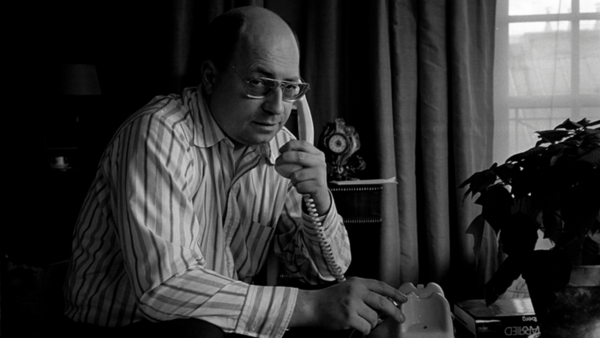
Legendary influencer Pierre Rissient. Photo: Criterion Collection
In 1963, Rissient officially entered the film business with Mac-Mahon Distribution, offering French theaters a veritable feast of “cult” American cinema: Walsh, Jacques Tourneur, and Josef von Sternberg. Sam Fuller’s 1963 Shock Corridor was an unexpected success in France, and Leo McCarey’s 1937 Make Way for Tomorrow — though a box-office flop — found new admirers. Two contemporary American films, Abraham Polonsky’s Tell Them Willie Boy Is Here (1969) and Jerry Schatzberg’s Scarecrow (1973), were likewise too unusual for mainstream US audiences but became causes célèbres in Paris.
In 1965, Rissient made a second foray into the film business, joining forces with future filmmaker Bertrand Tavernier, then a press attaché, to form a high-powered two-person press agency. Their credo: they would only represent films and filmmakers whom they deeply loved. Also, they would work their butts off making sure that those films and filmmakers succeeded. Over a breakfast once, Tavernier described to me how they would work together, surrounding a film critic and both bullying him until he agreed to write favorably about one of their clients. Tavernier remembered with amusement what Cahiers du cinéma described as “the terrorist seduction operations of Rissient and Tavernier.” Unlike many others, he got along fabulously with his pal Pierre.
Between 1964 and 1972, this duo worked on about 70 films, and then closed their business amicably. After that, Rissient became a regular at Cannes, eventually becoming a Cannes scout and even a programmer. He brought there Jeremiah Johnson (1972), The Conversation (1974), In the Realm of the Senses (1976), and Apocalypse Now (1979). And he was an occasional executive producer, most successfully with Jane Campion’s The Piano (1993). But more important, he circled the globe, helping filmmakers with low budgets and little money to pay for his assistance. Often broke, Rissient was, he said, “offered an extravagant sum to work on Funny Lady [1975], the Barbra Streisand sequel which, needless to say, I turned down.”
Interviewed for this book in 2016, Rissient at 80 admitted that his health was declining, that he was weary of watching films offered to him on DVD, that he had cut down his film festival going to a half-dozen a year. But he remained as opinionated as ever, insisting that Citizen Kane (1941) is “overrated” and that A Touch of Evil (1958) “felt bloated.” He noted that “I never followed Antonioni” and said, of Elia Kazan, “I still don’t think he’s the great filmmaker some make him out to be.”
And his sometimes off-putting temperament? “I probably should have been more diplomatic and more cautious, less fiery or rigid in my judgments. But then again, that’s the price you pay for being able to shave in the morning without too much shame.” Repentant? Unrepentant? Whatever, Rissient died two years later in 2018. I can testify to this: in international film circles, there will never be another. And how about this epithet from his close friend Clint Eastwood? “He burned with unmatched fervor, his love for cinema deeply and indelibly rooted within. If anyone dared disagree, he could pin them to the wall.”
Gerald Peary is a professor emeritus at Suffolk University, Boston; ex-curator of the Boston University Cinematheque. A critic for the late Boston Phoenix, he is the author of nine books on cinema; writer-director of the documentaries For the Love of Movies: The Story of American Film Criticism and Archie’s Betty; and a featured actor in the 2013 independent narrative Computer Chess. His last documentary, The Rabbi Goes West, co-directed by Amy Geller, played at film festivals around the world, and is available for free on YouTube. His 2024 book Mavericks: Interviews with the World’s Iconoclast Filmmakers, was published by the University Press of Kentucky. His newest book, A Reluctant Film Critic, a combined memoir and career interview, can be purchased here. With Geller, he is the co-creator and co-host of a seven-episode podcast, The Rabbis Go South, available wherever you listen to podcasts.