Arts Commentary: Boffo Box Office — Cultural Bust
by Tom Connolly
Hedge-fund logic, executive excess, celebrity casting, and algorithmic ticket prices are remaking nonprofit arts groups and Broadway alike.
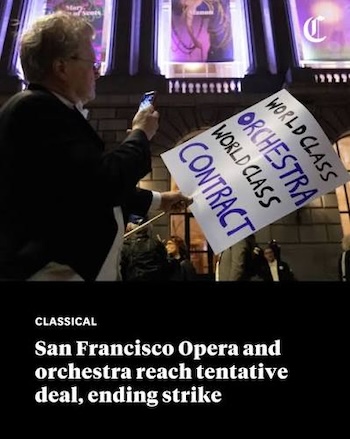
Boston continues to endure the fallout of the Boston Symphony Orchestra brouhaha over the firing of Music Director Andris Nelsons along with an averted threat by the orchestra to strike. Meanwhile, San Francisco Opera musicians went on strike over a 20% wage cut, in part a response to the fact that the company’s general director’s pay jumped 72%, to $729,000. The bottom line: Mammon’s battering the Muses from coast to coast.
Recent examples of administrative overreach aren’t an isolated corporate conk out; they’re the normal “systems thinking” of cultural institutions today. Boards populated by hedge-fund managers and real-estate developers treat nonprofit arts organizations as asset-management portfolios rather than public trusts. Executive compensation rises to keep the suits in line with their coevals — while the artists, orchestra members, and technical crews onstage are run ragged and left threadbare.
Corporate management will demur that art is too important to be left to artists. They might proffer a statistic that 83% of arts organizations face budget deficits in 2026 and badger consumers about needing to cut costs in order to protect the bottom line. But is it reasonable to blame artists for vanished post-pandemic relief funds, declining government and corporate grants, and soaring overhead costs?
Recall that only three years ago, COVID scythed through the arts across the country. The catastrophe was evident immediately: in June 2023, Center Theatre Group in Los Angeles abruptly suspended its entire 2023–24 main-stage season at the Mark Taper Forum. A few weeks later, New York’s Public Theater laid off 19% of its staff after decades of standing as the nation’s catalyst for theatrical innovation.
What we see now is something different. An escalating “private-equity aesthetic” put into action by boards that prioritize real estate, administrative bloat, and executive perks over artistic endeavor and achievement. Exhibit A: A.R.T., which has now become little more than a Broadway-musical tryout house. Exhibit B: BSO, note its board’s currently vague schemes for “repurposing” Symphony Hall. American high culture no longer exists to serve audiences or cultivate sensibilities, but to sate the marketing targets of corporate apparatchiks.
And commercial theater? A March 2025 New York Times article detailed how Broadway ticket prices smashed the ceiling last season. Othello charged up to $921 for orchestra seats; tickets started at $197, with lottery seats at $49. The production grossed a record-breaking $2.8 million in a week and averaged $361.90 per ticket—more than double the price of any competitor. The median Broadway ticket price is $130.
What’s driving these eye-watering sums? In part, it is the pernicious practice of drawing on dynamic-pricing algorithms. Taken straight from airlines and ride-share apps, these yield-management systems track real-time demand; ticket prices are automatically ratcheted skyward as more seats are sold. It is a Trumpian exercise in charging whatever the market can bear — and then some. When the price of a seat matches a mortgage payment, a theater performance becomes little more than a trophy for plush tourists, corporate expense account junkies, and big-bucks bohos.
Predictably, the pricing juggernaut continues apace. This month, Julia Louis-Dreyfus makes her Broadway debut in a revival of Other Desert Cities, with tickets ranging from $234 to $782. An ingenious variation on moneymaking comes along later this season: securing an advance ticket for Julianne Moore’s star turn in Faydra at Manhattan Theatre Club requires the purchase of a five-play subscription beginning at $445. Full packages suddenly look like bargain-basement deals.
Celebrity worship eventually goes beyond being the go-to strategy for price-gouging producers; it restructures nonprofit theater operations, including their artistic side. Off-Broadway and subscription-based organizations, initially created to encourage new writing and foster dedicated local audiences, now resort to bundling star-driven vehicles into obligatory subscription packages. To see a major performer in a limited engagement, theatergoers are being asked to underwrite an entire season upfront. Rush lines, student discounts, and standing-room tickets—time-honored entry points for young artists, students, and fans of modest means—are phased out or converted into ticket lotteries, with the latter form of largesse ladling out a handful of seats to thousands of hopefuls.
Granted, stars have long used Shakespeare as vehicles. Denzel Washington’s Othello played the Ethel Barrymore Theatre, whose namesake dynasty starred in stagings of Shakespeare for generations. If Drew tackled Viola in Twelfth Night, might the top ticket break $1,000? Of course, when Katharine Cornell, Paul Robeson, or Leslie Howard did their best by the Bard, they weren’t leading a leveraged audience buyout. Even in the ’60s and ’80s, Richard Burton and James Earl Jones led landmark Shakespeare productions—and they were not treated as box-office bait. Consider Al Pacino’s love-not-money Shakespeare obsession, documented in his film Looking for Richard (1996).
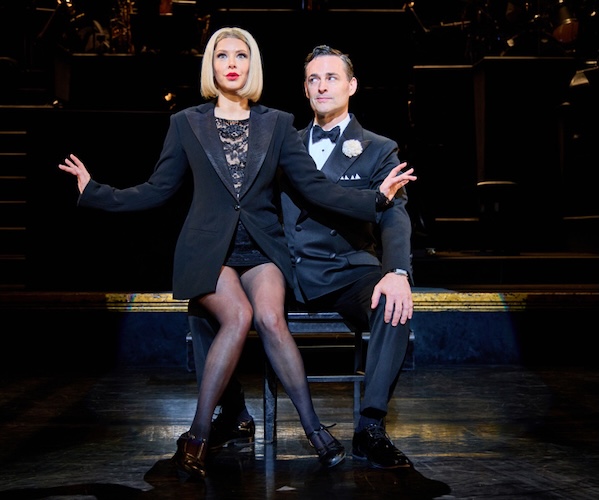
Ariana Madix and Max von Essen in Chicago. Photo: Jeremy Daniel
Once, Hollywood headliners retreated to the stage to test their range or revive fading careers, often working for scale out of respect for the theater—or, in some cases, desperation. Today that relationship has been inverted. Stunt casting—Tony Danza in A View from the Bridge, P. Diddy in A Raisin in the Sun—has become a form of financial insurance for risk-averse commercial producers. Even Broadway’s long-running revival of Chicago cast reality-TV stalwart Ariana Madix as Roxie Hart. Stars no longer join repertory companies; instead, they anchor carefully packaged productions mounted for 12-week runs, engineered to maximize returns before a film shoot calls them away.
The collateral damage of this increasingly dominant model is the death of artistic risk. When productions cost tens of millions and tickets command premium prices, producers cannot afford a flop. The predictable victims are original plays, adventurous directing, and unproven talent. Broadway and major regional theaters are increasingly overrun by movie adaptations, jukebox musicals, and durable, risk-free revivals. The invaluable ecosystem in which generations of performers and playwrights could fail, learn, and sharpen their craft has become a hothouse for hybrid hits: presold properties with television stars above the title.
Boffo box office does not a thriving culture make. At this point, the Broadway brand asks only “who?” and “how much?” — “why?” doesn’t really matter. Producers have found a formula: put famous faces onstage and charge stadium prices. It is theater under Klieg lights while the culture around it grows dimmer.
Tom Connolly is is Professor Emeritus of Humanities and Social Sciences at Prince Mohammad Bin Fahd University. He recently edited Images from Jewish Life in Döbling Vienna: Tracing History Through Memory (Bohlau Verlag, 2026). He has published three books and numerous journal articles on theater, film, and futuristic studies.
Tagged: American Repertory Theater, Boston Symphony Orchestra, Broadway, Broadway ticket prices, Performing Arts, San Francisco Opera, Symphony Hall, arts institutions, arts management, arts-funding, celebrity casting, commercial theater, corporate governance, cultural policy, dynamic pricing, nonprofit arts organizations, nonprofit theater, theater economics