Book Review: The Ghosts of Empire in China Miéville’s “The Rouse”
By Dan Dellechiaie
In this monumental, politically charged epic, the author turns Cold War imperialism, government secrecy, and the limits of human understanding into a haunting story of weaponized ghosts.
The Rouse by China Miéville. Del Rey, 1,260 pp., $40.
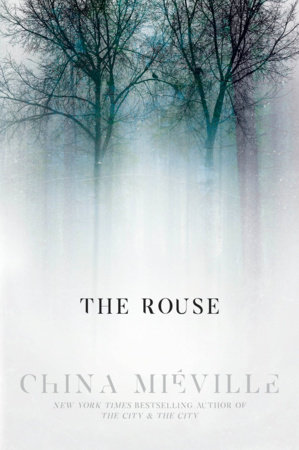 The girth and weight of China Miéville’s first full-length solo novel since 2012’s Railsea poses considerable difficulties, even for determined readers. But the effort is worth it: this cinderblock of a tome delivers a chilling message for our time. The spectre-laden storyline taps into our deepest fears, exploring the horror of confronting uncertainty with little to no comprehension or hope of guidance. The consequences of ignorant, amoral people unleashing swarms of unfathomable, all-powerful monsters they cannot control—the AI industry, anyone?
The narrative starts off fairly normally with the life of a soon-to-be-single mother who is navigating the bohemian corners of early-’70s London. Maur and her son, Ewan, have a contentious but ordinary life together. Early intimations of terror creep in when Maur has to battle callous government bureaucrats.
But a thicker darkness looms over Ewan—a young boy who knows something he shouldn’t. He runs away from home and joins a mercenary force. During the Yugoslav Wars, he is involved in some shady action and sees some inexplicable things. Ewan is frustrated that he can’t reveal his momentous secret to others, but he is ordered to keep what he has witnessed very hush-hush. Tragically, he isn’t given a chance to tell others what he knows. At the end of the novel’s first section, Ewan is found outside a military base with two bullet holes in his head. His alleged suicide—and the consequences of the investigation that follows—are at the center of the novel’s first timeline.
The second timeline follows a troubled youth turned soldier named Steven Allardyce. While in the jungles of Malaya, tracking down communist terrorists, or “CTs” (one of the many initialisms deployed throughout the novel), Allardyce glimpses something that he can’t comprehend. It is an enigmatic force that seems to become part of him, a weird shadow. After more inscrutable encounters, he is inducted into a secret government agency, Unit R, which is dedicated to weaponizing this malicious spirit energy against the Red Menace. As one of the British agents explains, “This whole operation’s a ghost story.”
Unit R searches the globe for cursed objects, called “apports,” that can summon up ghost death squads, which are called “the Roused.” The Communist Bloc and other militant groups and countries are also researching this alien magic—sectarian and occult conspiracies abound. Miéville supplies no clear reason why Britain has had the most success with the Roused. The reader just has to accept the supernatural setup and move on.
The unresolved problems posed by encounters with the Roused unify Ewan and Allardyce’s timelines. “We call it crepitus, that feeling you had,” one government agent tells Maur. “That’s the world out of joint. Time has allergies.”
At this point, those desiring a horror novel of the Stephen King variety know they will have to look elsewhere. This is true not only in terms of plot but also in terms of style: the narrative’s prose ranges from clipped realism and modernist splatter lyricism to cinema-inspired horror scenes and parapsychological dialogue exchanges. Miéville includes text from at least five different languages and multisyllabic words (be prepared for multiple trips to Google). References to magical and political arcana will no doubt initiate a number of Wikipedia crawls.
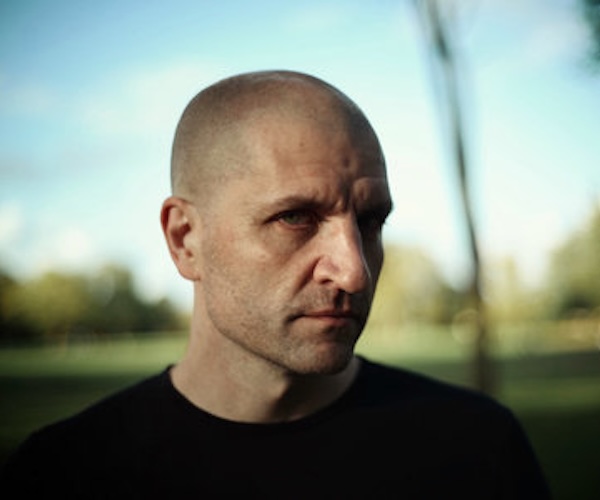
China Miéville — has he written his War and Peace? Photo: Barney Cokeliss
Miéville has deliberately published a challenging counterweight to the historical-horror romances that have deluged the market recently. The sex scenes in The Roused are matter-of-fact. Even more significantly, its horror confrontations are curt—old-fashioned in that they are suggestive rather than visually detailed. You are invited to imagine what has happened—not repeatedly dunked in guts and gore. A sample:
“They carried the bodies into the darkness amid the trees and laid them down naked, sacrificed kings in a cruel religion. The stones watched.… They carried the clothes to dispose of them piece by piece in holes and in the hollows of woods far distant. The snow would cover the blood and tracks.”
So what is The Rouse, genre-wise? It is a surreal philosophical epic about the limits of human perception and the existence of dark powers lurking invisibly in our world. Are they ghosts, ideological spirits, or both at once? Think H. P. Lovecraft with multivalent politics, or Thomas Ligotti cleansed of hopelessness.
The reader’s reward is the invigorating challenge of resisting impatience as Miéville piles on extended descriptions of characters scattered across the globe. This is a book that demands to be read multiple times and with close attention. In an era of easily digestible fiction—fiction that privileges minimal effort and meager prose—The Rouse presents considerable difficulties. For many pages, you won’t know what’s going on. (After completing the novel I remained in the dark about how the plot fit together, unclear about the relationships among its many secondary characters and overlapping conspiracies.) The book’s expansive storylines and ideas demand time and effort—and that is what gives it lasting value.
Miéville’s characters attempt to classify the creatures within the book’s dark magical system, but the effort is futile. Nothing they encounter corresponds to anything in the numerous mythology books that Steven consults. This bewilderment heightens the story’s unsettling atmosphere of distress generated by the presence of the unknown. Whether the Roused are alive, dead, or somewhere in between serves, throughout the narrative, as a recurring dark joke—with a perplexing punchline. “The thing is that even when you think about the nasty stuff,” a Cold Warrior confesses early in the novel, “even if you’re not too pleased about the fact that it happens, you can get sort of excited—I shouldn’t say that; what I mean is, you can still really want to hear the stories of it, can’t you? I can’t always tell where despite ends and because begins.”
Through her son’s death, Maur becomes a victim of her government’s weaponization of the Roused. Steven, meanwhile, falls afoul of the weapon he wields against his communist foes. He knows full well that he is committing evil acts against the enemy. He is no Eichmann, blindly following orders. He has a conscience, and can’t escape blowback from illegal transgressions committed in the name of furthering imperialism. He knows too much and feels that the darkness is everywhere. He is part of a grand game that is being played with all sides of the global ideological wars. As one character puts it, “There’s a vacuum where our enemies used to be and it isn’t only nature that has a problem with that. We’re all the Light Brigade now.”
When an award-winning novelist publishes a major book late in a long career, a question inevitably arises: Should the latest—and in this case heftiest—work be considered the author’s magnum opus? Granted, this inquiry of literary critics reeks of a preemptive obituary. Still, given the book’s girth and ambition, will The Rouse be remembered as China Miéville’s attempt to come up with his War and Peace?
Who knows? For now, The Rouse stands as a monumental achievement in 21st-century weird literature; its whirligig vision of the past as a haunted house deserves to be studied by fans of speculative and historical fiction alike.
Dan Dellechiaie is a fiction writer from New Jersey. His writing has appeared in Dodo Eraser, Partially Shy Magazine, The Scare You to Sleep Podcast, and elsewhere. He’s also a staff writer for the antifascist punk magazine, knifetwister records new york. You can find more of his work at dadell.com. Instagram: @dan_dellechiaie