Musician Interview: Low Cut Connie’s Adam Weiner on Protest, Partying, and the Power of Community
By Robert Duguay
Ahead of his November 18 show at Brighton Music Hall, Weiner talks about “Livin’ in the USA,” supporting immigrant communities, and the fans who keep riding with him.
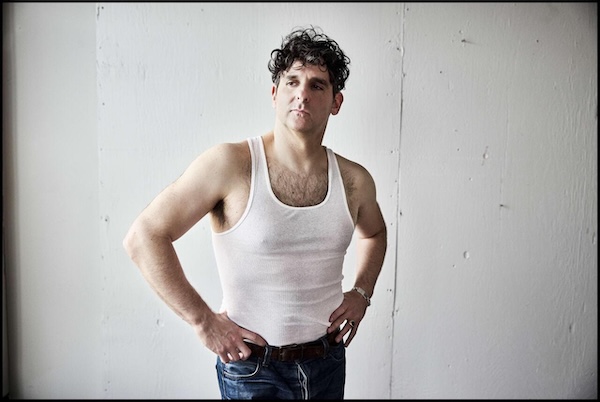
Adam Weiner of Low Cut Connie. Photo: Danny Clinch
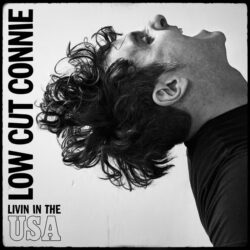
With the political, social, and economic climate these days, a lot of people feel like they’re hanging on by a thread. Whether it’s their finances, their sanity, their security, or a little bit of each, it’s a reality that’s very apparent for most of us. Some musicians have been offering their views on the situation through their music, including Adam Weiner, the creative nucleus behind the Philadelphia-based, piano-driven rock & roll act Low Cut Connie. This is evident on his latest album, Livin’ in the USA, which came out on July 3 via Contender Records. As part of a tour in support of the full-length album, Weiner and his bandmates will be performing at Brighton Music Hall in Boston’s Allston neighborhood on November 18, with New York-based singer-songwriter Brian Dunne kicking things off at 8 p.m.
Weiner and I talked ahead of the show about making the new record, working with a couple of nonprofit organizations, and being grateful that people have been riding with him for over a decade and a half.
The Arts Fuse: When you announced the release of Livin’ in the USA, you made a powerful statement calling for more protest music and urging people to speak out about the issues facing today’s society, from political and social issues to pretty much everything in between. How did you channel this angst into your songwriting?
Adam Weiner: I wish I could tell you that there was a method to it and that it was one plus one equals two, but it kind of never happens that way. It’s kind of a mystical thing. I meet people, talk to them, and hear their stories about how they’re living. Then, at random moments, I feel this little tug on my pant leg, like there’s a little kid bugging me, saying, “Pay attention to me,” and it’s a new song. It’s gotta demand my attention, and then I turn to look at it. A lot of times, a song just shows up quickly. Other times, an idea tells me that it’s going to take a year, and I gotta keep paying attention to it as it checks in. But really, what’s happening is that the world—everything I observe about it and how people are living in it—seeps into my lower consciousness and comes out in the songs.
AF: Did you have both Kelsey Cork and Amanda Bullwinkel on backing vocals for the record?
 Weiner: I sure did. There are 10 songs on the album, and Amanda, who goes by the name “Rocky” in the band, is on most of the album. Kelsey is on about half of it.
AF: I really enjoyed both of their contributions throughout the album. When you’re singing lead vocals and they’re singing backing vocals, how do the three of you decide where each voice fits?
Weiner: We’ve played so many shows together. This year, it’s been 50 or 60. Last year, we did about 70 shows together, with just as many rehearsals and recording sessions. We just spend so much time singing together, and sometimes we don’t even need to talk about it. It just kind of happens. We know where everybody needs to be for it to fit, if that makes sense.
AF: On your current tour you’re partnering with a few organizations. These include Western States Center and Comunidad Garces. The former is a Pacific Northwest-based nonprofit that works nationally to strengthen inclusive democracy, while the latter is a community-based nonprofit whose mission is to provide immigrants with health care, education, and support to improve their lives and reach their full potential. Will they have tables set up at the upcoming show so people can learn more about what they do?
Weiner: Yes, there will be tables for both organizations next to our merch table, as there have been at every show on this tour. This is both to raise donations and to spread information about what these organizations are doing. There are ways that people can integrate what these organizations do into their own cities and communities. I live in South Philadelphia. The area has a very diverse immigrant community — it’s been that way for hundreds of years. Dozens and dozens of languages are spoken in this neighborhood.
Comunidad Garces provides resources for immigrants in South Philadelphia. These are immigrants from countries all over the world who are looking to learn English, get health screenings or dental care, find a safe space to be, or get information about where ICE is going to be and what to do if they arrive. It’s an amazing organization for immigrants in this amazing neighborhood. I’ve seen the work they are doing, and I’m pleased to be working with them and talking about them nationally. The second organization, Western States Center, is a national organization that started on the West Coast, but now they’re everywhere, and they’ve helped me. They work with third spaces all over the country, which are public spaces where people gather. It could be a restaurant, a library, a bar, or a music venue, and they’re helping these third spaces stay safe in very difficult times.
For instance, these spaces might be facing threats from white supremacist groups, bomb threats, online doxxing, ICE raids, or all sorts of things that are designed to make people feel unsafe or scared. They’ve helped me because, last year, I received quite a few threats through our website directed at me and people I work with. They helped me with resources to protect myself, and I wanted to help them get their messages out to people all over the country about things they can do to stay safe.
AF: It’s fantastic that both of these organizations have had an effect on you in different ways. You’ve played in Boston numerous times throughout your career. Is there anything that makes performing in this part of the Northeast different from performing back home?
Weiner: Boston has some of the best live music audiences because people in Boston, like people in Philly, aren’t afraid to let you know how they feel. We first came there to play at a place that used to be around called Johnny D’s in Somerville, and then went on to Great Scott, TT the Bear’s, the Middle East, and all of these different places that we’ve played in the area for many, many years. I have fans who have been seeing me for 15 years. It always feels like a homecoming when I come there because people have really, really got spirit in Boston, and they have been riding with me for a long time there.
AF: What has it been like bringing Livin’ in the USA to these audiences in a live setting and mixing that material with the older material?
Weiner: I’m at a point now where I’m lucky to have people come up to me saying that it’s their 80th show. It’s very common for someone to have seen me 50 or 60 times. There are a lot of artists I look up to, like David Bowie, Prince, Bob Dylan, or Madonna, for whom every year is different. With every tour and every album, there’s a thread to it all, but fans expect that there will always be change. What I’m doing musically and onstage now is different from what I was doing two years ago, let alone 14 years ago. The beauty of it is that people have been riding with me through all these different twists and turns.
We’re in an era now, reflected in Livin’ in the USA, that is about protesting and partying together. Two years from now, it may be another era, and I’ll be exploring something else. Hopefully, people continue to ride with me as I deal with that. But it’s like making a new film, writing a new book, or making a new album. You’re exploring new terrain, and you’re swimming out into deeper waters.
Rob Duguay is an arts & entertainment journalist based in Providence who is originally from Shelton, CT. Outside of The Arts Fuse, he has also written for DigBoston, Aquarian Weekly, Providence Journal, Newport Daily News, Worcester Magazine, New Noise Magazine, Manchester Ink Link, and numerous other publications. While covering mostly music, he has also written about film, TV, comedy, theater, visual art, food, drink, sports, and cannabis.
Tagged: Adam Weiner, Boston live music, Brian Dunne, Brighton Music Hall, Comunidad Garces, Livin’ in the USA, Low Cut Connie, Rock-and-Roll, music interviews, protest music