Book Review: Christian Wiman’s “The Dance” — A Sonic Theology of Uncertainty
By Ann Leamon
The collection assembles moments of doubt, humor, and revelation into a resonant poetic experience.
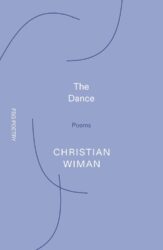
The Dance by Christian Wiman. Farrar, Straus and Giroux, 128 pages, $18
Christian Wiman’s seventh volume of poetry, The Dance, distills life to its essence, its joy and grief, confusion and moments of clarity. The author draws on his impressive background as a theologian, teacher, longtime, prize-winning poet, translator, memoirist, and longtime, much-praised editor of Poetry magazine to imbue this collection with surprise and delight. Wiman is a polysonic poet, as befits his position at Yale University’s Institute of Sacred Music. The verse here includes slant and full rhymes that have been deftly arranged to emphasize their musicality. Underlying the linguistic artistry, though, darkness resonates: the poet acknowledges the despair that comes when confronting moral or mortal limits. At his best, Wiman uses the shadows to make the light all the more vivid.
The volume has the randomness of pockets emptied at day’s end. Each poem introduces a different treasure. “Studio, 4 p.m.” begins: “Thinking of an old man I loved who died drinking tea.” We then follow a progression of observations that may or may not relate to the “old man,” a young girl, a season’s leaves, the fragments of a day:
“Lunch with friends, six feet
of snow in Buffalo, a child auditioning for a lead, emergency
surgery in Brno, pedestrian torsos through the window
[…]”
Lines repeat: “a season’s leaves” are “Raked and bagged, raked / and bagged”.
Later,
“Pushing back from the table whispering no, no.
Say something that will save me, say something that will save me,
I heard myself saying once,”
Our attention returns from this elusive search for salvation to, perhaps, the girl mentioned earlier, then to the narrator’s location:
“Too few leaves now to block the light from my studio.
Half-read books. The dog asleep. Cup gone cold.
Thinking of an old man I loved who died drinking tea.”
The circle closes, returning to the beginning.
This poem could describe a painting by Hieronymus Bosch, with vignettes of the girl, the leaves, and the snow scattered around the central image of the man who died drinking tea and the studio where the narrator sits with his own cup of tea, the dog, and the half-read books. The poem conjured my memory of an adventure with a long-lost friend, which also ping-pongs across details that serve a similar role: to keep my own grief at bay.
Wiman dives into matters of faith and belief in many of his poems. In “The Eye,” he wrestles with an almost Calvinistic idea of salvation in a modern context. The language is deliciously precise. The poem starts:
“Among the monks was one who kept apart
A gifted pray-er, they said of him,
Who sensed my faith was mostly faith in art.
A man of fluent, fasted absences
That from his tongue would come as scalding psalms,
Then yearlong silences of solid God.
[…]”
The protagonist feels seen, but as a fraud. The words, “fluent, fasted absences,” “scalding psalms,” and “silences of solid God” are perfectly chosen, especially the last phrase, which too easily elides into “solid gold” if one skims.
The poem continues with this precisely prickly language, which exploits slant rhymes to keep the protagonist (and the reader) on tenterhooks:
“For seven itchy, unctuous, dyspeptic,
penitential weeks he kept me guessing
where he’d be, or if the long sighs
at Mass or matins were, somehow, for me.
[…]”
The discomfort of “itchy” and “dyspeptic” counters the glide of “unctuous” and “penitential” as “guessing” slant-rhymes with “Mass” and “he,” “me” (twice) and “be” are positioned to keep us alert.
The images present further hurtles. The monk is “buoyant, too, as a battleship is buoyant / with cello legs and a cello’s walk.” How does a cello walk? Cellos can barely be carried. But monk’s appearance is even odder, “a raucous root-vegetable face / out of Breughel or Bosch.”
The poem then switches from describing the monk to a sharp crisis of faith as the narrator leaves the monastery after, one assumes, a seven-week retreat:
“He strode right up as if he knew me
and looking not so much at as through me
—as if I were a skull occluding sky—
leaned in close and whispered: Why?
And walked away.
I tried to laugh but only choked.
I tried to speak but had no voice.
[…]
“But no: the very first step I took
took something from me—that communal chant
that seemed so sad—and away was all I had.
[…]”
The odd-looking “pumpkin monk with his cello legs” understandably upsets the narrator, forcing him to reflect on why he was leaving the monastery. Or does the interaction make him question why he had even come in the first place? In this way, the poet invites readers to reconsider: what things in life have we given up or accepted — and why?
Wiman is not just earnest; he includes humorous poems as well. “Two Poets” and “Bad Literary Gathering” both poke satirical fun at the self-importance and petty jealousies in the literary community. The former compares a poet’s preference for “the tiddlywinking and the curlicues, / the velvet voltas of a mind too refined / for matter” with its opposite: “A plain style, Valentina? / As if one craved a cracker in the desert. / As if the recipe for the good life called for misery extract.” The second describes “A kind of nude gloom in which everyone sees / everyone else’s death: a mortality colony” and concludes “Only much later, long after one has left, / does one realize one can’t.” This wry commentary on the state of literature has a universal sweep — teacher and student, writer and reader — its critique coming across as affectionate rather than condemnatory.
The title poem, “The Dance,” crystallizes the experience of aging in a sun-dappled pastiche of image and language.
“The day is done.
She is poured out like water
[…]
then lies with half-shut eyes
stitching and unstitching
[…]
yielding to the slow dance
of grace and circumstance,
a pirouette of silhouette
and solid bone.”
Wiman’s rich and complex collection warrants multiple readings; its elusive perspectives and sly jokes reward slow appreciation. Overcome your initial impatience, gird your mind and spirit, and the rewards are ample.
Ann Leamon’s writing spans the genres and has appeared in Harvard Review, Tupelo Quarterly, MicroLit Almanac, North Dakota Quarterly, and River Teeth, among others. She holds a BA (Honors) in German from Dalhousie University/University of King’s College, an MA in Economics from the University of Montana, and an MFA in Poetry from the Bennington Writing Seminars. She has attended residencies at the Prospect Street Writing House, Blackfly Writing Program at the Haystack School, Stonecoast Writers Program, and Dorland Mountain Artists Colony. She lives on the coast of Maine with her husband and a Corgi-Lab mix.