May Short Fuses — Materia Critica
Complied by Arts Fuse Editor
Each month, our arts critics — music, book, theater, dance, television, film, and visual arts — fire off a few brief reviews.
Classical Music

Rituals: Art Songs by Charles Ives, Reynaldo Hahn, and William Bolcom (which can be purchased here as a CD, also as a download, a vinyl LP, or, remarkably, a tape cassette) feels like a handcrafted object made by a highly experienced artisan, or rather, by two (soprano and pianist)—or, counting the composers, five, or yet more if one adds in the poets (Robert Browning, Matthew Arnold, Leconte de Lisle, Jane Kenyon, and so on).
Everything one could wish in a recording has been thoughtfully accomplished here, not least the two booklets, which are printed in a comfortably large font and offer the full texts of the songs, plus ruminations by the singer, Laura Choi Stuart, and evocative photos of Stuart (a lyric soprano) and pianist Tanya Blaich visiting the home of the poet Jane Kenyon (1947-95).
The songs, selected with care, reflect on varied aspects of human life, including personal relationships, social interactions, and group activities. The album’s title, “Rituals,” emphasizes continuities and recurrences, such as an impoverished family glimpsed on the sidewalk, an intimate moment between two people, or religious worshipers gathering to reflect on life’s joys and mysteries.
Charles Ives is a natural composer for such ponderings, given his fascination with hymn tunes and political songs, and that’s where the disc starts. It ends with somewhat Ives-like numbers by William Bolcom: two of his Cabaret Songs, plus the cycle Briefly it Enters, to poems by Kenyon, with sweet-sad reflections on daily life (a garden, a man eating yogurt with a plastic spoon).
Most surprising and welcome to me were the seven short, elegant songs by Reynaldo Hahn (1874-1947), the friend and sometime-lover of Marcel Proust, from his collection Études latines. Here images from Greek and Roman antiquity emphasize, again, the joys of human encounter and the brevity of human existence.
The performances are exquisite and beautifully recorded (in the New England Conservatory’s famed Jordan Hall). A disc to treasure.
— Ralph P. Locke
Jazz
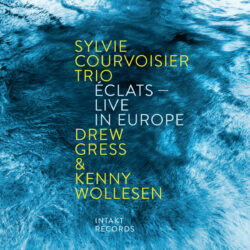 About five years ago, I reviewed Free Hoops, the latest release by the Sylvie Courvoisier Trio. I also commented on a fine, pandemic-era livestream of the trio in concert at Roulette in New York.
>Pianist Courvoisier has been busy since then, releasing sterling duet recordings with the likes of Wadada Leo Smith (Angel Falls) and Mary Halvorson (Bone Bells). But the 57-year-old Swiss native is now back with the trio disc Éclats — Live in Europe, a session that features her partners of a dozen years, Drew Gress on bass and Kenny Wollesen on drums and “Wollesonics,” the latter a technique which, alongside the leader’s audible forays inside the piano, produces intriguing atmospheric moments.
The all-original Courvoisier pieces selected for Éclats were drawn from three live European performances in 2025. Most of the nine compositions have previously appeared on studio recordings, but the threesome’s interactive (and unpredictable) musicality continues to have its special virtues. The group’s ability to introduce shards of free playing into implied structures (and vice versa) is consistently intriguing—and satisfying.
“Big Steps Toward Silence” starts with a bit of agitation before the piano undertakes a series of pensive lopes. Gress is particularly impressive throughout this release, here dancing with the pianist, who at times supplies a quiet, lyrical center. A heavier pulse eventually inserts some drama, with a Wollesen solo elevating the interplay via start-and-stop episodes. A pervasive quality of searching underlies this composition, leading to a quiet finish.
“Just Twisted” is an avant-garde burner that walks you into an imaginary joint jumping with deconstructed rhythms and pianistic onslaughts. “Downward Dog” resonates with a simmering restlessness à la the late Chick Corea (a musician you may think of occasionally as you hear Courvoisier pick a melody apart). Wollesen’s solo caps off a risky/frisky piece that might have gone on a while longer.
“Éclats for Ornette” carries the free-bop flag into blues territory. Courvoisier has carefully studied the master. “Imprint Double” portends an eruption: Courvoisier mingles a down-and-dirty riff with splashes of high notes that hover above a Gress solo. The payoff is the arrival of a marching passage that treats the piece’s opening motif in a more swinging manner. Another important release from this brilliant, longstanding threesome.
— Steve Feeney
Concert
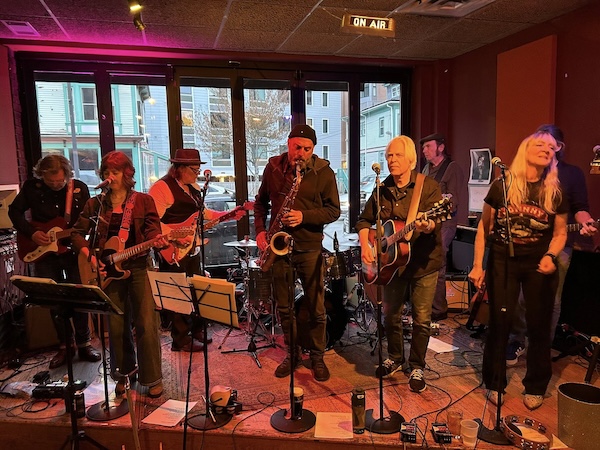
Back Porch Carousel performing at Sally O’Brien’s in Somerville. Photo: Nicole Tammaro
The Covid-19 pandemic affected everyone and everything. People got sick and many died. Businesses shuttered, permanently or temporarily. Isolation and loneliness took hold. One area that reeled from the pandemic restrictions was the local music scene. Clubs went silent, musicians lost their connection to their audiences, and audiences had nowhere to go to hear music, dance, and enjoy the social community that grows naturally in such an environment.
Back in 2020, when all the talk was about masking and social distancing, a group of Boston-based musicians found a safe outlet: the videoconferencing application Zoom. After a few impromptu sessions among themselves, they decided to hold livestream concerts for fans under the moniker Back Porch Carousel. While offered for free, the online shows also served as fundraisers to help bartenders and club staff, and later for nonprofit organizations.
On Saturday, April 25, 2026, key members of this group – singer-songwriters Randy Black, Sarah Levecque, Eric Martin, Adam Sherman, and Linda Viens; guitarist Peter Zarkadas; bassist Matt Gruenburg; drummer Larry Dersch; and guest saxophonist Dana Colley – reunited for a true live concert at Sally O’Brien’s in Somerville. The sight of these nine musicians crowded onto Sally’s small stage only reinforced the closeness and connection that Back Porch Carousel was founded to foster.
While the singer-songwriters have their individual styles, the whole was greater than the sum of its parts. Harmonies were flowing, solos were wailing, and people were dancing. It was all immensely joyful and the rollicking closing cover of Elvis Costello’s “What’s So Funny About Peace, Love, and Understanding” sent folks home with high ideals buzzing in their ears. The entire evening was one of celebration and thanksgiving because six years after the pandemic, the local music scene survived. We lost some venues and some people, but clubs like Sally’s and the Plough and Stars in Cambridge – where Black, Levecque, and Sherman have monthly residencies – continue to draw crowds.
Back Porch Carousel recorded new material together, which is available on its Bandcamp site. Individual members also have music for download on their own Bandcamp pages.
— -Jason M. Rubin
Film

Barbie Ferreira in a scene from Faces of Death. Photo: Shudder
Generation Jones over here. I grew up hearing about the cult mockumentary Faces of Death (1978), which everyone swore was “real” and that, at the very least, contained some actual snuff footage or images of real deaths. I never saw the whole film; it was difficult to get a hold of (which, of course, added to its cachet), and honestly—who wants to see people killed violently, over and over again? But as a pop-cultural phenomenon, the film always fascinated me from afar. Eventually I watched some clips: the mockumentary style is satisfyingly cheesy, given its era.
In our current age of deepfakes and generative AI, the act of determining what is “real” has taken on new urgency, so it was inevitable that a “remake” of Faces of Death would emerge. Director/co-writer Daniel Goldhaber’s version, while not wholly successful, nonetheless explores some intriguing aspects of the legacy of the original. Goldhaber also directed the critically acclaimed How to Blow Up a Pipeline (2023), and his 2018 film about an online sex worker, Cam, was thoughtful, scary, and well executed, helped by a great performance from Madeline Brewer (The Handmaid’s Tale).
Another fine actress helms this horror remake: Barbie Ferreira (Euphoria) plays Margot, a content moderator whose job is to determine what counts as “allowable” content online. She spends her days viewing videos with sexual or violent material, flagging images that she deems to be suspect or forbidden. Sometimes she appeals to higher-ups when she’s not sure. Margot’s life seems a bit lonely: her cool roommate is sweet but constantly online, which doesn’t help.
Margot stumbles on some snuff-style footage and falls down the Faces of Death rabbit hole. She becomes convinced that someone out there is trying to “recreate” the film’s controversial death scenes. Predictable goings-on follow, but so do some spooky and suspenseful turns. Most intriguing: how fixated and obsessed Margot becomes. Clearly, the ’70s slogan “keep repeating to yourself, it’s only a movie” doesn’t apply here. Margo’s inability to exercise caution — or to even take a break from an upsetting tsunami of violent imagery — offers a potent commentary on the unhealthy (and dangerous) reality of 24/7 digital engagement. Log off and touch grass, girlfriend.
— Peg Aloi
This historically valuable but skimpy documentary chronicles a failure in the heralded career of the avant-garde American director Robert Wilson, who died last July at the age of 83. We watch the artist attempt to create an epic 12-hour opera, the CIVIL warS, a collaboration among six international theater companies that was scheduled to culminate at the 1984 Summer Olympics. Will Wilson—who does not come across as particularly charismatic—be able to raise the million dollars necessary? We watch him working the phones, interspersed with scenes of Wilson rehearsing portions of the opera, at one point dealing with recalcitrant electricians threatening to strike at an Italian opera house.
There are short segments with composer Philip Glass (Einstein on the Beach) and other collaborators, along with brief glimpses of Wilson’s early years and the birth of his surreal theatricality. No critics of the director are heard from (whether pro or con), detailed commentary on his artistic process is scant, and there is next to nothing about Wilson’s personal life. For the most part, the film focuses on an artist who remains stoic under considerable pressure—a dreamer who, for all his experimental chutzpah, had more than a little Cecil B. DeMille in his blood.
The film was restored in 2025, under the supervision of Aaron Brookner, from surviving analog sources: a 16‑mm print, a VHS copy, and a stereo 16‑mm optical soundtrack. Wilson was renowned (or castigated) for the slow-motion pacing of his lengthy productions—Einstein on the Beach ran nearly five hours—composed of intricately choreographed scenes filled with sublime lighting effects, mechanical movements, and textual chaos. The short clips here fall short of conveying Wilson’s magnificent stagecraft. As do the often grainy visuals. (I saw a segment of the CIVIL warS when the American Repertory Theater staged it in 1985.) Still, it is worth having this film available: it serves as a useful supplement to the much fuller, more satisfying exploration of Wilson’s career in the 2006 documentary Absolute Wilson. And, for theater artists and audiences today, Robert Wilson & the CIVIL warS offers an inspiring glimpse of a visionary in the American theater whose unconventionality stands as a direct rebuke to today’s commercialized product.
— Bill Marx
Books
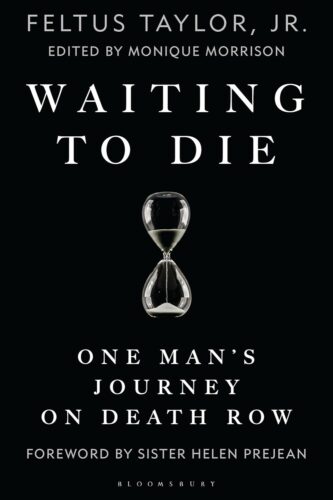 Feltus Taylor Jr. was executed by lethal injection twenty-six years ago, after spending nearly a decade on death row at Angola Prison in Louisiana. Waiting to Die: One Man’s Journey on Death Row presents his reflections on the crimes he committed, his regrets and attempts at atonement, the toll of years behind bars, and the psychological equilibrium he ultimately achieved.
The book’s strength lies in its earnestness, though it is not without moments of dark humor. At one point, Taylor observes how guards respond to another condemned man: “The night before his execution date, the guards moved him from the cell he was in so they could watch him to make sure he would not hurt himself before they could kill him.”
Waiting to Die makes clear that a man condemned for murder was more than his crime. He was a child abandoned at birth, a young man struggling with serious psychological issues that went undiagnosed until his trial—and were then disregarded. He was a loving grandson. He was a Black man convicted by an all-white jury.
My experience with the Emerson Prison Initiative—a program that enables incarcerated men to earn college degrees—has underscored the importance of books, essays, poems, and films that insist on the full humanity of the incarcerated. Waiting to Die is one such work.
—Bill Littlefield, whose most recent novel is Mercy (Black Rose Writing)
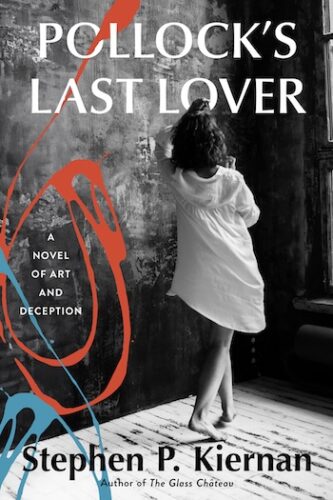 Stephen Kiernan’s novel, Pollock’s Last Lover, is an audacious fictionalized retelling of the tragic final years of iconic American painter Jackson Pollock. Art history purists, beware: the author weaves real people and actual events into his speculative narrative. Willem and Elaine de Kooning, along with Pollock’s wife Lee Krasner, serve as secondary characters. The protagonist is the artist’s mistress, Ruth Klingman, who was in the convertible at the time of his fatal car crash.
Here’s the premise: fifty years after Pollock’s death, the story revolves around attempts to authenticate a painting Ruth claims she was given by the artist in his final days. A (fictionalized) auction house assigns a new associate, Gwen, thirty days to establish the artwork’s provenance. The ensuing investigation is complicated by Ruth’s evasions. Questions of whom—and what—to believe make for compelling reading.
Throughout the novel, Kiernan ingeniously alternates between time periods: flashbacks present Ruth as an aspiring model and part-time gallerist in the 1950s, while we watch Gwen ascend within the auction-house milieu in the early 2000s. The mirroring structure works wonderfully—both women struggle for agency amid personal and professional turmoil.
The author draws on Pollock’s well-documented life, death, and legacy. Detailed descriptions of the Pollock–Krasner home and studio, along with the infamous Cedar Tavern, serve as dramatic backdrops for Ruth’s seduction and her dysfunctional relationship with the artist. Through it all, this is Ruth’s story, not Pollock’s—and her life is as complicated and dissolute as his. There are no happy endings.
In earlier books, Kiernan has situated his historical fiction in the mid-20th century: the personal toll of building the atomic bomb (Universe of Two); a young French woman surviving in occupied Normandy (The Baker’s Secret); and the restoration of stained glass windows in post–World War II France (The Glass Château). His latest novel is a worthy addition to his literary travelogue of the last century.
–John R. Killacky
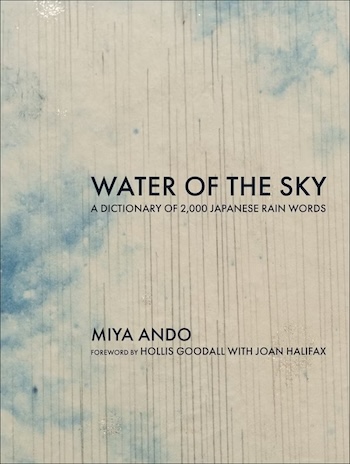
It may be a fable that Inuit have a hundred words for snow but Miya Ando has derived 2,000 Japanese words, idioms, and regionally specific terms associated with rain in a glorious compendium, Water of the Sky. This artist’s book opens to 100 contemplative drawings made of matte natural indigo dye, reflective micronized pure silver, and smudgeable graphite pencil made originally on 8.5” x11” Hahnemuhle or Kozo paper that transport a viewer through shifting seasons of wet weathers, followed by an index of 2,000 words in Japanese Kanji and Hirigana, English transliterations and their often startlingly poetic English equivalents.
A sixteenth generation descendant of Bizen swordsmiths, Ando was raised between Northern California and a Buddhist temple in Okayama Japan, and her work seems to carry forward deep lineage and precision. Furiguse (To Rain Often as if it Were a Habit/Habitual Rain) runs pale blue like a pair of bleached jeans, a deep Rothko-like blue vertical at the top of the page, slender diagonal threads flowing from right to left and meeting a slightly undulating horizon line where the rain seems to dissolve into a softer body of cloudy water. For Yukikeshi no Ame (Rain That Erases Snow) the indigo, left in the dye pot, recedes to black against short pins of light, dissolving blots, and discrete splatters. You almost want to turn up your collar. And then there are the rains whose names encode a metaphysical stance, like Hakobiame (A Sudden Rain in the Beginning of Autumn That is Believed to Bring the Spirits of the Ancestors), represented by a dimensional blue spattered with dots like a constellation above a darker field where the thin, almost imperceptible rain lines fall in straight verticals as if to stitch heavenly serenity into the rind of earth.
Ando’s work reflects mono no aware, the Buddhist principle described on her website as “an attunement to transience and the quiet poignancy of things as they pass.” In her preface, she notes that “I am also aware of how this work functions as a time capsule or an extinction diary for the types of rains themselves as we face changes in our climate and weather patterns.” Water of the Sky is an experience that will encourage you to leave your umbrella at home.
— Debra Cash
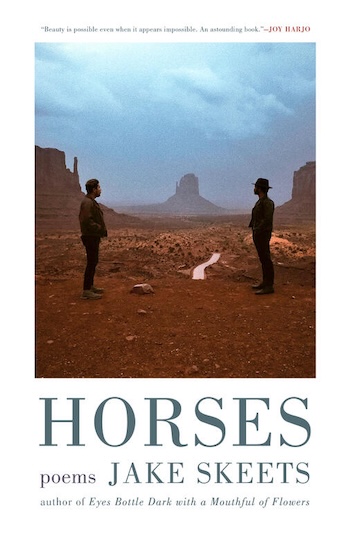
You can almost taste the dust in Jake Skeets’ second poetry collection, Horses as he writes “because even clouds can’t stand this heat;/the sky is memoryless/the color of drying wool/ hung over a wire” Skeets’ Navajo nation landscapes open even as they imprison, their very geology making claims on the insects, animals, people and perhaps the restless ancestral spirits who inhabit them. Laced with Diné vocabulary, his observations shimmer.
With his first book Eyes Bottle Dark with a Mouthful of Flowers the lives of men, and especially queer men like Skeets, rummage through limited possibilities. Throughout Horses, the poems are primarily uninhabited, except by loss and desire: even the sexual partner Skeets alludes to seems faceless. It is startling – and maybe something that belonged in another collection — when a poem ventures indoors and snaps into shared pop culture reference, writing “my mom & aunts sing along to Waylon Jennings, making tortillas/in the kitchen.”
The kernel of this book is a dismaying 2018 incident where 191 feral horses were caught in mud of a drying stock pond in Northern Arizona, and died there. Skeets, in these distinctive poems, turns to the ways the living are stuck in their searches for emotional, even moral sustenance.
— Debra Cash
 The human capacity for irrational violence is a familiar issue for T.C. Boyle. In his latest novel, No Way Home, the prolific author covers customary ground. Terry Tully, an overworked third-year medical resident at a gritty L.A. hospital, receives word that his mother has died. On a trip to her small desert town to settle her affairs, he meets a beautiful young woman in a green minidress named Bethany, and he begins an affair. Terry then finds himself drawn into a dangerous romantic triangle involving Bethany and her boyfriend, Jesse. After Jesse assaults Terry, he must choose between going to the authorities or taking personal revenge.
Boyle’s prose crackles with its usual energy and bravado. He movingly portrays Terry’s vulnerability following his mother’s death: the emotional distance he has learned as a medical resident clashes with his very real need to grieve his loss. In internal monologues, he also captures the self-justifying logic of alcoholics – one of his signature strengths as a storyteller.
Unfortunately, Boyle alternates the narrative’s point of view among Terry, Bethany, and Jesse, and this highlights the novel’s central problem: his weak portrait of the other two members of this edgy romantic triangle. As characters, Bethany and Jesse lack warmth, complexity, and emotional consistency. Bethany is narrowly slotted as shallow and manipulative, a woman whose relationship with the truth is circumscribed by what she sees as her self-interest. Jesse is even less developed; he is a brittle cartoon figure who exudes machismo and narcissism, a sketchy outline of a well-known American “type.”
Despite some fine writing and moments of genuine pathos, No Way Home also bears the marks of Boyle’s weakness, at times, for settling for caricature.
— Clark Bouwman
Rock
If ANSIEDAD1000 produces dream-pop, the emphasis falls squarely on the former. Since 2008, Mexican producer Tony Gallardo has worked under his own name and other monikers, performing across a wide range of styles from techno and trap to dembow and surf rock. (Selected Works, released in 2022, gathers tracks from his early EPs.) Abizzmo (Hakuna Kulala) marks Gallardo’s first album in his new “ethereal wave” guise.
Accordingly, the recording’s mood isn’t as dark as the album title and producer tag—which mean “abyss” and “anxiety”—might suggest. Abizzmo resides in a foggy musical space, its tracks created out of small pieces that have been cut up and rearranged in unpredictable ways. Gallardo continues to maintain his outsider ethos.
Reverb and tape hiss are so heavy here that they function the way most musicians would use guitar or drums. (Fuzz qualifies as the lead instrument of “SUPERPUSH BB.”) The presence of these effects is emphasized rather than naturalized. The music sounds lo-fi but expansive, echoing to the point that it resonates dramatically. For example, “ANSIEDAD1000” ends with the hiss of breath, slowly fading away.
Abizzmo never settles for the sum of its influences. With gentle, airy guitar and vocals, “LODO” partially resembles the Cocteau Twins, but it uses sped-up polyrhythms that the British group would never draw on. Percussion is the most identifiably Mexican aspect of Abizzmo.
Even when the album brings in live instruments, it sounds as though it were carved up in a DAW (Digital Audio Workstation), with a few chunks left out. (The falsetto cries and slowed-down vocals of “TIJUANAISDOOMED” shouldn’t be an effective match, but they sound great together.)
Abizzmo is eccentric yet accessible. Plenty of anxiety is generated in the music, to be sure, but there’s also tremendous wonder and hope. Gallardo successfully creates an altered state of consciousness, with no substances required.
— Steve Erickson

Do you feel overwhelmed by the tidal waves of music released each week? Do you view Spotify as a psyop but still stream music on the service for hours each day? On their latest album, Musick (Mute), Laibach have got your back, satirically speaking The Slovenian band have been lampooning popular music since the late ’80s. Their MTV hit “Live Is Life” was the start of a series of covers, including “Sympathy for the Devil,” the Beatles’ Let It Be, and the soundtrack to The Sound of Music. In their early days, when their country was still part of communist Yugoslavia, they adopted an ironic fascist image, complete with quasi–Leni Riefenstahl-style videos. Since the 2010s, they’ve been clearer about their politics. Last year, they transformed Foreigner’s “I Want to Know What Love Is” into a pisstake on Trump’s ego.
They’re talented enough to imitate their targets with deadly accuracy. “Musick” and “Allgorhythm” adopt the hooks of Eurodance, with a banal phrase repeated as the chorus. Their hooks go down easily, but the deeper, darker connotations are impossible to ignore. “Music is the answer” and “I dream of music” lead into “I’m sick of music.” Milan Fras’s gravelly voice is the album’s best joke—he’s no one’s idea of a dance diva. Guest singer Wiyaala harmonizes against him jarringly. Against the injunction “keep it reel,” he adds “and artificial.”
“Allgorhythm” was originally written as a contender for Eurovision. While its lyrics and video describe the vicious conformism created by the need to appeal to the corporate algorithm to earn a living, it’s also the most radio-friendly song Laibach has recorded. Musick locates pleasure in pop, but continually calls attention to its limits. The “be yourself” refrain of “Fluid Emancipation” is revealed to be rather hollow. This is Shoshana Zuboff’s Surveillance Capitalism as an earworm, affectionately rendered with full complicity.
— Steve Erickson
Design

Boston made, Seymour Brothers 1794 Federal Mahogany Card Table
The phrase “brown furniture” has been a derogatory term in the furniture market for several decades. It refers to traditional, heavy, dark wood furnishings—mahogany, walnut, teak, rosewood, or cherry—that have fallen out of favor with younger generations. Antique and used-furniture dealers often use the term for pieces that are difficult to sell—too stuffy, too formal, and decidedly old-fashioned.
“Brown furniture” aptly describes what filled my grandmother’s 1950s–’60s apartment. It contained many late-19th-century pieces: very dark, overly ornate, heavy tables, sideboards, chairs, credenzas, vanities, desks, and four-poster beds with hard, tactilely uninviting surfaces. Even as a child, I reacted immediately and negatively to the furniture.
Older generations valued the craftsmanship of “brown furniture,” but Millennials and Gen Z have often avoided it, favoring lighter, more flexible styles. Today, the style has low market value and limited appeal. Antique, secondhand, and even some contemporary wood pieces are frequently sold at reduced prices, sometimes at a loss. In contrast, high-value pieces tend to be mid-century modern (’30s–’60s) design, especially Danish varieties. Also predictably valuable are rare, museum-quality antiques in excellent condition with documented provenance.
Still, tastes may be shifting. Some interior designers and upscale showrooms are spotlighting dark wood pieces as focal points, arguing that they should be prized for their warmth and character. Their appeal stems from a more “curated” look, in contrast to the long-dominant minimalist palette of grays and beiges. For some buyers, refinishing or repurposing older pieces offers an eco-conscious alternative to purchasing new.
According to publications that cover the world of antiques, “brown furniture” is making a notable comeback in 2026. Some designers and dealers even claim that brown has become beautiful again. That said, my memories of my grandmother’s apartment linger—the visual equivalent of the smell of burnt meat. So we shall see.
Leigh and Leslie Keno, identical twins and longtime experts on PBS’s Antiques Roadshow, were shown an extremely rare Boston-made Seymour Brothers Federal mahogany card table from 1794. The piece later sold at Sotheby’s for about $490,000 in 1998. Here is the story on YouTube.
— Mark Favermann
Tagged: "Abizzmo", "Faces of Death", "Horses", "Musick", "Pollock’s Last Lover", "Rituals", "Rituals: Art Songs by Charles Ive Reynaldo Hahn and William Bolcom", "Robert Wilson & the CIVIL warS", "Water of the Sky", Acis Recordings, Back Porch Carousel, Daniel Goldhaber, Hakuna Kulala, Jake Skeets, Laibach, Miya Ando, Robert Wilson, Stephen Kiernan, Sylvie Courvoisier Trio