
Harvard University Press
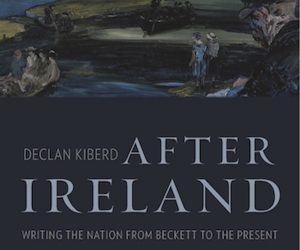
The critic settles too comfortably too often on a familiar trope — Ireland’s sense of promise squelched.
Oscar Wilde’s life might have been tortured, but the writer never believed he had been disgraced, only rejected.
Why didn’t a legal mind as brilliant as Richard Posner’s get to the Supreme Court? One suspects his candor and bluntness.
For a reader without the reference points of mid-twentieth century Lithuania and Poland, this deeply researched biography can be a slog.
Two books — one nonfiction, the other fiction — that deal with Jewish history.
Why did rock and roll become white? Music critic Jack Hamilton’s extraordinary new book provides a challenging answer.
The Annotated Poe invites readers to take a fresh look at Edgar Allan Poe and his far-ranging artistic legacy.
Otto Dov Kulka’s exploration of the time he spent in Auschwitz as a child won the 2014 Jewish Quarterly-Wingate prize, one of the judges calling it “the greatest book on Auschwitz since Primo Levi.”
Editor Bharat Tandon guides us expertly through “Emma,” stopping along the way to augment the text by clarifying usages, concepts, and references that may stump the 21st-century reader.
Commentary/Interview: “Du Bois’s Telegram” — Restricting Literary Resistance
Is there a disconnect between artists and meaningful resistance movements?
Read More about Commentary/Interview: “Du Bois’s Telegram” — Restricting Literary Resistance