
Clark Art Institute
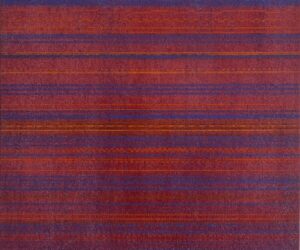
Raffaella della Olga prepares manual typewriters the way John Cage prepared pianos, using their percussive power to completely subvert their original purpose.
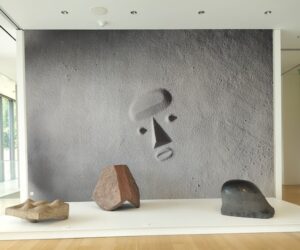
This impressive show of more than 32 works concentrates on what Isamu Noguchi could do with stone, sometimes just leaving it in abstract forms, either raw or polished, often imagining it (and cutting it) into what were meant to be essential shapes.
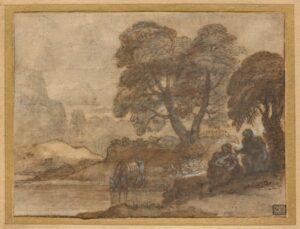
Surprisingly, the 17th- and 18th-century drawings and prints in “Pastoral on Paper” proffer bold experiments in charcoal, chalk, and gouache.
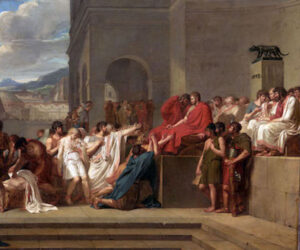
Considering that none of Guillaume Guillon-Lethière’s history is familiar, absorbing this scholarly exhibition, which is accompanied by extensive labels and wall texts, is demanding.
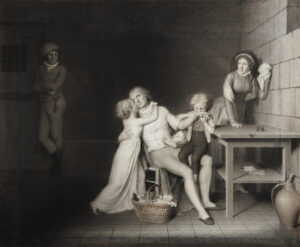
Plan to linger over every moment of this revelatory, diverse, and understated special exhibition.
Each month, our arts critics — music, book, theater, dance, television, film, and visual arts — fire off a few brief reviews.
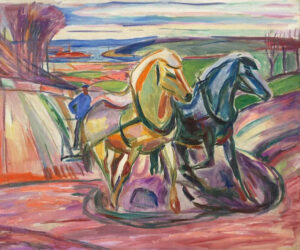
Edvard Munch was very far from a one-hit wonder. His career was a long narrative of restless creativity.
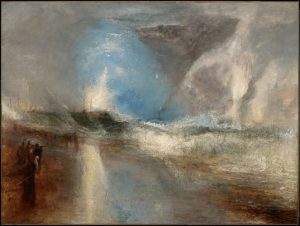
One sees how the keen observation and “truth to nature” that critic John Ruskin espoused was put into action by John Constable and J.M. W. Turner.
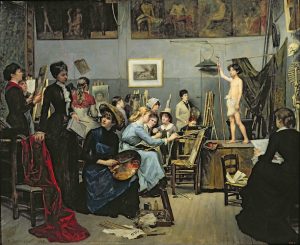
Who knew that there were dozens of first-rate female American, Scandinavian, German, Swiss, French and Russian painters in Paris in the second half of the 19th century?
This is a relatively small but stunning selection of Picasso’s finest prints, a collection that reflects the artist’s range of inspiration.
Recent Comments