
Visual Arts

Every subject in Jim Dine’s richly rendered work seems to edge towards something other than itself, deeper and more personal.

I wish this catalogue spelled out John Singer Sargent’s professional stance as a “juste milieu” painter more methodically. That term refers to those eager to be associated with new stylistic tendencies yet careful not to transgress the establishment’s norms.

While he paints, Stanley Whitney listens to and is inspired by jazz. Miles Davis’s album “Bitches Brew” is his constant companion in the studio.

Reluctant to explain the meaning of her art, Leonora Carrington chose to let the magic and mystery of her inner life reveal itself through the imaginary animal/human creatures and fantastic landscapes of her paintings.
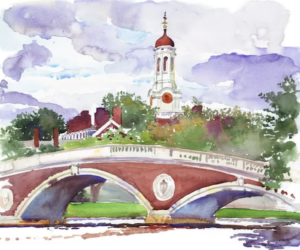
“Visionary Projects” at the Boston Athenaeum is a captivating exhibition of Frank M. Costantino’s work, a display of over 80 drawings and watercolors.
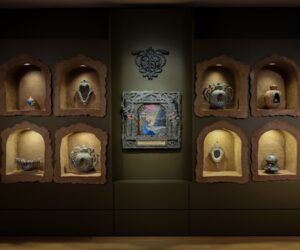
While offering a window into artist Fabiola Jean-Louis’s examination of her cultural and personal identity, the exhibit also provides a deeper understanding of the Haitian struggle for freedom.

The exchange proved to be as fruitful for the artists as it was for the Shakers.

In her stimulating book, Eva Díaz presents more than 30 conceptually minded artists who “reconsider how the applications of technologies used in near and outer space, once billed as progressive and exploratory, are today rife with negative effects such as resource depletion and privatization, economic inequality, and racial and gender domination.”

The stunning painting is beautifully presented in this documentary, but the flood of references to other works of art and quotations from classical and Renaissance writers might make the film a bit slow going for someone with no background at all in Renaissance cultural history.

Minor White’s autobiographical undertaking lacks diaristic narrative. There’s too much neurotic navel-gazing too much of the time. Yet it is very appealing as a twisted personal miscellany whose contents range from summaries of sex dreams to snarky letters that were never sent.
Recent Comments