
Visual Arts
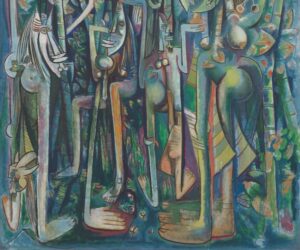
Wifredo Lam can now be seen almost in full in New York — except for his many drawings, which might get a showing soon while the public’s interest is piqued. As for the artist’s paintings in Cuba that never reached MoMA, Americans (perhaps in uniform) might have a chance to see them soon enough.

Overall, the exhibit offers a fascinating look at photography’s potential to pose challenging questions about who we are, how we are perceived, and how we can alter our self-image to interrogate our own sense of identit
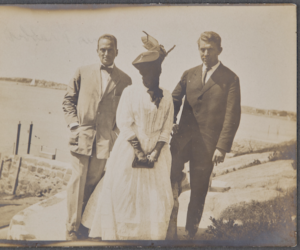
The exhibit suggests that Isabella Stewart Gardner wanted her art curation, intellect, and fashion sense — the areas of her life over which she had the most agency over — to be her legacy, not her image.
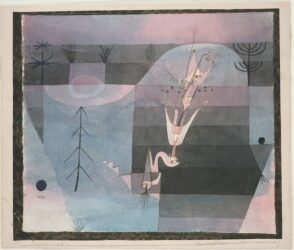
“Taking a Line for a Walk: Alexander Calder & Paul Klee” and “An Imagined Dialogue: Alberto Giacometti & Mark Rothko” are touching reminders of the remarkable kindness inherent in making art – the desire to reach across time and space to offer something to another.
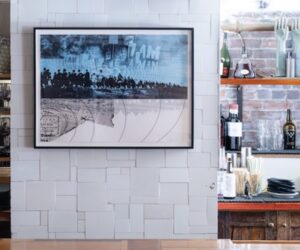
In this exhibit, curator Robin Hauck celebrates ten Boston-area artists who resist the relentless distractions that contemporary life imposes on all of us.
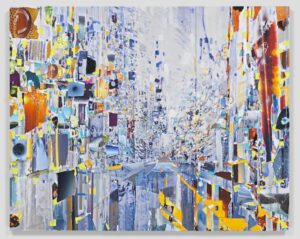
This exhibit is a fair reflection of the museum’s desire to spotlight work by artists who have traditionally been neglected by the museum world.
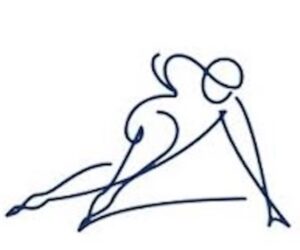
The “Look” of the 2026 Games succeeds at what should be its elemental function — the connection of beauty, athleticism, celebration, and memory.

Yun Ko-eun’s novel is a good, entertaining read that proceeds by a kind of literary Zeno’s Paradox: forever on the verge of some Big Revelation or vague Deeper Meaning without ever actually reaching them.
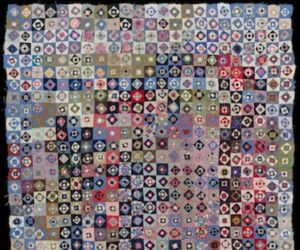
Although the work seems timeless, its modernity reflects a culture that reveres its age-old traditions and preserves them over many generations.
Visual Art Commentary: Silence Is Complicity — Why Museums Must Use Their Voice to Defend Democracy
At a moment when arts and culture, public education, historical memory, and American democracy itself are under coordinated attack, silence is not a neutral posture. It is a decision with consequences.
Read More about Visual Art Commentary: Silence Is Complicity — Why Museums Must Use Their Voice to Defend Democracy