
Book Review: A Berkeley Renaissance, Reassembled
By Michael Londra
A new anthology gives long-overdue shape to an influential but unjustly forgotten chapter in twentieth-century American poetry.
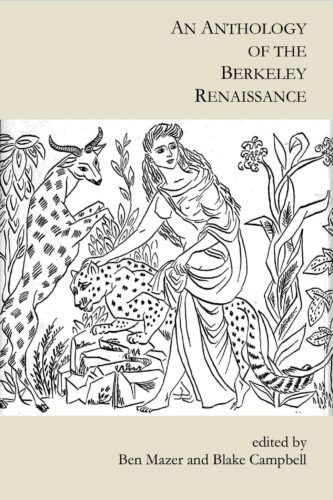
An Anthology of the Berkeley Renaissance, edited by Ben Mazer and Blake Campbell (MadHat Press, 2026). 246 pp. Paperback, $22.95
 Watching Kent Jones’ film Late Fame, I couldn’t help but think of Ben Mazer. An ageing poet ignored and neglected for almost five decades is buttonholed one day on a Manhattan street by a twentysomething fan who—having fallen in love with the obscure poet’s only published volume, discovered at a used bookstore—has decided to seek out the man behind the lyrics. This wonderful on-screen moment between actors Willem Dafoe and Edmund Donovan inadvertently resonates with the initial encounter between Cambridge-based poet and editor Ben Mazer and West Coast bard Landis Everson in 2004. Cold-calling a phone number gleaned from the internet, Mazer introduced himself to the poet. It was the first time in forty-three years that anyone had asked Everson about his poetry and his participation in the anarchist avant-garde literary collective known as the Berkeley Renaissance (c. 1946–1950). Unlike Dafoe’s creatively stifled character in Late Fame, Everson was able to successfully compose new verse after nearly half a century of inactivity. Under Mazer’s editorial stewardship, the result was Everson’s long-awaited book-length debut, Everything Preserved: Poems 1955–2005, which eventually won the Poetry Foundation’s Emily Dickinson First Book Award.
Twenty years after resuscitating Everson’s literary reputation, Mazer and co-editor Blake Campbell have assembled An Anthology of the Berkeley Renaissance. Harvesting stanzas, letters, and selected prose (much of it hard to find, previously unknown, or unpublished), Campbell and Mazer have given a gratifying contour and shape to a watershed movement in twentieth-century American poetry that ended prematurely with the rise of McCarthyism. As significant and incestuous as the Beats or the New York School—but never as famous—the seven seminal talents traditionally canonized under the rubric of the “Berkeley Renaissance” have never before been assembled in one volume. Beginning with the meeting of poets Jack Spicer (1925–1965), Robert Duncan (1919–1988), and Robin Blaser (1925–2009) on the U.C. Berkeley campus at the end of World War II, this fruitful intellectual circle would expand to include Mary Fabilli (1914–2011), Virginia Admiral (1915–2000), Sanders Russell (1913–1982), and, of course, Landis Everson (1926–2007). Sharing a fascination with the occult and medieval history, the members of the Berkeley Renaissance fashioned “anti-academic” verse in direct opposition to the reigning postwar poetic mode of Romanticism.
 For example, Spicer advocated for T. S. Eliot’s prohibition against incorporating personal elements into poetry: “Keep as much of yourself as possible out of the poem,” he advised. Yet he parted company with Eliot by insisting that cultivating access to supernatural and extraterrestrial voices was preferable to writing from the perspective of one’s ego. (Appropriately, Spicer was a neighbor of the hyper-paranoid sci-fi giant Philip K. Dick.) This radical notion came into better focus later in his career, but inklings of Spicer’s rebellious nature are all over “Words,” finished when he was a teenager. Spicer’s dismissal of language—as inflexible, lifeless material requiring external intervention to produce meaning—is present, albeit communicated through highfalutin schoolboy syntax: “Words are merely blocks of passions dead, / Pounded into shape by writer’s hand.” Kudos to Campbell and Mazer for excavating this juvenilia from Colonial Voices 1941, Spicer’s high school literary magazine. Among his accomplished mature contributions, there’s “A Night in Four Parts” and “Psychoanalysis: An Elegy.” His experiments with lyric cadence in “Waking” presage Allen Ginsberg: “Self winds heart-self like a watch, disremembers / The almost-unmechanical, the inhuman. / Chastens itself with water, dresses— / ‘What was that dream I had, heart-self? / Answer!’ / Can’t answer.”
Since the publication of Lewis Ellingham and Kevin Killian’s definitive biography Poet Be Like God: Jack Spicer and the San Francisco Renaissance (1998) and Peter Gizzi (a close friend of director Kent Jones, Gizzi makes a silent cameo in Late Fame) and Kevin Killian’s co-edited My Vocabulary Did This to Me: The Collected Poetry of Jack Spicer (2010), Spicer has received plenty of attention in mainstream quarters. Dwight Garner and Ben Lerner, for instance, have glowingly reviewed his work. But, as An Anthology of the Berkeley Renaissance illustrates, Spicer was not the movement’s prime mover. As Mazer notes in his preface: the “Berkeley Renaissance had its beginnings…in a group centered around…Robert Duncan.” Duncan was the era’s Zelig; he participated in Kenneth Rexroth and Lawrence Ferlinghetti’s San Francisco Renaissance of the ’50s as well as Charles Olson’s Black Mountain School. He even chilled with Anaïs Nin in New York. In fact, Duncan published Lawrence Durrell and Kenneth Patchen in The Experimental Review, a short-lived magazine he started in collaboration with Sanders Russell, an author totally unknown to me.
Let me stop for a moment and assert that discovering a poet like Russell is the reason collections like this one are so valuable. Represented by five poems, Russell’s unusual work alters metaphysical landscapes with unanticipated lexical turns: “Time flows out of me, / makes dead space come alive / and thought is mixed with pictures / like birds and thunder in the music / or consciousness in surgeon’s hands” (“Two Poems”); and “Dissolve, the inhuman cactus…The incredible arc of branches strikes the eye…Desire curving upward with the branches / Along the rock-ribs the bone-swells of the mountain / Where the ridges change to stars” (“Cactus Gardens”). Memo to Mazer and Campbell: please compile a collection of his verse immediately.

Poet and editor Ben Mazer. Photo: courtesy of the artist
To get back to Duncan, his ten-poem cycle entitled “Medieval Scenes” flexes his knowledge of esoteric references and archaic spellings in ways that never sound mannered: “The Swan is the signet, heraldic joy. / The Banners make animate the inanimate day. / No longer mere, but night-mare changed” (“The Banner”). His sophisticated eroticism is unmistakably subtle yet grounded: “In the magic of not-touching, / not-looking sharpenings of the eye, / dim thunders of imaginings. Half-loves / kept short of love’s redeeming fire” (“The Dreamers”). He is a down-to-earth aesthete, a highbrow comfortable in worn jeans.
Duncan was renowned for audaciously and unapologetically confronting readers with scandalous subject matter and profanity—something that, according to Campbell, led Sanders Russell to fall out with him. This anthology confirms that his tendency toward uninhibited utterance was present at the outset: “It is to charge her ass-hole with saint’s gas / that the city descends upon her towers / sucking the lives into the magic shit, / hissing and murmuring / automobiles of pleasure” (“Distant Counsels of Artaud”).
This aesthetic devotion to truthful expression further translates into a political and cultural stance in Duncan’s essay “The Homosexual in Society.” Originally published in critic Dwight Macdonald’s journal politics in 1944, it is considered by poet and scholar David Grundy to be “arguably the first published piece of out gay writing in modern-day America. A courageous public admission of sexual orientation that paved the way for gay liberation.” What gives the Berkeley group added distinction is the resolve of Spicer, Duncan, and Blaser to exist as queer for the world to see amid the shameful nationwide targeting of the LGBTQ+ community that historian David K. Johnson calls the “Lavender Scare”—not to mention the dangerous fact that non-heteronormative sex was considered a felony.
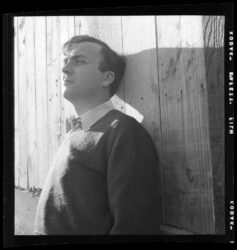
Poet Robert Duncan. Photo: Jonathan Williams. Yale Collection of American Literature, Beinecke Rare Book and Manuscript Library.
On the other hand, the Berkeley women prove that, in misogynistic midcentury America, poetry could be more than beautiful writing—art is activism. Virginia Admiral (actor Robert De Niro’s mother) was a poet and painter associated with political causes throughout her life. On the Berkeley campus, she self-identified as a Trotskyite and was a member of the Young People’s Socialist League. Represented by three prose poems reminiscent of Baudelaire—Robert De Niro Sr., appropriately, is supposed to have had a portrait of the French master in his Greenwich Village loft studio—“Dreams” obliquely addresses domestic violence: “If I lived in this room I would build a fence across this place. Even a fence would not be entirely safe; one must have a balcony below with another fence around it.”
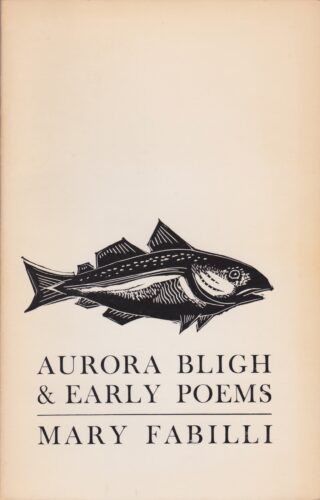
Conversely, if Duncan is an unorthodox formalist, then Mary Fabilli, a devoted Catholic, is a rapid-fire ironist. Her hipster fantasia detailing an unhinged house party, “An Hour or Two of Quiet Talk,” is a remarkable anticipation of Frank O’Hara. Folks get roaring drunk and bloviate about Partisan Review, Baudelaire, and “Marxist-Leninist-Stalinist” politics. I’m not sure what this passage means, but it offers too much fun to care: “Mr. Phoebus Callobway / Hot-jazz enthusiast, / Held his note-book in his hand / Screwed his courage to the end, / Read the raves and wrote the raves, / Beat the band.”
Like Fabilli, Robin Blaser was influenced by Catholicism. Indeed, according to Miriam Nichols in Mechanic of Splendor: A Literary Biography of Robin Blaser, “one of the big themes of his oeuvre” was exploring “the sacred as a dimension of lived experience.” Blaser was also fascinated with the practice of seriality, in which each individual poem is intended to operate as a component in a larger self-reflective literary mirror-work. Both of these aspects are evident in nascent form in the multi-segmented, expansive “Cups” and “song in four parts for God the son”: “Put on Your colors in the light of day. / You are the rose that needs no day. / The rose is dead / As He is dead.” Blaser’s memoir of the Berkeley contingent, the essay “The Practice of Outside” (not included here), is recommended—if you can get your hands on it.
Closing things out, Landis Everson’s visionary and mischievous voice gives the book its fitting last word. With eighteen short selections, he is the sleeper who hijacks the spotlight. His verse is among the anthology’s most revelatory. It’s hard to believe he stopped composing for four minutes, let alone four decades. His tribute to Spicer is particularly poignant, especially in light of the fact that, unbeknownst to Everson, Spicer was in love with him (once calling Everson a “Babylonian Adonis”): “An accordian of air, a voice…It is like an unmating song. Did Jack say / ‘My anguish did this to me’? / He died trying to rise” (“Jack, My Vocabulary Said This”). His Berkeley comrades’ muse and object of desire, Everson was leading-man handsome. They were obsessed with his beauty, though there was no sexual contact between them. Everson is suitably eloquent on just that sort of unconsummated frisson: “Picture a goal, like a racehorse reaches, / the startled beginning, the intensity building, / the whipped competition, the screaming, / the pounding, then that’s the end” (“After We Met”). As if corroborating my intuition, Everson’s “Late Fire” echoes the themes of Late Fame and could have been used by Kent Jones as an alternative cinematic epigram. Left behind after Spicer’s death, as his friends migrated from California to New York, Vancouver, and other locales, Everson stopped writing. He composed solely to please his poet family. Alone, he no longer had a reason to do it. Yet something of the old passion remains and “smokes”: “All misfortunes / have been like bricks / piled up into chimneys / made to smoke…Eyes / are bricks / breathless / after the fire.”
Mazer’s hunting down of Everson, apparently, was the catalyst for the maestro to pick up his pen again in 2004. And during the three years before Everson passed, the two were each other’s closest friends, chatting all night over the phone and sending each other letters, one of which, from Landis to Ben, can be savored in these pages. And Mazer is a habitual offender in this regard—his previous reclamation project was The Collected Poems of Delmore Schwartz (2024), a significant literary intervention that gathers the entire lyric output of one of America’s finest forgotten versifiers. More than that, Mazer is himself the author of eleven poetry collections. Campbell, likewise, is an admired poet, with the chapbook Across the Creek (2019) under his belt. Their editorial labors, it should be mentioned, further extend to a gorgeous color portfolio of rare photographs.
Ultimately, An Anthology of the Berkeley Renaissance resurrects a lost tradition of trailblazers: “The postmodern has entered our everyday consciousness,” Ben Mazer explains in his preface, “and for younger generations awareness of its pioneering days can seem like a primeval memory of antiquity.” In other words, kids, the Beats ain’t the whole shebang. Arriving in the mid-fifties, that roughhousing cadre did not have to contend, as Spicer did, with being asked to sign a McCarthy loyalty pledge. He refused. That meant he was denied a teaching assistantship. He departed the Bay Area in 1950, and that dropped the curtain on the Berkeley Renaissance. But the hopeful final lines in Spicer’s “Psychoanalysis: An Elegy” insist that every renaissance—like every poem—remains unfinished. There’s always room inside for us to live in: “What are you thinking now? // I am thinking a poem could go on forever.”
Michael Londra is a poet, fiction writer, and critic who has appeared thirty times in The Arts Fuse. He recently introduced the Poets Confront AI and Surveillance Capitalism event at Poets House, available on YouTube. He can also be seen talking New York writers in YouTube indie doc Only the Dead Know Brooklyn (dir. Barbara Glasser, 2022). “Time is the Fire,” the prologue to his soon-completed novel of Delmore Schwartz and Lou Reed, was published in DarkWinter Literary Magazine. His poetry was translated into Chinese by scholar-poet Yongbo Ma. Two of his Asian Review of Books contributions were named Highlights of the Year for 2024 and 2025, one of which was translated into Vietnamese. “Life in a State of Sparkle—The Writings of David Shapiro” from The Arts Fuse was selected for the Best American Poetry blog. He can be found or is forthcoming in Lana Turner: A Journal of Poetry & Opinion, Restless Messengers, The Fortnightly Review, spoKe, Cha: An Asian Literary Journal, and The Blue Mountain Review, among others. He added six essays and the introduction to New Studies in Delmore Schwartz, coming next year. Born in New York City, he lives in Manhattan.
Tagged: "Late Fame", American poetry, An Anthology of the Berkeley Renaissance, Beat Generation, Ben Mazer, Berkeley Renaissance, Black Mountain School, Blake Campbell, Jack Spicer, Kent Jones, Landis Everson, MadHat Press, Mary Fabilli, McCarthyism, New York School, Philip K. Dick, Robert Duncan, Robin Blaser, San Francisco Renaissance, Sanders Russell, Virginia Admiral, avant-garde poetry, literary history, poetry anthology, poetry criticism, postwar American literature, queer poetry, twentieth-century American poetry
