
Book Review: Arthur Mitchell — Breaking Barriers, Building a Legacy
By Debra Cash
There is no question that this new volume will be the resource that all subsequent historians will turn to when they explore the trajectory of classical ballet’s slow — and not yet completed — choreography towards racial inclusion.
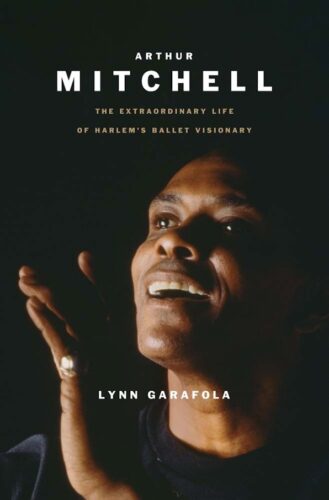
Arthur Mitchell: The Extraordinary Life of Harlem’s Ballet Visionary by Lynn Garafola. Yale University Press, 416 pages, $35.
It was a few months after the April 4, 1968 assassination of Martin Luther King, and the phone rang very early in actor Cicely Tyson’s apartment. It was her friend and neighbor, the New York City Ballet danseur Arthur Mitchell. “I’m going to form my own dance company,” he declared “and I want you with me.” Tyson would later write that the passion of his declaration dragged her out of bed and got her into a cab. They, together with another noted Black performer, actor Brock Peters, clustered on Mitchell’s living room floor digging through Mitchell’s brainstorming portfolio of papers and photographs.
Thus the dream of America’s first Black classical ballet company — Dance Theatre of Harlem — was born.
It’s an iconic story, and one that historian Lynn Garafola lavishes with admiration in the first full-scale biography of Mitchell that grew out of a 2018 exhibit and website she curated at Columbia. The exhibit, website, are book are based on Mitchell’s voluminous papers, held at Columbia, on material held in the New York Public Library’s Jerome Robbins Dance Division and on dozens of interviews Garafola conducted with Mitchell’s dancers, colleagues, Board members and friends. There is no question that this new volume in the Yale University Press Black Lives series will be the resource that all subsequent historians will turn to when they explore the trajectory of classical ballet’s slow — and not yet completed — choreography towards racial inclusion.
Mitchell was born a dancer, but ballet didn’t seem in the cards. His volatile father had killed a numbers racketeer and spent time in Sing Sing, a loss that he bottled up but that Garafola persuasively argues led him to a number of father-figure-seeking entanglements, professionally and sexually. His mother, who had encouraged her son’s dancing interests by enrolling him in tap classes at the Police Athletic League and then allowed him to audition for the High School of Performing Arts, tried to hold the family together — the first sentence of Garafola’s biography is “I always danced for my mother and my people,” and Mitchell would support, and sometimes employ, members of his extended family for all of his days.
American modern dance at mid-century had a number of noted Black dancers, most of whom seem to have become Mitchell’s friends and associates, and so did commercial New York theatre. But when he was turned down after an audition for television variety The Show of Shows— since television broadcasts would also be seen in the South — he took the position of generations of Black strivers: “what can you do that will make you so good that people will have to use you?”
When Mitchell made his debut with New York City Ballet in 1955, the year after Brown vs. Board of Education Garafola writes, there were no “Negro Breaks Barriers” stories, as he put it. Garafola carefully notes that he hadn’t been the only Black student at NYCB’s associated school, SAB (School of American Ballet) and that Lincoln Kirstein, the Filene’s heir and arts patron who had invited choreographer George Balanchine to New York, had “progressive views on race.” Mitchell had worked hard, incessantly trying to improve his technique, and as a corps de ballet member, was cast colorblind (a hunter in Swan Lake, a Monster in Firebird) but early in his NYCB career he began to dance in new and repertory works by Balanchine that used his speed, comfort with jazz timing, and personal magnetism.
But it was Agon, the first principal role that Balanchine created for him, that became his signature. In this twisty, pared down “leotard ballet” to a score by Stravinsky, the ballerina’s precariousness is steadied against her partner’s assurance. Mitchell’s skin color read as an expressive design element, and Garafola quotes dancers who remember the frisson of seeing a black man touch and seem to manipulate the body of a white woman (originally Diana Adams) in 1957, the same year the Little Rock Nine integrated a high school in Arkansas.
Through Mitchell’s personal rise, and the development, international recognition, collapse and resurrection of Dance Theatre of Harlem, Garafola charts shifting tides in the shape of Black dance self-determination, which toggles between exclusion and separatism, tokenism and integration, toleration and admiration. Along the way, she explores different definitions of professionalism on stage and behind the scenes (if there has been a better explanation of what happens in a dance company costume shop, I haven’t read it).
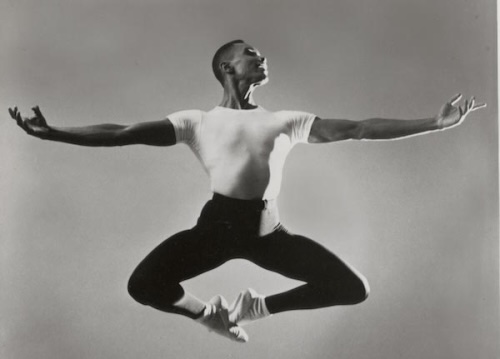
Arthur Mitchell. Photo: Martha Swope
The founding vision of DTH was an inspiring one, a statement about the value of classical ballet as an art form and a belief that an anchor institution and low-cost outreach programs could help an entire community embrace its own beauty and value. For a long while — about 1968, when Mitchell was a magnet for Black dancers who wanted to take his classes, through the neoclassical ballet company’s debut at the Guggenheim Museum in 1971 and worldwide performances and teaching engagements through the 70s and 80s — it seemed to work.
But Founders Syndrome was the “trouble in paradise.” Mitchell’s big dreams had a big drawback — and Garafola has the literal receipts. Mitchell had always had charisma and fearlessness to burn, which attracted some of New York City’s wealthiest and most influential men and women to his corner and his Board. Unfortunately, his business model assumed he would always be bailed out by one foundation or another. Lavish productions, unfulfilled promises, debt: time after time, Mitchell rejected sound solutions and carried on as if by right, gambling, as Garafola writes, that DTH would not be allowed to fail. The discipline he had brought to his dancing did not extend to business and fiscal administration.
Not everything was his fault. Garafola discusses how, as early as 1973, funds for dance in New York were being cut, victim of both that year’s oil embargo (which affected the size of foundation endowments), changes in audience tastes, and ultimately the drying up of international touring.
Some of the company’s greatest achievements were still ahead. Creole Giselle, with canonical choreography but distinctive sets by Carl Michel that reimagined the classic as taking place in the bayous of 1840s Louisiana starred the luminous Virginia Johnson. (Premiered in London in 1984, it was filmed for television in 1987.) The company made a five-week tour to the USSR (where Mitchell was able to meet some of Balanchine’s surviving family members) and a 1992 trip to South Africa, during which Nelson Mandela was a guest of honor twice.
Financial troubles, however, remained and deepened. To their shock, the dancers were furloughed for a time. While Garafola gives readers a full explanation of who owed what to whom and who wrote checks to keep DTH from collapsing entirely during this period, we have to imagine the very solitary and often imperious Mitchell gnashing his teeth and lashing out at those closest to him. She infers self-awareness from facts like his one week stay at a mental health center for “neurotic depression” in 1987. While I don’t doubt that Mitchell wasn’t much given to introspection, this biography always feels, disappointingly, written at arm’s length from the man himself.
By 1997, the unionized DTH dancers voted down a one-year contract, and ultimately won one that for the first time included a guaranteed 40 work-week season. One union rep told Garafola she remembered Mitchell scoffing “you cannot be a star on AGMA time.”
By 2004, it looked like it was over: DTH laid off the entire staff, and one insider calculated that it would take $10 million to pay off the accrued debts and bring the company back to fiscal health. In 2009 Virginia Johnson was named the company’s artistic director, but DTH’s didn’t resume business until 2012. (Today, Robert Garland and Anna Glass are artistic and executive directors, respectively.) Mitchell’s disengagement from the company, as painful as it was, probably made it possible for Dance Theatre of Harlem to exist as some version of the institution he had dreamed of on his living room floor.
Arthur Mitchell died of renal failure at the age of 84. Right before his death in in 2018, according to some of his obituaries, he had spent two weeks restaging older ballets to be performed during the company’s 50th anniversary. This fall, DTH opens its 58th season featuring its production of Firebird at Zaha Hadid’s Royal Theatre of Rabat in Morocco. See U.S. tour dates here.
Debra Cash is a Founding Contributing Writer for the Arts Fuse and a member of its Board.