
Concert Preview: The Mavericks Carry Raul Malo’s Music Forward
By Scott McLennan
Founding Mavericks drummer Paul Deakin reflects on loss, reconciliation, and a summer tour devoted to keeping Raul Malo’s songs alive.
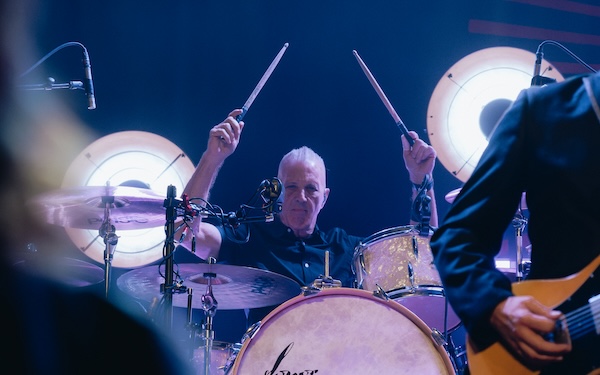
Mavericks drummer Paul Deakin. Photo: courtesy of the artist
Drummer Paul Deakin tells a story about being in his 20s and traveling around Europe with his best friend, Robert Reynolds. In Paris, they met a fellow American who was busking in the streets. They didn’t realize it was a harbinger of sorts.
Fast-forward a few years, and Deakin and that one-time busker — better known to alt-rock fans as singer and songwriter John McCrea — ran into each other. The conversation went something like this:
McCrea: “Hey, you’re The Mavericks!”
Deakin: “Hey, you’re Cake!”
Both bands went on to make their respective marks in popular music.
Deakin and Reynolds stuck together after that European jaunt and ultimately ended up in Miami, where, in 1989, they teamed with otherworldly singer and gifted songwriter Raul Malo to form The Mavericks. The band crafted a brand of rootsy, rocking country music laced with Latin influences that would never fit comfortably into any one box.
The Mavericks maneuvered through a career that garnered critical acclaim and commercial success, even though the band never really conformed to whatever else was popular on the country charts. Malo penned numerous top-shelf songs, including “Here Comes the Rain,” “From Hell to Paradise,” “What a Crying Shame,” “Stories We Could Tell,” “Back in Your Arms Again,” and “Waiting for the World to End.” And, as a song stylist, Malo claimed, among others, Neil Young’s “Harvest Moon” and Bruce Springsteen’s “All That Heaven Will Allow” as his own.
“Bruce called Raul in September to tell him what a huge fan he was,” Deakin recalled during a recent interview, noting that Malo modeled versatility and explosive concert energy of The Mavericks on Springsteen’s E Street Band.
The Mavericks weathered a roller-coaster career of lineup changes and periods of hiatus, but nothing prepared these friends and bandmates for the devastating news of Malo’s cancer diagnosis in 2024. Malo continued working as best he could, but the cancer progressed to leptomeningeal disease. The Mavericks’ leader died in December 2025 at age 60.
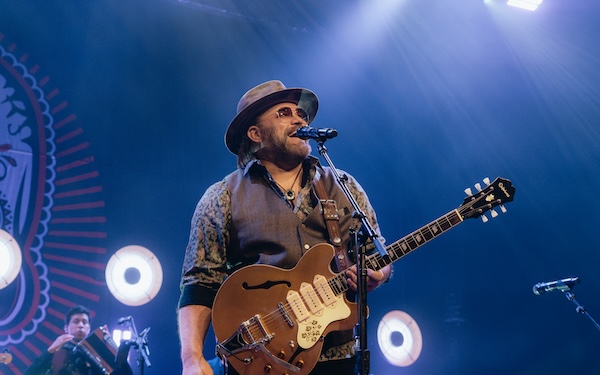
Guitarist and singer James Otto. Photo: courtesy of the artist
Many quite naturally thought that Malo’s death would signal the end of The Mavericks, given the singer’s commanding presence. But, like most things Mavericks, this story has a twist — one that started when a group of country artists decided to celebrate Malo and his work.
No one expected Malo’s health to decline so quickly. His bandmates and admirers had planned a concert of Malo’s music at Nashville’s famed Ryman Auditorium that fateful December. By the time the event arrived, Malo was too ill to attend — he died two days after the star-studded celebration of his life and music.
Deakin was uneasy about doing the Ryman shows, which had initially been planned to include Malo’s participation. “I loved his optimism,” the drummer said. “He thought he could at least play guitar. Raul told me, ‘I can’t sing any more, but I sang enough.’”
Malo was hospitalized as the celebration unfolded; his songs sung by Jamie Johnson, Jim Lauderdale, Maggie Rose, Marty Stuart, and many others.
Going into rehearsals for the Ryman performance, Deakin thought to himself: “How do we do those songs without that voice?” He quickly learned just how good those songs are by watching other artists sing them. The different performers brought their own styles and approaches to the material, and the tunes continued to shine.
Deakin realized Malo’s music did not die with him.
And so the dramatic noir of “Come Unto Me,” the Tex-Mex rave-up “All You Ever Do Is Bring Me Down,” and the country jangle of “Dance the Night Away” — along with many other songs — are being performed again. Deakin and his longtime bandmates, guitarist Eddie Perez and keyboard player Jerry Dale McFadden, agreed to rejoice in those songs on a summer tour dubbed “The Music Lives On,” by The Mavericks & Friends.
The show has two stops in Massachusetts: an evening performance Aug. 21 at The Cabot in Beverly, followed by an afternoon show Aug. 22 at Indian Ranch in Webster. The annual summertime Mavs concerts at Indian Ranch had become the Worcester County equivalent of the Beatles playing Shea Stadium.
The tour also brings Reynolds back into the fold on bass and guitar. Though he helped form The Mavericks, the band fired Reynolds in 2014 because of his drug use. Deakin said that Reynolds — who has taken control of his addiction and rebuilt his life — and Malo met for the first time in roughly a decade when the singer’s health began to decline. Reynolds also participated in presenting Malo with country music’s American Eagle Award for career excellence during the Ryman performance.
Two singers also emerged from the Ryman homage as natural fits for this tour: James Otto and Emily West.
Deakin said there is no replacing Malo. Rather, Otto and West are talented performers who understand the singer’s approach to the songs.
“Robert has said since we started that we are Raul’s band,” Deakin said. “We still are. We are doing this to honor his legacy.”
Scott McLennan covered music for the Worcester Telegram & Gazette from 1993 to 2008. He then contributed music reviews and features to The Boston Globe, Providence Journal, Portland Press Herald, and WGBH, as well as to The Arts Fuse. He also operated the NE Metal blog to provide in-depth coverage of the region’s heavy metal scene.
2 Comments
Leave a Comment

We are all so happy that his music lives on through his loving bandmates and friends. We love you all. We’ll see you on September 12th in Clearwater, FL. I hope I don’t cry but I feel I will. God bless you all. 🌹❤️🎼🎸❤️🎼🎸❤️🎼🎸🙏🏼
OMGoodness
Such a beautiful story which brings tears to my eyes
You all are so caring and down to earth.
I love the music .You make Raul and Betty and family as well as us fans so proud. You Mavericks are simply the best. I appreciate you all so much.
I believe Raul and Dolly are talking about this. I also believe that both are resting in Peace. God Bless All.