
Classical Music Album Review: Gershwin Among Modernists
By Jonathan Blumhofer
A thoughtfully curated program uncovers surprising connections between George Gershwin and Vienna’s early 20th-century avant-garde.
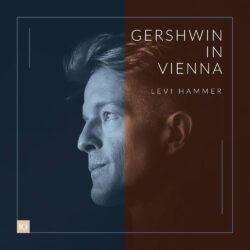 On the face of it, George Gershwin and the Second Viennese School seem like odd bedfellows. But looks can be deceiving: the Brooklyn-born Gershwin, whose lack of formal training made him a less-than-ideal face for American music in some circles, was deeply invested in the work of his Modernist contemporaries.
As it happened, the admiration ran both ways. Arnold Schoenberg became a close friend and admirer. Alban Berg hosted the composer during his 1928 visit to Vienna; an autographed photo counted (along with the score to Wozzeck) among Gershwin’s prize possessions.
Pianist Levi Hammer’s album Gershwin in Vienna doesn’t precisely recreate that last encounter—Berg arranged a performance of his Lyric Suite for his guest and Gershwin’s keyboard contributions to one of the 20th century’s most fascinating musical evenings remain unknown—but it does reinforce the argument that the New Yorker and his music were on par with anything in any genre emerging from the 1920s and ‘30s.
It’s particularly intriguing—and rather refreshing—to hear Schoenberg’s music in this context. Yes, it remains knotty and sometimes (especially the Six Little Pieces) cryptic. But the composer’s sense of freewheeling invention comes out vigorously in Hammer’s playing, particularly in the Three Piano Pieces (Op. 11).
His lean-textured reading of that one ably draws out the score’s conversational aspects. It also reveals a range of character: who’d have guessed that the Pieces’ central movement is, at heart, so bluesy and soulful? It’s a hard realization to miss in this context, where the pianist’s account of the big, trilling climax seems to anticipate Porgy & Bess.
Or maybe it was the other way around: we know that Berg was very much on Gershwin’s mind as he wrote his only opera. That composer is represented by his Piano Sonata which, in Hammer’s hands, is impassioned and rich-toned. The pianist again draws out the score’s responsive and imitative elements strongly; his playing at the beginning of the central developmental episode is conspicuously lovely and inwardly focused.
The outlier on the disc’s lineup is Anton Webern, who is represented by his Op. 27 Variations. Still, if the Vienna native’s dry, austere style inhabits an island of its own, the aphoristic nature of this short work pairs well with the album’s Gershwin selections.
Those—most of them, at least—hail from the composer’s keyboard arrangements of eighteen of his songs. Short and brilliant, they sometimes function better as encores than main items. But by placing them amid (mostly) similarly focused numbers, Hammer has managed to unlock something more vital about the set than usual.
Certainly, Gershwin’s virtuosity is cut from similar cloth as Schoenberg’s and Berg’s. His way with dissonance could be enticingly free, too: just listen to the cloudy harmonies of “Do It Again” or “Liza’s” soupy chromaticism. Also, rhythm. “Sweet and Low Down” jumps athletically; “’S Wonderful” trips with sophisticated grace. One might be excused for thinking that the primary difference between Gershwin and his European colleagues was a predilection for great tunes—and you wouldn’t be entirely wrong.
That revelation comes about thanks in large part to Hammer’s accomplished way with these numbers as well as the recording’s other items (the Jazzbo Brown Blues and Three Preludes). He plays all of this fare with an affection, style, and understanding that reflect his long experience with it and the album’s musical rewards far exceed the not-inconsiderable intellectual pleasures to be had from encountering these composers and works side-by-side.
In that, the disc manages to recall Berg’s admonition to his guest nearly a century ago. Seeing Gershwin nervous about playing his own music for him, the Austrian offered words of reassurance: “Mr. Gershwin, music is music.”
Jonathan Blumhofer is a composer and violist who has been active in the greater Boston area since 2004. His music has received numerous awards and been performed by various ensembles, including the American Composers Orchestra, Kiev Philharmonic, Camerata Chicago, Xanthos Ensemble, and Juventas New Music Group. Since receiving his doctorate from Boston University in 2010, Jon has taught at Clark University, Worcester Polytechnic Institute, and online for the University of Phoenix, in addition to writing music criticism for the Worcester Telegram & Gazette.
Tagged: George Gershwin, Levi Hammer, decurion
1 Comment
Leave a Comment

Great review! Bought the disc. The Berg Sonata is the gem.