Arts Feature: According to Our Critics — The Best That TV Offered in 2025
Our critics supply their TV favorites of 2025.
Peg Aloi
It was a busy and difficult year for many people. Binge-watching TV can be a welcome distraction or a way to unwind. I’m fascinated by how so many people gravitate toward wildly different genres when it comes to “comfort watching” — for some it’s comedy, for some it’s true crime, for some it’s competitive reality shows. Personally, I like a good drama, thriller, or horror story, but that’s me. I must admit I found it a bit harder to watch “darker” fare this year. Also, I didn’t have time to check out nearly as much TV as I’d have liked, even though so much of what is new came in the form of a limited series, as opposed to a multiseason story. Here’s hoping I can get caught up on some good TV in January. Here’s hoping you will, too. Here are my top picks for TV in 2025.
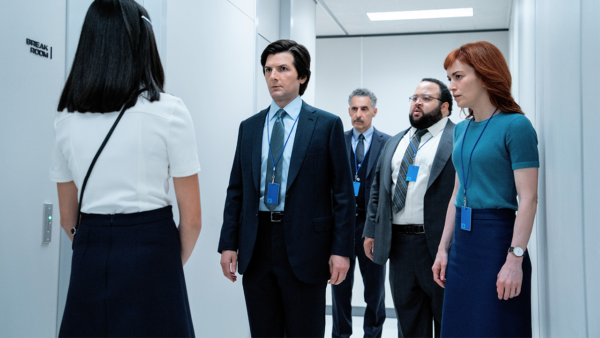
A scene from Severence. Photo: Apple TV
Severance, Season 2 (Apple TV) You’re still not watching this incredible series helmed by creator Dan Erickson and director/producer Ben Stiller? What the hell are you waiting for? Severance is one of the smartest, most compelling, beautiful, and disturbing things to ever be on TV — and that’s saying a lot these days.
Plur1bus (Apple TV) Vince Gilligan’s hotly awaited new series is somewhat beyond genre: is it sci-fi, drama, dystopian, or speculative fiction? Whatever it is, it’s fantastic. Rhea Seehorn stars as a somewhat jaded romance novel writer whose life is turned upside down when a strange entity (a virus perhaps?) infects humanity. All but a tiny number of people on earth can share a common set of memories, skills, thoughts, and feelings. Is this a metaphor for AI, or encroaching fascism, or something else? Despite its fantastical underpinnings, this story feels very real, its characters recognizable. Yet unexpected occurrences and revelations arrive with refreshing regularity. This one is instantly addicting and demands close watching. Season 2 can’t come fast enough.
Your Friends and Neighbors (Apple TV) In a part apparently written for him, Jon Hamm plays Coop, a recently-divorced hedge fund manager who loses his job and decides to try something new. The opening scene foreshadows a moment when Things Go Horribly Wrong for Coop and his new hobby/job: stealing expensive loot from the opulent McMansions in his exclusive New York suburb. Juiced up by Hamm’s clever voice-overs, this darkly comic series has a touch of soap opera and a whole lot of social commentary. Eagerly awaiting the second season of this intelligent, sexy show.
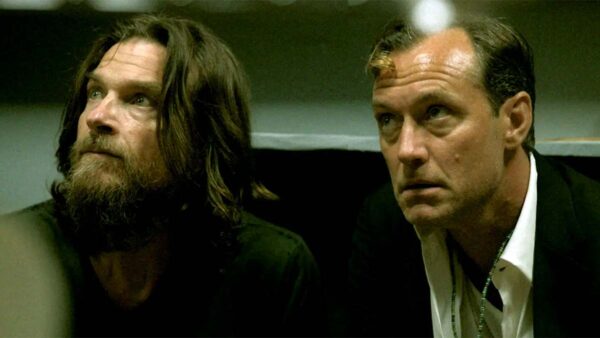
Jason Bateman and Jude Law in Black Rabbit. Photo: Netflix
Black Rabbit (Netflix) You reach the end of the first episode of this limited series, thinking to yourself, damn, Jason Bateman is such a good actor. Then the end credits say “Directed by Jason Bateman.” He plays Vince Friedkin, reckless drifter and brother to Jake (Jude Law), who runs a trendy nightspot in Manhattan. Vince arrives in town unexpectedly, stirring up the kind of trouble that makes it clear why the two parted ways after going into the restaurant business together. Great cast, artful direction, sharp writing, and a suspenseful story: this is a must-watch limited series.
Task (HBO) New from the creator of Mare of Easttown’s Brad Inglesby, another working-class crime drama that’s crafted with heart and art. Mark Ruffalo is an FBI agent on reduced duty (helming tables at college job fairs) in the wake of a family tragedy. He’s asked to head up a task force investigating a string of home robberies perpetrated by well-meaning trash collector Tom Pelphrey (Ozark, Outer Range), who, damn it, just wants a better life for his family. The excellent supporting cast includes Emilia Jones, Martha Plimpton, Raul Castillo, and Jamie McShane.
Wayward (Netflix) Created by and starring comedian Mae Martin, this series follows a police detective (Martin) whose new job finds her investigating a missing person case in Vermont. She is checking out Tall Pines, home to a strange school that’s more like a juvenile detention facility. It’s run by a charismatic cult leader (Toni Collette, who stars in seemingly everything these days). Young cast members shine playing the trapped teens who rely on the town’s newest cop to help them escape.
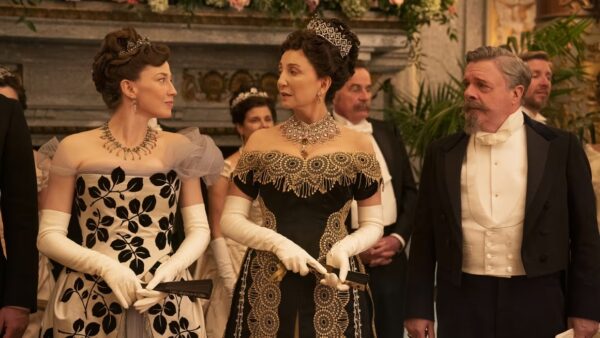
Carrie Coon, Donna Murphy, and Nathan Lane in Season 2 of HBO’s The Gilded Age. Alison Cohen Rosa/HBO
The Gilded Age, Season 3 (HBO) Okay, I’m biased because this one films in my neighborhood sometimes, where there are numerous Gilded Age brownstones. I found the first season a bit bloated and shallow while I felt like some of the actors were miscast and out of place (especially the excellent Carrie Coon). But this series has slowly come into its own (thanks to a huge and passionate social media following that celebrates the drama’s queer storylines), and the cast (including Cynthia Nixon, Christine Baranski, and Taissa Farmiga), which continues to be excellent.
The White Lotus, Season 3 (HBO) Season 2 (set in Tuscany) is still my favorite, but the distinctive cultural and physical setting of Thailand worked surprisingly well for Mike White’s quirky anthology series about a chain of luxury hotels, the wealthy, wacky people who stay in them, and the beleaguered employees who cater to them. Each season features a horrific crime and a lot of human folly: the Far East setting is used to emphasize the vaunted healing practices of the hotel’s spa, which are supposed to transform lives. Stellar actors like Parker Posey, Jason Isaacs, Walton Goggins, and Aimee Lou Wood (Living) made this season eminently watchable.
Sarah Osman

Catherine O’Hara and Seth Rogen in The Studio. Photo: Apple TV
The Studio: This zany, satirical take on the current state of Hollywood won multiple Emmys for good reason. The Studio is a mix of absurdist and physical humor; no matter how many times Seth Rogen takes a pratfall, it’s always funny. From the ridiculous Kool-Aid Man movie to the “old school” Hollywood party — where guests unintentionally end up high on mushrooms — The Studio is the comedy we need in these stranger-than-fiction times.
The Chair Company: Tim Robinson moved from skits into full-length comedy this year (though it could be argued that his extended narratives are a succession of sketches). In The Chair Company, Robinson stars as Ron, an Ohio family man who, after an embarrassing incident at work where he breaks a chair, decides to investigate the company that made the nefarious piece of furniture. This kicks off Ron’s descent into madness, as he discovers wilder and weirder facts about the alleged chair company. My favorite side character: Ron’s coworker, who at one point tells his friend that morale is down and that he’ll show up to work dressed as a chicken to improve it.
North of North: Set in the northernmost part of Canada, North of North follows Siaja (Anna Lambe), a young Inuit woman living a seemingly perfect life. In the first episode, she breaks up with her husband and decides it’s time for her to live the life that she wants to live. North of North has a Parks and Recreation vibe, but the focus on Inuit culture makes it distinctive. Characters speak in Inuktitut, hunt in traditional ways, and take part in venerable native ceremonies. What’s more, locals in the area helped write the series — and they performed in it as well.
Hacks (Season 4): The fourth season of Hacks pitted Deborah (Jean Smart) against Ava (Hannah Einbinder) in a new power struggle. Ava finally got the upper hand when she became the head writer of Deborah’s new late-night talk show. But Ava quickly learned that being head writer isn’t as easy as it looked. Standout moments included Ava’s meltdown over her staff ordering an extra branzino for lunch; a Vegas trip gone awry, and the appearance of “Dance Mom,” a viral TikTok star brought on to spice up Deborah’s show.
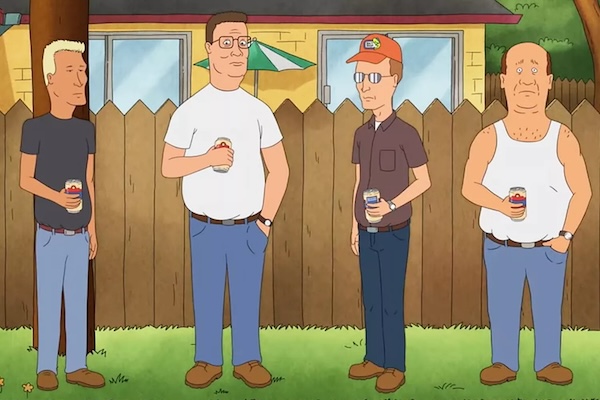
Boomhauer, Hank Hill, Dale, and Bill on King of the Hill. Photo: Hulu
King of the Hill (Reboot): Let’s face it: most reboots aren’t that great (looking at you, And Just Like That). Thankfully, the resuscitated version of King of the Hill proved that some returns can be great. The updated take on the residents of Arlen, Texas, was thoughtfully done: each character had matured and changed in ways that made sense given who they were 15 years ago. The initial King of the Hill cleverly satirized Texan culture, and the reboot does that as well, poking fun at craft beer and various forms of cultural appropriation. King of the Hill 2.0 should serve as the template for how to properly pull off a reboot.
Severance (Season 2): I was late to jump on the Severance train, and I’m glad I waited until all the episodes had aired before watching it. I don’t think I could have handled the wait between installments. Season two of Severance expanded on the world that was established in season one. We saw the innies interact with the outies’ families, met some creepy new characters, and Milchick (Tramell Tillman) continuing to stir up trouble. I’ll have to be patient as I wait for season three — it can’t come soon enough.
#1 Happy Family USA: Ramy Youssef’s foray into animation went further into the absurd than his first show, Ramy. #1 Happy Family USA follows the Husseins, an Egyptian Muslim family trying to navigate the world after 9/11. While parts of the series are madcap — including nihilistic sheep with a gift for gab — other parts felt all too real, like how the characters need to code-switch. As an Egyptian-American who grew up with a Muslim father post 9/11, #1 Happy Family USA supplied me with some much needed catharsis.
The Righteous Gemstones (season 4): The fourth and final season of The Righteous Gemstones made me wish the series wasn’t going to end. It featured a brilliant opener that cast Bradley Cooper as a helper monkey as it gave us Uncle Baby Billy (Walton Goggins) hosting the Bible trivia game show “Uncle Baby Billy’s Bible Bonkers.” My favorite recurring comic bit: Uncle Baby Billy’s new TV show, Teenjus, which focused on Teen Jesus. What made The Righteous Gemstones work so well was how — even though the Gemstones hurled insults at each other with the speed of a professional baseball pitcher — the family members still managed to love each other.