
Opera Preview/Interview: White Snake Projects’ “To The People Like Us” — Understanding the Urgency of the Moment
By Jonathan Blumhofer
Our conversation touched—considerably, as it turned out—on the current political climate and the dispiriting response of the musical world to the rising tide of homegrown authoritarianism.
“It’s the artists of the world,” Leonard Bernstein told a crowd of students at Tanglewood in 1970, “the feelers and thinkers, who will ultimately save us; who can articulate, educate, defy, insist, sing, and shout the big dreams.”
He might have been speaking about White Snake Projects, Boston’s self-styled “activist opera company.” Founded in 2018 by Cerise Lim Jacobs, the troupe has carved out a niche for itself with productions of new works that are often whimsical and proudly offbeat. For example, 2023’s Monkey, a Kung Fu Puppet Parable, which fused opera with the eponymous martial art.
Yet each staging is rooted in larger concerns. Such is the case with WSP’s current, climate crisis-themed season, which began earlier in the spring with a series of Sing Out Strong events in local schools and libraries and continues with operatic presentations at Dorchester’s Strand Theater in June and September.
I caught up with Jacobs by phone for a wide-ranging chat about the company’s upcoming plans. Our conversation also touched—considerably, as it turned out—on the current political climate and the dispiriting response of the musical world to the rising tide of homegrown authoritarianism.
To The People Like Us plays at Dorchester’s Strand Theater on June 28 at 2 p.m. and 7 p.m.
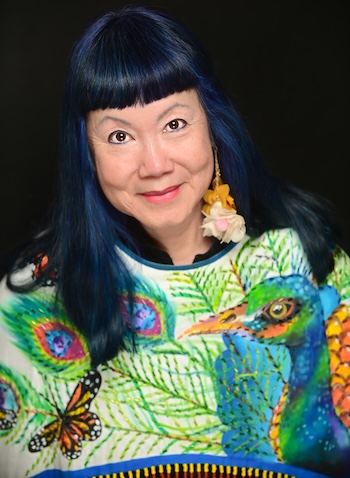
Cerise Lim Jacobs, founder of White Snake Project. Photo: Manon Halliburton Photography
Arts Fuse: I want to start off by talking a little bit about the current political climate. You’ve been outspoken in your opposition to the administration’s efforts to co-opt the arts, curtail funding, and more.
White Snake Projects: I feel very strongly about what’s happening today. We need collective action and connection because it’s not possible to be truly strong or effect meaningful change alone.
AF: Do you find a similar imperative to unite and act from other groups and institutions in Boston?
WSP: Actually, I’ve only been approached for collaborative discussion by one other company. Otherwise, I haven’t found many companies—other than those in the theater, of course—that seem to understand the urgency of the moment. In classical music, more broadly, I have not found any voices of resistance. I don’t understand what performing arts institutions are doing. I just feel so alone. Even at the Opera America conference [earlier in May in Memphis], all that discussion was underground. My first question I asked them was: where is the movement? Where is the organization? Shouldn’t our industry be making a concerted effort, stand, statement—something—a push-back? But there was nothing. So, I don’t know—it’s very disappointing to me.
AF: Why?
WSP: People are failing to see the larger picture. It’s important to look at the totality of the cultural situation. We don’t exist in a vacuum. Too many are only concerned about survival at the moment, and that makes them myopic. And they think that scrubbing websites, removing any hint of DEI, is going to save them.
Frankly, I don’t care about these three letters because it’s not about words, it’s about practice. And it’s foolish to hope that by removing three little words, you’ve insulated yourself from attack. They don’t understand that the attack is on free speech and free thought. It is about basic liberties. It’s about everything we believe in. It’s about climate change, immigration, the ability to mount a resistance. They are using an economic club to demand obedience. And we start to obey when we start scrubbing words from our vocabulary.
What if, ten years from now, everyone had done that — we’d have lost the concept of what diversity is. What it means to include people who don’t look like us. What it means to be just and fair to those who are less powerful than you are. This is about a remaking of the fundamental values of our society. It’s not about the three little words. And when people don’t understand that this blindness just breaks my heart.
AF: We’re still relatively early in this process — this is the time for cultural groups to stand up.
WSP: Absolutely. The most powerful man in the world is stooping so low as to take over the chairmanship of the Kennedy Center. Doesn’t he have better things to do? There’s only one explanation: he understands that it’s through the arts and free thought and free speech that you control the hearts and minds of people. Sheer, brute force isn’t going to do it. Totalitarian power draws on mind control, propaganda, because submission has to be voluntary.
I grew up in a totalitarian society. I understand how this thing works, that government control is not the power of arms but the power to change minds. So I am very concerned about the future. Will we have an arts and culture landscape—or the community and the society—that stands for the values that have been the bedrock of American democracy?
I speak as an immigrant, who never appreciated democracy until I went to law school here [at Harvard]! I didn’t grow up with the opportunities for free speech or thought. I’m horrified that Americans do not see what is being taken away.
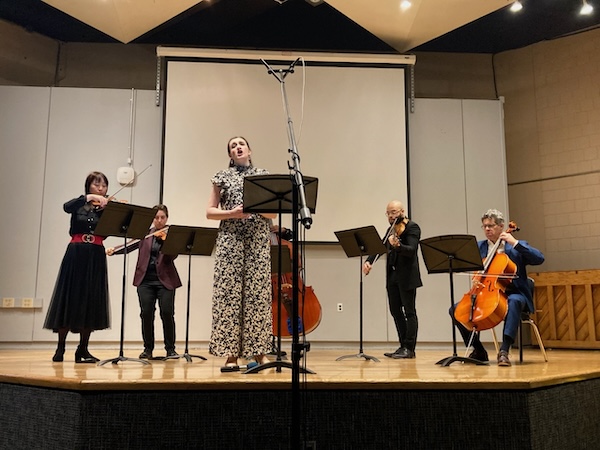
A look at this year’s Sing Out Strong: Environmental Voices. Photo: Courtesy WSP
AF: We started by talking about collective action and community. I wonder if the spirit of individualism, a very American trait, is contributing to the indifference of cultural organizations. Community is not valued.
WSP: Exactly! But we continue to do our bit [writing op-eds, having artist discussions] in the hope that other arts leaders will see there is a discussion to be had. Our industry needs to understand that there is a purpose greater than art for art’s sake. We need to rise to the occasion.
AF: Speaking of rising to the occasion, let’s pivot to chat about White Snake’s climate change season.
WSP: Let me start by telling you a bit about how we program. Even though our season is September to May (which is a crazy way of doing things!), our thematic season is the calendar year.
Looking back at the calendar year 2024, our theme was voting rights. We commissioned songs on voting rights, toured, hosted panels, presented a new opera by Mary D. Watkins on the life of Fanny Lou Hamer, and so forth. The mainstage productions at the Strand Theater in Dorchester are just one part of a much bigger creative ecosystem.
AF: Right. And there’s a very strong community aspect to this as well…
WSP: Yes, and let me explain how we connect with our community. We announced that our theme this year was climate change. We have a song series called Sing Out Strong that reflects the theme of our larger season. This year it’s Sing Out Strong: Environmental Voices.
For this project, we solicited texts from the community—not professional writers, but real community members. I work with high school students and we had them write lyrics about what climate change means to their generation. We set up a little competition and the winning lyricists are paid. (We always pay for the right to use their lyrics.) We had an open call for composers; well over 100 submissions came in, and we selected six composers to write six songs.
Three of them had to be for strings, because we have a partnership with the Boston Youth Project, which is embedded in the Boston Public Schools at Josiah Quincy School in Chinatown. So, in March, we launched this year’s Sing Out Strong [at JQS] with these little children playing tiny instruments!
That was the beginning. Since then, we got a grant from the Brookline Community Foundation for two climate-related Sing Out Strong events; the first was performed in April. We partnered with the New England Aquarium; on World Oceans Day (June 8), we were at the Aquarium.
Our commitment to programming extends far beyond mainstage work. We work just as hard on community events as we do on our operas.
In late June, before we open To The People Like Us, we have a partnership with Teen Empowerment—they’re located in Roxbury—and we’re going to have a climate panel that’s moderated by a group of teens. We’ll bring some of our Sing Out Strong songs; the students in Roxbury will be invited to contribute songs about climate change, too. We’re hoping to have that gathering in a park, where we’ll have a tree planting afterwards. And this will be done before we mount our mainstage event! We’re also putting together an art gallery on climate issues that will be at the Strand, for the audience to interact with.
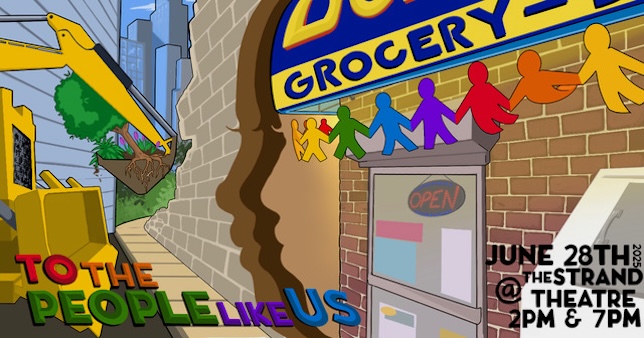
AF: Talk about To The People Like Us.
WSP: I’ve long felt that, especially with classical music, there’s been this myth about high art and low art that’s been perpetrated by Western gatekeepers. Let’s just limit it to opera: only certain Western classics are high art and everything else is low art—and community art making is the lowest of the low. I strongly disagree with that.
I want to explode this myth by collaborating deeply with my community to make art together and see if we can achieve what I call “middle art.” It has great production values and is satisfying aesthetically, philosophically, and as a storytelling experience. We started an initiative called Show Out Boston, where we rent out Hibernian Hall and present different local organizations. The long and short of it is that it is necessary for us to do this to show the community that we’re not here just to take from local organizations, but to showcase them, work with them, create for them.
Through [Show Out], I set up a relationship with 826 Boston, which is a youth writing educational group embedded in the Boston Public Schools. We began to bring students into the Boston shows to present spoken word interludes, read poetry, and other things. We decided to embark on To The People Like Us with them. The students wrote their first libretto under our auspices, with our guidance and editorial oversight.
That’s how To The People Like Us came about. The students picked the topic—gentrification and its effect on climate. They wrote the story. A libretto is a challenging form — there are moments of recitative and moments for arias. It can’t be wordy, because the music should do a lot of the work. We commissioned Jorge Sosa, who’s a Mexican composer and a dear friend I trust, to take this libretto—which is unlike any other professionally-made libretto—and honor [the students’] words, their intent, and their vocabulary. The goal is to create an artwork made at the “middle ground”. To ensure that, we engaged our usual panoply of stage designers and directors for this—because I believe community art making, when properly mentored and resourced, offers an untapped artistic value and merit.
AF: The idea of art being rooted in community is advertised, but it is not a reality, especially for opera and classical music.
WSP: The truth is, performing arts groups go into schools and run workshops on how to write operas, then perform what they have created in the schools. Do they take that material out of the schools and onto their stages? No. Community-based arts creation has been stigmatized as a poor stepchild to the high arts. That’s the divide I want to explode. I want to make the musical theater of the future, where we don’t have these arbitrary, mythological dividing lines between music and the community.
AF: The librettists for To The People Like Us are Boston students. Does the casting draw on local connections as well?
WSP: It’s an all-Latin cast, with nearly all members from New York. The Haitian dance company Jean Appolon Expressions will also perform as part of the show.
AF: Are you planning on continuing with 826 Boston or with other community groups in the future?
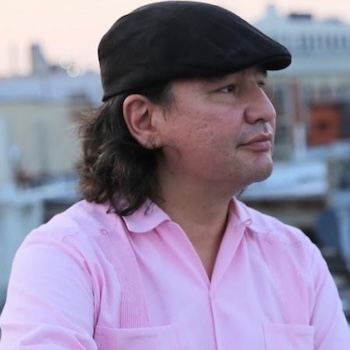
Composer Jorge Sosa. Photo: Courtesy of WSP
WSP: I am so glad you asked that! At the end of the process of creating To The People Like Us, we had a post-mortem with our collaborators to see what we could do differently or better next time. They were over the moon, and asked if we could do it again! We said yes, but we can’t do that kind of project every year. Our plan is to do [a collaboration] every other year. The next opera after this will be in 2027 — the theme is going to be democracy.
We’re trying to expand the concept of community art making because of this successful experience. I’ve spoken with Jorge Sosa about bringing in student composers. We’ll train them to write for voice and give them each a three-minute song or number to write. Who knows what will happen four years from now? At some point, we hope to have apprentice lighting technicians for tech week. We have students who are interested in animation and projections who can work with us, too. But one step at a time! It’s very hard to create new work, and even harder to do so in ways that have never been tried before.
So that’s where we are and I’m so excited for what’s ahead.We’re trying to expand the concept of community art making because we have this successful experience under our belt. I’ve spoken with Jorge [Sosa] about bringing in student composers. We’ll train them to write for voice and give them each a three-minute song or number to write. Who knows what will happen four years from now? At some point, we’re hoping to have apprentice lighting people for tech week. We have students who are interested in animation and projections who can work with us, too. But one step at a time! It’s very hard to create new work, and it’s even harder to do it in ways that have never been tried before. So that’s where we are and I’m so excited for what’s ahead.
AF: And there’s one more show upcoming in the fall, correct?
WSP: Yes. That one—White Raven, Black Dove—explores climate and race. You can’t talk about global warming without talking about climate justice. We all know that what’s happening to the environment adversely impacts communities of color, who also happen to be of lower socio-economic means, the most harshly. Is it any surprise that Dorchester is the hottest spot in Massachusetts?
Jonathan Blumhofer is a composer and violist who has been active in the greater Boston area since 2004. His music has received numerous awards and been performed by various ensembles, including the American Composers Orchestra, Kiev Philharmonic, Camerata Chicago, Xanthos Ensemble, and Juventas New Music Group. Since receiving his doctorate from Boston University in 2010, Jon has taught at Clark University, Worcester Polytechnic Institute, and online for the University of Phoenix, in addition to writing music criticism for the Worcester Telegram & Gazette. st
Tagged: Cerise Lim Jacobs, Jean Appolon Expressions, Sing Out Strong: Environmental Voices, To the People Like Us
” It’s an all-Latin cast, with nearly all members from New York.” I was fine with this interview till I got to this. Cannot conceive why a piece about climate change should be performed by an “all-Latin cast.” As for people coming from New York, the show is about CLIMATE CHANGE, for Heaven’s sake. That means no extra driving or flying. The show is being performed at the Strand? The cast ought to be coming from around the corner! My skin is just crawling with the stupidity and hypocrisy of this.